 Save
Save Last April, I was standing in my kitchen with the windows thrown open, and the first truly warm breeze of spring came through smelling like soil and green things. I'd just grabbed a bunch of radishes from the farmers market—they still had their greens attached—and something about their peppery crunch made me want to build an entire meal around them. That's when this salad happened, and it's become my go-to way to celebrate when the season finally shifts and everything tastes alive again.
I made this for a potluck once where everyone brought heavy casseroles and pasta bakes, and my salad showed up looking like pure spring in a big ceramic bowl. Two people asked for the recipe before dessert was even served, and a friend who usually skips vegetables entirely came back for seconds. That's when I knew I had something special—it's proof that the right combination of flavors and textures can actually make people excited about salad.
Ingredients
- Mixed spring greens: Use whatever looks freshest—arugula adds a peppery note, baby spinach brings subtle earthiness, and watercress gives you a clean bite that ties everything together.
- Sugar snap peas: Slice them on the diagonal not just for looks but because it increases the surface area and makes them feel more substantial in each bite.
- Fresh or frozen green peas: Frozen peas are genuinely wonderful here since they're picked and frozen at peak sweetness, and they thaw quickly without any cooking needed.
- Radishes: The thinner you slice them, the more tender they become while still keeping their satisfying crunch and peppery kick.
- Red onion: A small amount thinly sliced brings sharpness without overpowering—it's the secret note that makes people say this tastes brighter somehow.
- Extra virgin olive oil: This is where quality actually matters since you're tasting it directly, not cooking it down into something else.
- Fresh lemon juice: Never use the bottled stuff for this—real lemon juice makes the entire vinaigrette taste like spring instead of chemicals.
- Lemon zest: The tiny flecks add brightness and a slight texture that keeps the dressing from feeling one-dimensional.
- Dijon mustard: Just a teaspoon acts as an emulsifier and adds a subtle depth that makes the dressing cling to the greens.
- Honey: The small amount balances the acidity of the lemon and softens the mustard's sharpness without making anything sweet.
- Fresh chives: They're milder than onions but add a whisper of something green and fresh that hits you on the finish.
- Feta cheese: Optional but recommended—the creamy saltiness gives you something to bite into and anchors all those bright vegetables.
Tired of Takeout? 🥡
Get 10 meals you can make faster than delivery arrives. Seriously.
One email. No spam. Unsubscribe anytime.
Instructions
- Gather your vegetables:
- Wash and spin dry your greens so they're not wet, which would dilute the dressing. Slice everything on a clean cutting board, keeping pieces roughly the same size so each bite feels balanced and intentional.
- Build the salad base:
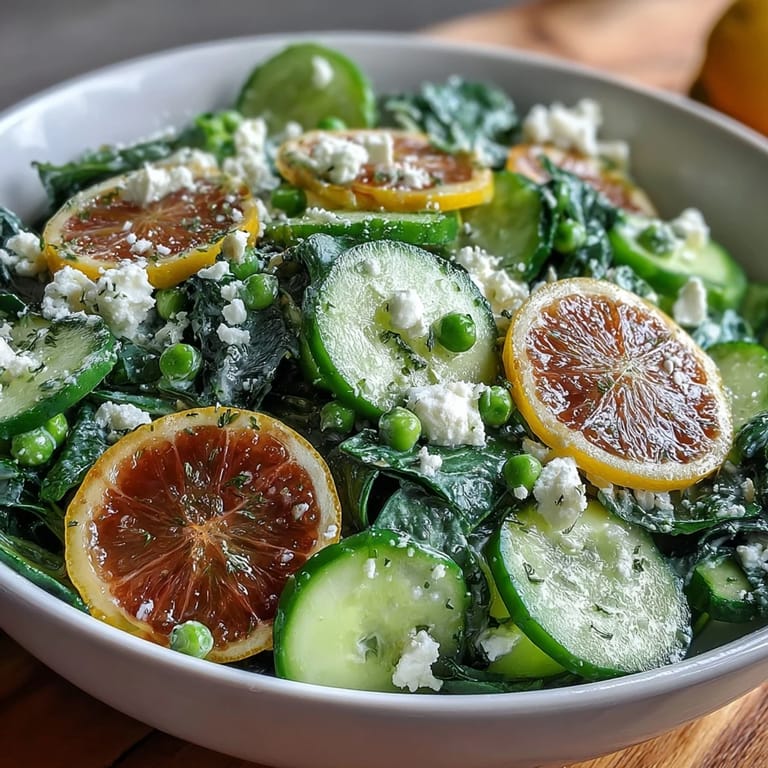
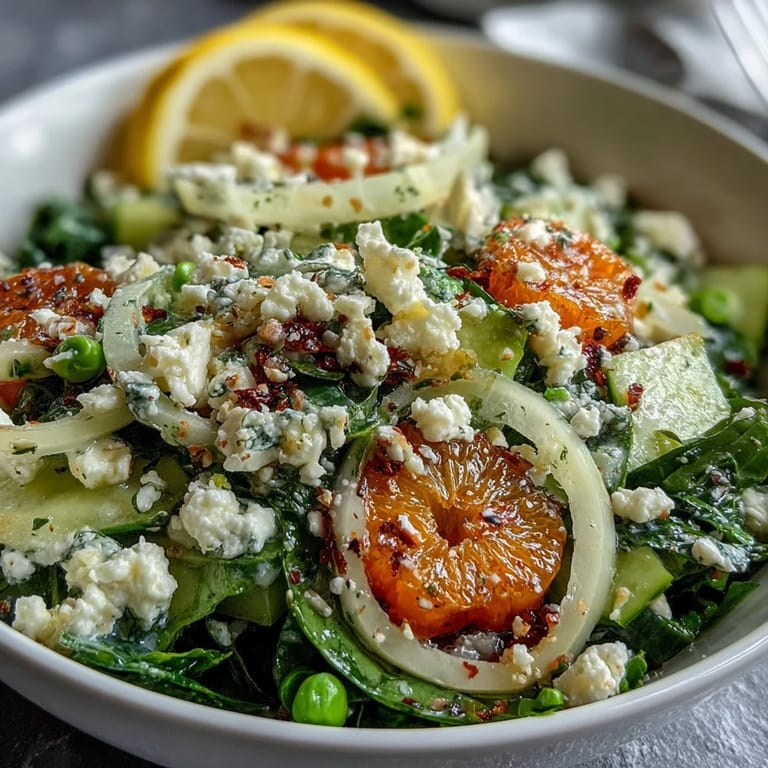
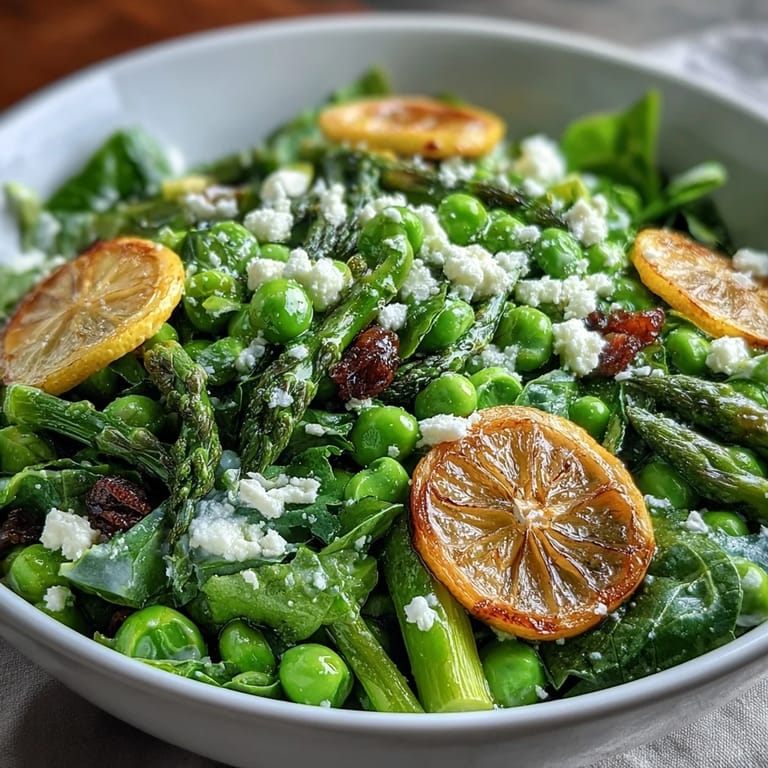
- In your largest bowl, combine the greens, sugar snap peas, green peas, radishes, and red onion without any dressing yet. You want to see how the colors play together before you bring them into one unified dish.
- Make the vinaigrette:
- In a small bowl or a glass jar, whisk together the olive oil, lemon juice, lemon zest, Dijon mustard, honey, salt, and pepper. Whisk until the dressing becomes slightly thicker and takes on a subtle sheen—that's the emulsification happening, which means it'll actually coat the leaves instead of pooling at the bottom.
- Dress and toss gently:
- Drizzle the vinaigrette over the salad and use two large spoons or salad servers to toss everything with a light hand, the way you'd fold something delicate. You want every leaf and vegetable kissed with dressing, but not bruised or crushed.
- Plate and garnish:
- Transfer to a serving platter or individual bowls depending on the mood you're in. Scatter the chives and feta cheese over the top just before serving so they stay fresh and maintain their texture.
 Save
Save My sister brought this to a family dinner one May evening when everyone was sitting outside and the light had that golden quality that makes everything feel important. We ate it straight from the serving bowl, passing it around the table, and no one said much because we were all too busy eating and enjoying the fact that something this bright and fresh and alive existed on our plates. That's when I realized salad could actually be the star of a meal instead of an obligation.
Variations That Work Beautifully
The foundation of this salad is so clean that it welcomes additions without becoming confused. You can add shaved asparagus or blanched green beans for more vegetable substance, or sliced strawberries if you want to lean into the sweetness. Toasted sunflower seeds, sliced almonds, or even crispy chickpeas add a textural element that makes it feel more like a main course, especially if you're serving it to people who need something more substantial on their plate.
Making It a Complete Meal
This salad is happy to play a supporting role, but it's also entirely capable of being the main event. Grilled chicken sliced on top, smoked salmon, or even marinated tofu transforms it into something that feels like actual dinner. The vinaigrette is bright enough to cut through richer proteins without needing anything heavy, and the vegetables still get to be the stars instead of becoming background players.
Pairing and Serving Thoughts
Spring is when this salad truly sings, but it's honestly good year-round if you can find decent vegetables. Serve it alongside crusty bread to soak up any extra vinaigrette, or pack it in containers for lunch the next day—it holds up better than you'd expect if you keep the dressing separate until the moment you're ready to eat. The flavors are clean and refreshing enough to pair with practically any main dish, and the brightness makes it the perfect counterpoint to heavier weekend meals.
- If you're doubling this for a crowd, make the vinaigrette in a larger quantity since the proportions scale beautifully and you can keep extra in the refrigerator for up to three days.
- Taste the dressing before it touches the salad—lemon juice varies in acidity, so you might need slightly more or less depending on what your particular lemons are bringing to the table.
- Serve it in a wide shallow bowl rather than a deep one so all the vegetables can be seen and everyone can reach everything equally.
 Save
Save This salad reminds me that the best meals often come from paying attention to what's at its peak right now, rather than trying to force a recipe that doesn't match the season. It's become my way of saying yes to spring and everything fresh and hopeful that comes with it.
Recipe Questions
- → What types of greens work best for this salad?
Mixed spring greens such as arugula, baby spinach, and watercress provide a fresh and tender base with varied flavors and textures.
- → Can I use frozen peas in this dish?
Yes, thawed frozen green peas work well, offering sweetness and a bright pop of color alongside fresh sugar snap peas.
- → How is the vinaigrette emulsified properly?
Whisk olive oil with lemon juice, zest, Dijon mustard, honey, salt, and freshly ground pepper until fully combined and slightly thickened.
- → What are good garnishes to enhance flavor and texture?
Fresh chives add a mild onion note, while crumbled feta provides creaminess; both complement the tangy vinaigrette nicely.
- → Can this salad be adapted for a vegan diet?
Simply omit the feta cheese or substitute with a plant-based alternative to keep it vegan-friendly.
- → What proteins pair well with this salad?
Grilled chicken or salmon are excellent choices to add heartiness and balance the fresh flavors.