 Save
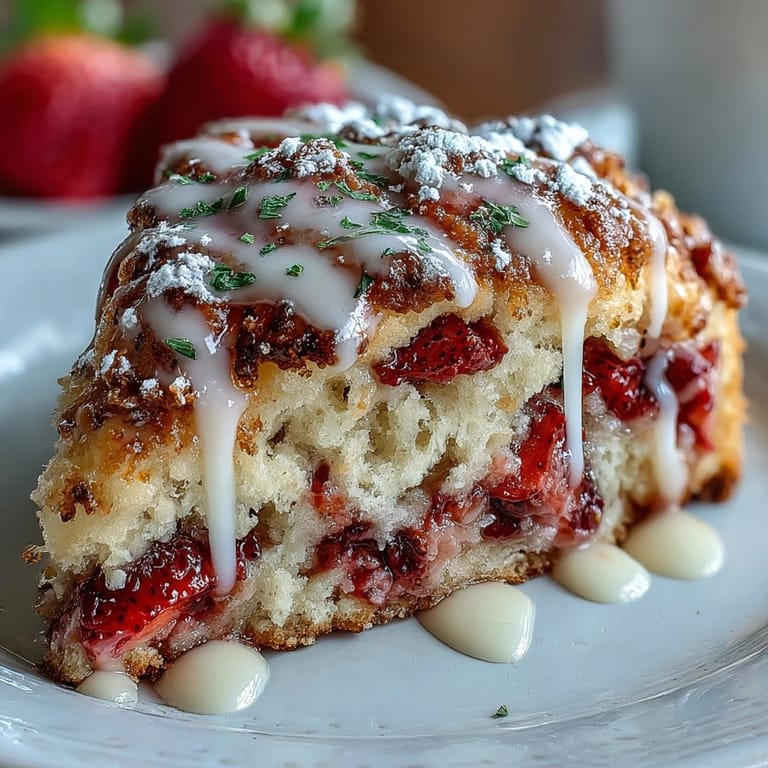
Save My friend Sarah showed up at my door one Saturday morning with a basket of strawberries from the farmer's market, insisting we had to do something special with them before they got soft. We ended up in my kitchen at 9 AM with flour everywhere, laughing at how neither of us had made scones before, but somehow we found ourselves creating these tender, buttery clouds studded with fresh berries and topped with the brightest lemon glaze. That morning taught me that the best recipes aren't always planned—sometimes they just happen when good fruit meets curiosity.
I'll never forget bringing a batch of these to my book club, expecting polite compliments and maybe a few crumbs left over. Instead, people were asking for the recipe before they'd even finished their first scone, and one friend literally closed her eyes while chewing and said 'this is what I imagine summer tastes like.' That moment made me realize these scones aren't just breakfast—they're a vehicle for joy, especially when served warm with someone you want to linger over tea with.
Ingredients
- All-purpose flour (2 cups): The foundation of your scone structure—make sure it's not packed down when measuring, or your scones will be dense and sad.
- Granulated sugar (1/3 cup): Just enough sweetness to let the strawberries and lemon shine without overwhelming them.
- Baking powder (1 tablespoon): This is your lift—don't skip it or substitute it with baking soda, or you'll end up with hockey pucks.
- Salt (1/2 teaspoon): A small pinch that makes everything taste more like itself.
- Cold unsalted butter (1/2 cup, cubed): Cold is the magic word here; warm butter won't give you those beautiful flaky layers that make scones worth eating.
- Heavy cream (2/3 cup plus more for brushing): This creates the tender crumb and golden crust—don't substitute with milk or your scones will be tough.
- Large egg (1): The binder that brings everything together while keeping things moist.
- Vanilla extract (1 teaspoon): A whisper of warmth that deepens all the other flavors.
- Lemon zest (1 tablespoon): Fresh zest from an actual lemon makes all the difference; the bottled stuff tastes like disappointment by comparison.
- Fresh strawberries (1 cup, diced): Choose ones that smell like strawberries and are ripe but still firm—soggy berries will bleed into your dough and create wet spots.
- Powdered sugar (1 cup, sifted): Sifting removes lumps and makes a smooth glaze that actually drips beautifully.
- Fresh lemon juice (2–3 tablespoons): Bottled lemon juice tastes flat and chemical; squeeze it fresh right before you glaze.
- Mixed fresh berries (1 cup for serving): Whatever looks good at the market—blueberries, raspberries, and blackberries all work beautifully.
Tired of Takeout? 🥡
Get 10 meals you can make faster than delivery arrives. Seriously.
One email. No spam. Unsubscribe anytime.
Instructions
- Get your oven ready and prep your space:
- Heat your oven to 400°F and line a baking sheet with parchment paper so your scones slide off easily. Having everything ready before you start mixing is the difference between a calm baking session and a frantic one.
- Build the dry foundation:
- Whisk together flour, sugar, baking powder, and salt in a large bowl, breaking up any lumps as you go. This distributes the leavening evenly so you don't end up with dense pockets in your scones.
- Work in the cold butter:
- Cut the cold butter into small cubes and add it to the flour mixture, then use a pastry cutter, two knives, or your fingertips to break it into coarse crumbs. You want pea-sized pieces of butter throughout—these melt in the oven and create those gorgeous flaky layers everyone loves.
- Combine the wet ingredients separately:
- In another bowl, whisk together heavy cream, egg, vanilla extract, and lemon zest until everything is smooth and well combined. Keeping wet and dry separate prevents overmixing, which is the enemy of tender scones.
- Bring it together gently:
- Pour the wet mixture into the dry ingredients and stir just until combined—you're not making dough, you're just bringing things together until barely no flour shows. Once everything is just barely mixed, fold in your diced strawberries as gently as you can, trying not to crush them.
- Shape your scones:
- Flour your work surface lightly and turn the dough out onto it, then gently shape it into a round about 1 inch thick. Cut the round into 8 wedges like a pizza and transfer them to your prepared baking sheet, spacing them a couple inches apart so they can puff up.
- Give them a golden finish:
- Brush the top of each scone lightly with heavy cream—this creates that beautiful golden-brown exterior that makes scones look like they came from a bakery. Don't drench them; just a light brushing is all you need.
- Bake until golden:
- Bake for 18–20 minutes until they're a light golden brown and smell absolutely incredible. Your kitchen should smell like lemon and strawberries and butter—if it smells burnt, pull them out immediately.
- Cool completely before glazing:
- Let the scones cool on a wire rack for at least 10 minutes before making the glaze. Hot scones will absorb the glaze too quickly and end up looking patchy; cooled scones let the glaze sit pretty on top.
- Make the lemon glaze:
- Sift your powdered sugar into a small bowl, then whisk in fresh lemon juice and zest until you have a smooth, pourable consistency. If it's too thick, add a tiny splash more lemon juice; if it's too thin, whisk in a bit more powdered sugar.
- Glaze and serve:
- Drizzle the glaze over your cooled scones and let it set for a few minutes, then serve them with a pile of fresh berries and maybe some clotted cream if you're feeling fancy. These are best enjoyed within a few hours of baking while they're still tender and fresh.
 Save
Save There's something almost magical about the moment when you pull golden scones from the oven and the whole house fills with that lemon-strawberry-butter smell that makes everyone suddenly appear in the kitchen asking what's happening. These scones became my go-to gift for neighbors, a way to say 'I was thinking of you' without needing an occasion.
The Secret to Flaky Scones
After making these about twenty times now, I've figured out that flaky scones are all about respecting your ingredients and not overworking them. The moment you start thinking of it as kneading bread instead of bringing together a tender pastry, you've already lost. The scones that turn out best are always the ones where I stop myself from fidgeting with the dough and just let the cold butter do its thing.
Why Fresh Lemon Makes All the Difference
I tried making this recipe once with bottled lemon juice because I was being lazy, and the glaze tasted flat and vaguely chemical in a way that made the whole scone feel one-dimensional. Fresh lemon juice has this brightness that actually makes the strawberry flavor pop instead of competing with it, so it's worth the thirty seconds it takes to squeeze a lemon.
Troubleshooting Your Scone Disasters
The most common scone catastrophes happen for predictable reasons, and once you know what to watch for, you'll avoid them almost automatically. I've burned them, forgotten the baking powder, let butter get warm, and overmixed until they were dense as pound cake, so I can tell you exactly what went wrong when things don't go right.
- If your scones spread too much instead of rising, your butter was too warm or your dough was too wet—chill everything next time before mixing.
- If they're dense and tough, you've either mixed too much or your baking powder was old and weak, so check that expiration date.
- If the strawberries turned the dough pink and wet, you used berries that were too ripe or you didn't pat them dry before folding them in.
 Save
Save These scones have become my answer to 'what should I make when I want to feel like I actually know how to bake.' They're simple enough that you won't stress, but impressive enough that everyone will think you've been taking secret pastry classes.
Recipe Questions
- → What type of flour works best for these scones?
All-purpose flour provides the right balance of structure and tenderness for these scones, ensuring a soft crumb.
- → How does the lemon glaze enhance the scones?
The lemon glaze adds a bright, tangy sweetness that contrasts beautifully with the rich buttery texture and fresh strawberries.
- → Can I substitute the strawberries with other berries?
Yes, raspberries or blueberries can be used instead, offering a different but equally delicious flavor profile.
- → What is the best way to achieve tender scones?
Using cold unsalted butter cut into the dry ingredients helps create a flaky, tender texture by producing small pockets of air during baking.
- → How long should the scones cool before glazing?
Allow the scones to cool completely on a wire rack to ensure the glaze sets properly without melting.
- → Can these scones be prepared ahead of time?
They are best enjoyed fresh but can be stored in an airtight container for 1–2 days without losing flavor or texture.