 Save
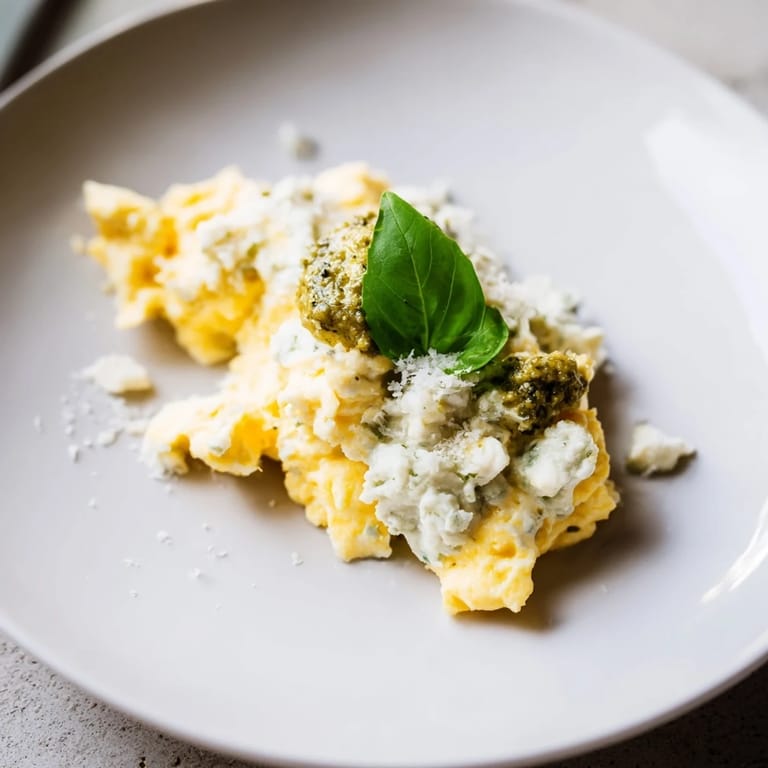
Save I discovered this combination on a lazy Sunday morning when I was standing in front of my open fridge, holding a carton of cottage cheese I wasn't sure what to do with. The basil pesto caught my eye, and I thought, why not? Five minutes later, I was eating the creamiest, most vibrant scrambled eggs I'd ever made, and suddenly cottage cheese wasn't just a sad diet staple anymore. It became my secret weapon for breakfast.
The first time I made this for my roommate, she looked skeptical when she saw cottage cheese going into the pan. Then she took a bite and went completely quiet, the way people do when food surprises them in the best way. That's when I knew this wasn't just my weird fridge invention—it was something special worth sharing.
Ingredients
- Eggs: Four large ones give you enough volume to create that fluffy, billowy texture, and they're really the canvas here.
- Milk or cream: Just two tablespoons adds richness and helps the eggs stay tender, though you can skip it if you're keeping things simple.
- Cottage cheese: Use full-fat if you can—it tastes better and melts more beautifully than the low-fat version, trust me.
- Basil pesto: Two tablespoons is enough to flavor everything without overpowering the eggs; store-bought works just fine here.
- Salt and pepper: A quarter teaspoon of salt and an eighth teaspoon of pepper is my baseline, but taste as you go because pesto already brings salt.
Tired of Takeout? 🥡
Get 10 meals you can make faster than delivery arrives. Seriously.
One email. No spam. Unsubscribe anytime.
Instructions
- Whisk your eggs with intention:
- In a medium bowl, whisk together your eggs, milk or cream if using it, salt, and pepper until everything looks pale and frothy. This incorporates air and makes the final texture lighter.
- Warm the pesto gently:
- Heat your nonstick skillet over medium-low heat—this is important, go low—and add the pesto. Let it warm for about 30 seconds, just long enough to smell that gorgeous basil aroma release into your kitchen.
- Pour and be patient:
- Pour in your whisked eggs and let them sit undisturbed for 10 to 15 seconds. This creates a slight set on the bottom, which makes the next step easier.
- Gently fold and push:
- With a spatula, slowly push the eggs from the edges toward the center, working gently and deliberately. You're not scrambling aggressively; you're creating soft, creamy curds.
- Add the cottage cheese at the right moment:
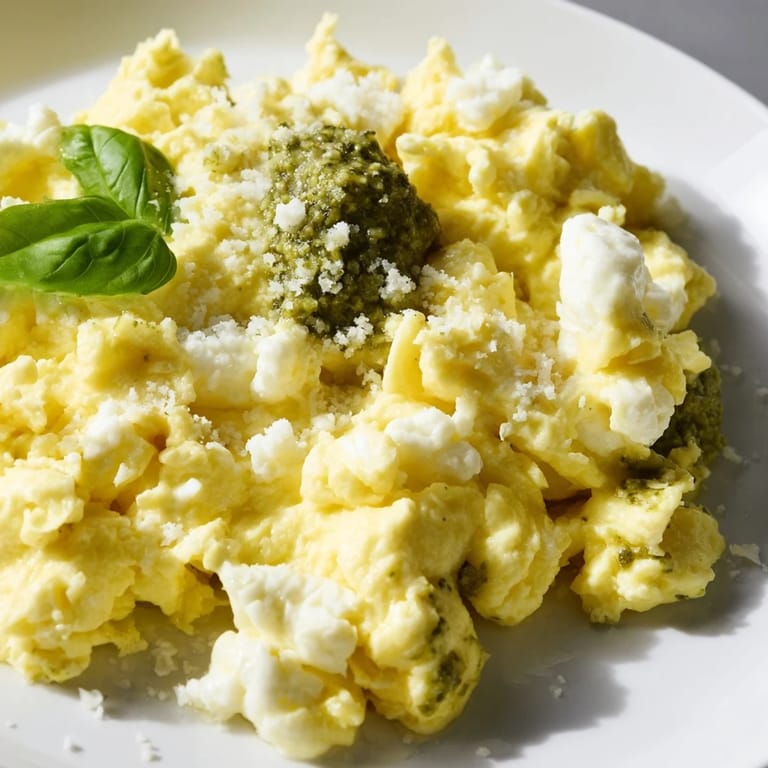
- When the eggs are just beginning to set but still look quite wet and creamy, fold in your cottage cheese and keep stirring gently until the curds look soft and the cheese is just warmed through, maybe another minute. The moment you see no liquid pooling is when you stop.
- Remove from heat immediately:
- The pan's residual heat will continue cooking, so don't linger. Overcooked eggs lose that creamy quality you worked for.
 Save
Save My mom tasted this version and asked if I was secretly taking cooking classes. I told her it was just eggs and cottage cheese. She didn't believe me until I made it again in front of her, and watching her realize how simple it was made us both laugh. Sometimes the best meals are the ones nobody sees coming.
Why This Works
Cottage cheese gets a bad reputation, but it's actually one of the most underrated ingredients in the kitchen. When you heat it gently and fold it into soft, creamy eggs, it doesn't separate or become grainy—it becomes silky. The pesto does the heavy lifting flavor-wise, so you're tasting fresh basil and garlic in every bite, but the cottage cheese is what makes the texture feel decadent and protein-rich at the same time. It's the kind of discovery that makes you feel clever for thinking of it, even though it's really just common sense on a plate.
Variations and Swaps
This is more flexible than it looks. I've made it with sun-dried tomato pesto when regular basil wasn't around, and it tasted like a completely different dish—earthier, a bit richer. Other times I've stirred in a handful of sautéed spinach or some crispy bacon crumbles right before the cottage cheese hits the pan. If you don't have cottage cheese, ricotta works too, though it's richer and less tangy. Even a combination of both makes something special.
Serving and Pairing
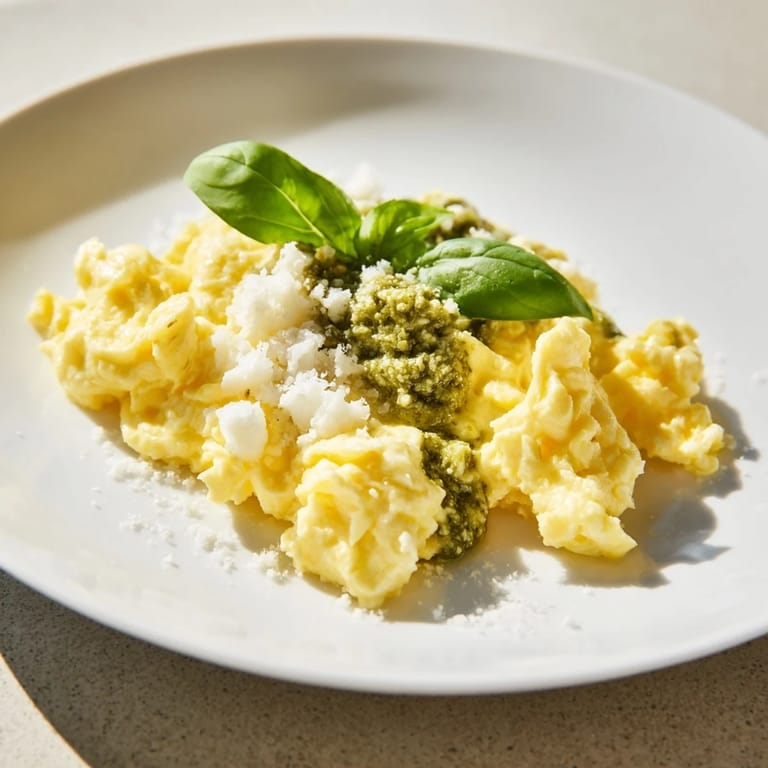
Serve this immediately while it's still steaming, with crusty bread or toast on the side to catch any creamy bits that fall off your fork. A sprinkle of fresh basil and a crack of black pepper on top feels fancy but takes two seconds. Sometimes I add a light grating of Parmesan, and sometimes a drizzle of extra pesto right on top. The bread is really important—it keeps you from letting any of this go to waste.
- Fresh basil leaves and extra pesto make this feel intentional, not rushed.
- Pair with something acidic like a tomato salad or fresh fruit to balance the richness.
- This serves two people generously, or one very hungry person who's ready to start their day right.
 Save
Save This breakfast took something ordinary and made it feel like a small victory. It's the kind of meal that reminds you that good food doesn't need to be complicated, just intentional.
Recipe Questions
- → Can I use homemade pesto for this dish?
Yes, homemade basil pesto works wonderfully and adds a fresh, vibrant flavor to the eggs.
- → What type of cottage cheese is best to use?
Both full-fat and low-fat cottage cheese work well, depending on your preferred richness and texture.
- → How do I prevent the eggs from overcooking?
Cook the eggs over medium-low heat and remove them from the skillet as soon as they are softly scrambled to keep the texture creamy.
- → Can I add other herbs or ingredients?
Sautéed spinach or sun-dried tomato pesto can add extra flavor and variation to this dish.
- → What can I serve with this meal?
Crusty bread or toast pairs perfectly, offering a crunchy contrast to the creamy eggs.