 Save
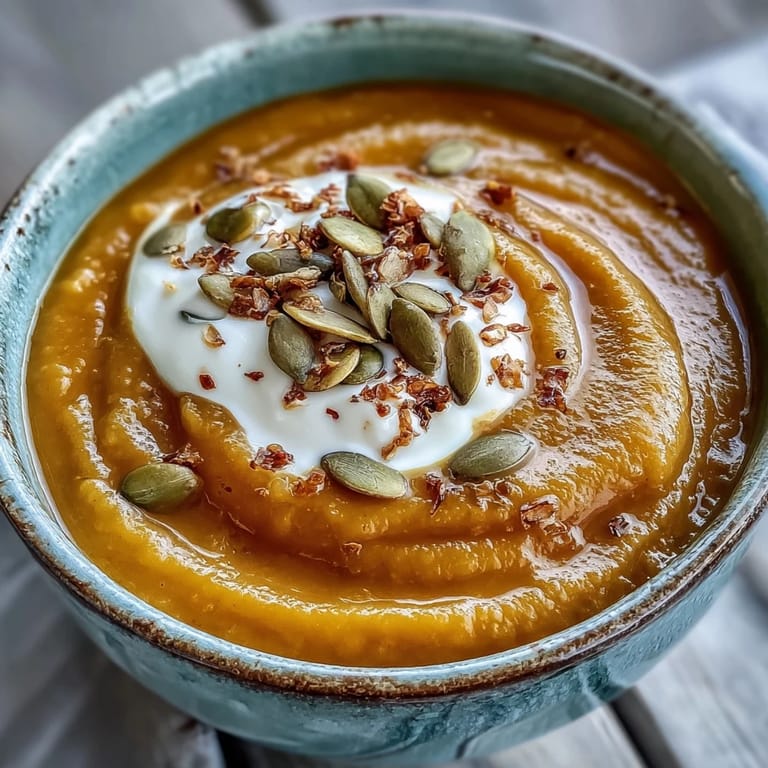
Save There's something about October that makes me want to fill the house with the smell of roasted squash and cinnamon. A few years back, I was standing in the farmers market with no real plan, just grabbed a butternut squash because it felt substantial in my hands, and an apple vendor was practically handing out samples of their Honeycrisp variety. It struck me then that these two things belonged together in a pot, so that's exactly what I did that evening. The result was this silky soup that tasted like autumn had actually learned to cook.
I made this for my sister's book club last November, and watching eight people go quiet after their first spoonful was honestly one of my favorite kitchen moments. Someone asked if I'd added cream to the whole pot, and I got to explain that no, the squash and apples just naturally create this luxurious texture when they're blended together. That's when I realized this recipe isn't just good—it's the kind of thing that makes people feel cared for.
Ingredients
- Butternut squash, 1 medium (about 2 lbs): Peel it while it's slightly firm, not rock hard—it's honestly easier that way, and you'll waste less flesh trying to hack through a cold squash.
- Apples, 2 medium (Granny Smith or Honeycrisp): The tartness cuts through the richness beautifully; if you use only sweet apples, the soup loses its backbone.
- Onion and garlic, 1 medium onion and 2 cloves: These create the savory foundation that keeps the soup from tasting like dessert in a bowl.
- Vegetable broth, 4 cups: Use the good stuff if you can—the broth becomes the main voice in this dish once everything's pureed.
- Apple cider or juice, 1/2 cup: This adds depth and a subtle boozy warmth that regular water never could.
- Olive oil, 2 tbsp: Enough to coat and soften everything without making the soup feel slick.
- Cinnamon and nutmeg, 1/2 tsp and 1/4 tsp: Don't skip the measuring spoons here—these spices can overtake the whole pot if you get heavy-handed.
- Salt and pepper, 1/2 tsp and 1/4 tsp: Start conservative and taste as you go; soup is forgiving about seasoning adjustments.
Tired of Takeout? 🥡
Get 10 meals you can make faster than delivery arrives. Seriously.
One email. No spam. Unsubscribe anytime.
Instructions
- Start with the aromatics:
- Heat the olive oil in your pot over medium heat until it shimmers slightly, then add the diced onion and minced garlic. You'll know it's ready when the onion starts turning translucent and the kitchen smells like the beginning of something good—usually about 3 minutes.
- Introduce the main players:
- Add your cubed butternut squash and chopped apples to the pot, stirring them into the oil and aromatics. Let them cook together for about 5 minutes so they start releasing their own liquids and flavors.
- Build flavor with spice:
- Sprinkle in the cinnamon, nutmeg, salt, and pepper, then stir everything thoroughly so the spices coat every piece evenly. This is where the soup starts smelling like it actually belongs in your home.
- Simmer into tenderness:
- Pour in your vegetable broth and apple cider, bring everything to a boil, then reduce the heat, cover it, and let it simmer for 25–30 minutes until the squash is completely soft and breaks apart if you look at it wrong. You'll know it's ready when a fork sinks through like butter.
- Blend into silk:
- Remove the pot from heat and use an immersion blender right in there, working it through until the soup is completely smooth with no chunks visible. If you're using a countertop blender, work in batches and be careful with the hot liquid—let it cool slightly first if you're nervous about splashing.
- Taste and adjust:
- Sample a spoonful and decide if it needs more salt, more spice, or maybe a touch more cider for brightness. This is your moment to make it exactly what you want.
- Serve with intention:
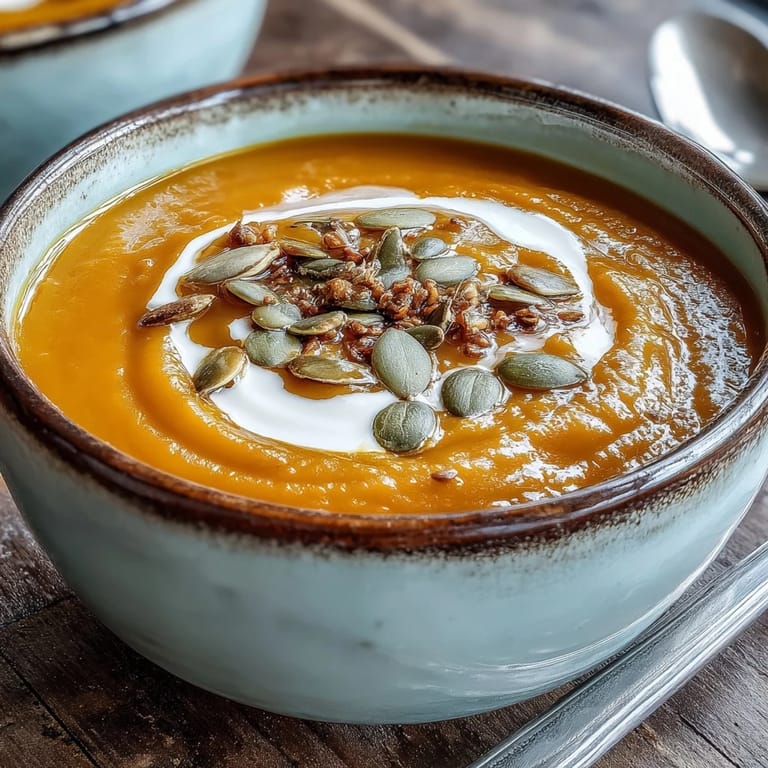
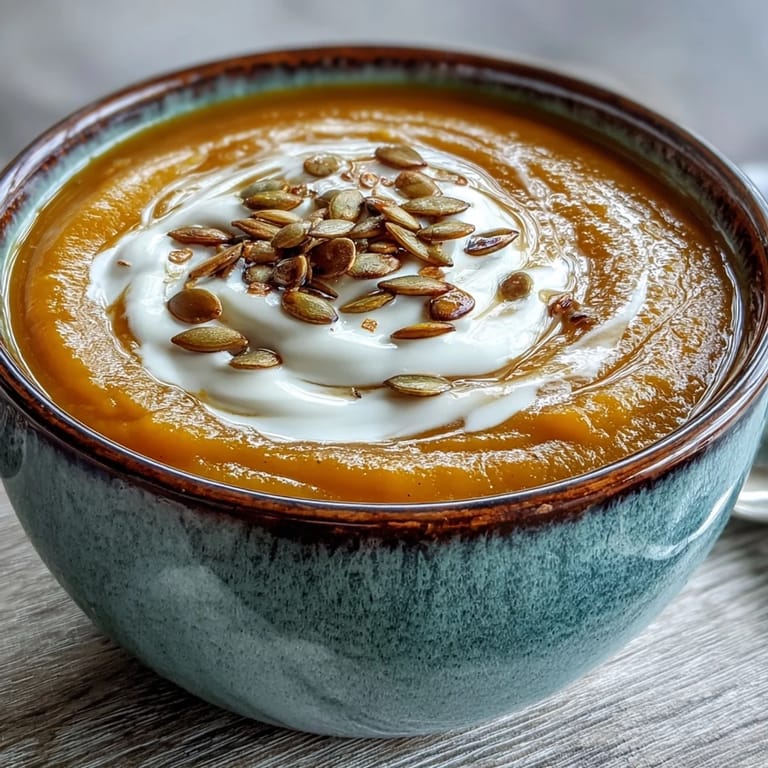
- Ladle the soup into bowls and add a swirl of cream or coconut cream if you're feeling fancy, then scatter some toasted pumpkin seeds or fresh thyme on top. Even without the garnish, this soup knows how to stand on its own.
 Save
Save My neighbor came over once and said this soup tasted like a memory she didn't know she had, which I think is exactly the point. Good food has this quiet way of making you feel like you're somewhere safer, somewhere more autumn-colored, no matter what the calendar says.
The Secret to Silky Texture
The reason this soup feels so luxurious without requiring heavy cream is because both butternut squash and apples naturally release starches and pectin as they cook down. These ingredients do half the work for you—they break down into something naturally creamy when blended properly. I learned this the hard way after trying to add way too much cream to earlier versions, making the soup heavy instead of elegant.
Timing and Temperature
This isn't a recipe that needs to simmer for an hour while you forget about it. The 25–30 minute window is precise because that's when everything is soft enough to blend into silk but hasn't had time to lose its personality through over-cooking. I time it by checking the squash with a fork rather than watching the clock; if you can mash a piece against the side of the pot easily, you're there.
Making It Your Own
This recipe is a foundation, not a rule. I've made it with pears instead of apples, added ginger for a spicier kick, and once even stirred in a bit of red curry paste because I had some lying around and felt adventurous. The combination always holds because the squash is forgiving and the spice structure is flexible. The thing that matters most is that you taste as you go and adjust toward what makes your kitchen smell like home.
- Try a pinch of cayenne pepper if you want warmth that lingers on your tongue.
- Swap in coconut broth for a different kind of richness if dairy feels too heavy.
- Serve it warm or chilled depending on the season—it's equally beautiful either way.
 Save
Save This soup has become my answer to the question of what to make when someone needs something warm, something that tastes like it was made with intention. It's the kind of recipe worth coming back to again and again.
Recipe Questions
- → What type of apples work best?
Granny Smith provides tartness that balances sweetness, while Honeycrisp adds natural sugar. Fuji or Gala work well for milder flavor. Avoid Red Delicious as they can become mushy when cooked.
- → Can I make this ahead of time?
Absolutely. The soup actually develops deeper flavors when made a day ahead. Store in the refrigerator for up to 4 days. Reheat gently over medium-low heat, adding splash of broth if it thickens too much.
- → How do I achieve the smoothest texture?
Simmer until squash is completely tender—it should yield easily to a fork. Use an immersion blender directly in the pot for convenience, or process in batches in a standard blender. For ultra-smooth results, pass through a fine-mesh sieve after blending.
- → What can I substitute for apple cider?
Fresh apple juice works perfectly as a non-alcoholic alternative. For a deeper flavor, use dry white wine or simply increase the vegetable broth by half a cup. The cider primarily adds sweetness and acidity.
- → How can I add protein to make it a full meal?
Stir in white beans or lentils during the last 10 minutes of simmering. Top with roasted chickpeas or pumpkin seeds. Serve alongside grilled cheese sandwiches or add cooked quinoa directly to bowls.
- → Is freezing recommended?
Yes, this soup freezes beautifully for up to 3 months. Cool completely before transferring to airtight containers. Leave space at the top as liquid expands when frozen. Thaw overnight in refrigerator before reheating.