 Save
Save There's something about the smell of butternut squash roasting in the oven that stops me mid-afternoon, pulling me toward the kitchen like a spell. My neighbor knocked on the door once while I was making this soup, and before I could even say hello, she asked what smelled so good. That's when I knew this recipe was special—it fills a room with warmth before you've even taken a spoonful.
Last November, I made this soup for a friend who was having the kind of day where everything felt heavy. She arrived at my door looking tired, and I had a bowl waiting for her with a drizzle of cream and a handful of toasted seeds on top. Watching her take that first spoonful and then pause—that moment of feeling cared for through food—that's what this soup means to me.
Ingredients
- 1 large butternut squash (about 2 lbs), peeled, seeded, and cubed: The star ingredient—roasting brings out its natural sugars and creates those caramelized edges that make all the difference in flavor depth.
- 1 medium yellow onion, chopped: Yellow onions mellow beautifully when cooked slowly, adding sweetness and body without overpowering.
- 2 garlic cloves, peeled: Just a whisper of garlic here—you want warmth, not bite.
- 1 medium carrot, peeled and chopped: Adds subtle earthiness and natural sweetness that rounds out the spice profile.
- 1 stalk celery, chopped: The quiet backbone that gives the soup depth you can't quite identify.
- 2 tbsp olive oil: One tablespoon goes on the squash for roasting, the other into the pot for your aromatics—don't skip this step.
- 2 tbsp unsalted butter (optional, for richness): If you're using it, it adds a silky mouthfeel that makes this feel luxurious without being heavy.
- 4 cups vegetable broth (low sodium preferred): Low sodium lets you control the salt and taste the actual squash instead of just saltiness.
- 1/2 tsp ground cinnamon: Warm and comforting—this spice is what makes people ask what you added.
- 1/4 tsp ground nutmeg: Just a tiny pinch; nutmeg is a background singer that shouldn't take the lead.
- 1/2 tsp ground black pepper: Adds a gentle bite that keeps the soup from being one-note sweet.
- 1 tsp kosher salt (or to taste): Taste as you go—you may want more depending on your broth.
- 1/4 cup heavy cream or coconut milk (optional): A drizzle on top makes it feel finished and special.
- Toasted pumpkin seeds: These add a little textural moment and toasty flavor that surprises your palate.
- Fresh thyme leaves: A handful scattered on top brings freshness and a hint of herbal brightness.
Tired of Takeout? 🥡
Get 10 meals you can make faster than delivery arrives. Seriously.
One email. No spam. Unsubscribe anytime.
Instructions
- Prepare and Preheat:
- Heat your oven to 400°F and line a baking sheet with parchment paper—this prevents sticking and makes cleanup easy. You're basically setting yourself up for success before you even touch the knife.
- Roast the Squash:
- Toss your cubed butternut squash with 1 tablespoon of olive oil, a pinch of salt, and pepper, then spread it out on the baking sheet. Roast for 25 to 30 minutes until the edges are caramelized and the squash is fork-tender; you'll see the color deepen and smell something incredible.
- Build Your Aromatic Base:
- While the squash roasts, heat your remaining olive oil and butter (if using) in a large pot over medium heat. Add your chopped onion, carrot, and celery—you'll hear them begin to soften in about 5 to 7 minutes, and that's when you add the garlic for just one more minute to keep it from burning.
- Combine and Simmer:
- Pour in your roasted butternut squash and vegetable broth, then add the cinnamon, nutmeg, salt, and pepper. Bring everything to a boil, then lower the heat and let it simmer gently for 10 to 15 minutes so the flavors mingle and deepen.
- Blend Until Silky:
- Using an immersion blender, puree the soup right in the pot until it's completely smooth and velvety—if you're using a countertop blender, work in careful batches to avoid steam burns. Take your time here because the texture is part of what makes this soup feel luxurious.
- Taste and Adjust:
- Give it a taste and add more salt, pepper, or spices if you want—this is your moment to make it exactly right for your palate. Sometimes a squeeze of fresh lemon juice or an extra pinch of cinnamon is just what it needs.
- Serve with Love:
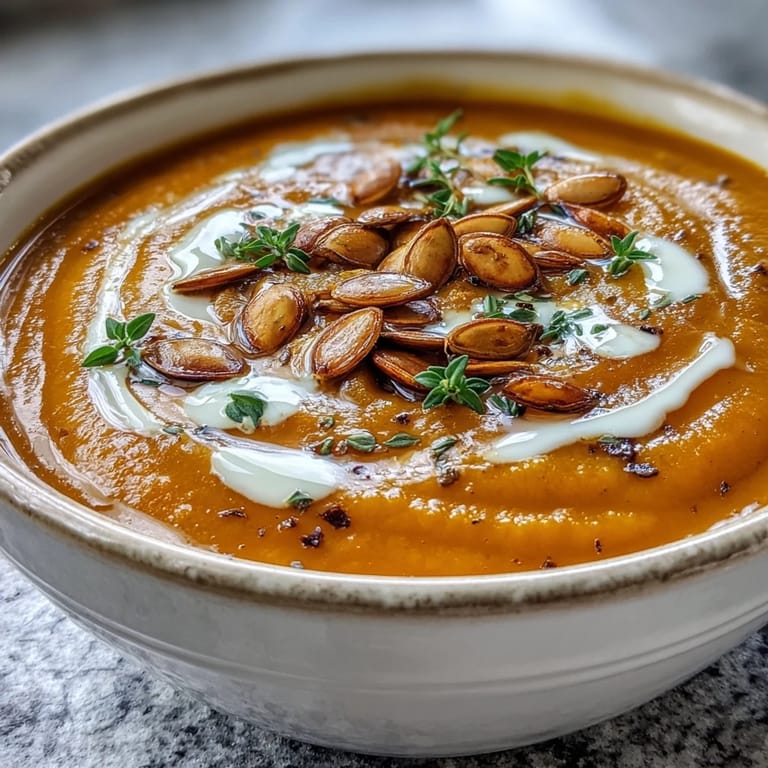
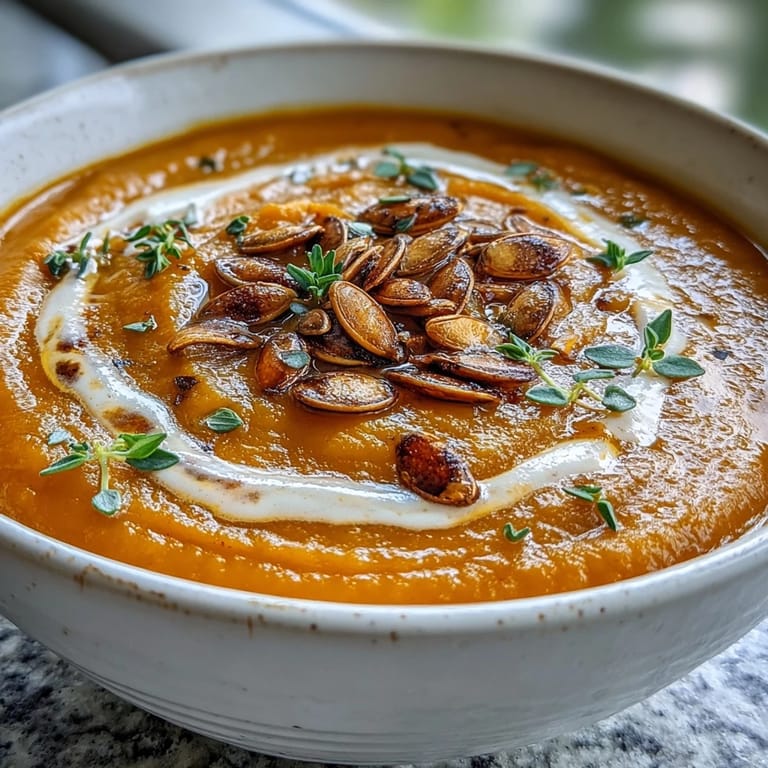
- Pour into bowls and top with a drizzle of cream or coconut milk, a scatter of toasted pumpkin seeds, and fresh thyme leaves. The warm soup meeting the cool cream creates this moment of perfect balance.
 Save
Save There's a quiet magic in watching someone taste something you made and see their shoulders relax. This soup does that—it tastes like comfort and nourishment without needing to be complicated. It's the kind of dish that reminds you why cooking matters.
Why Roasting Changes Everything
I used to simmer butternut squash directly in broth, and the soup was... fine. Then I tried roasting it, and suddenly the entire character shifted. Roasting caramelizes the natural sugars and adds depth that you simply can't get from boiling. The squash becomes sweeter, richer, more complex—less like watered-down vegetable and more like something you'd want to eat on purpose. It's an extra 30 minutes of oven time that's worth every second.
The Spice Balance That Makes It Special
Cinnamon and nutmeg could easily turn this into dessert soup if you're heavy-handed, so I learned to measure carefully and taste as I go. The cinnamon brings warmth and sweetness, while nutmeg adds a slightly earthy undertone that keeps things grounded. Together with just a touch of black pepper, they create this flavor complexity that people can't quite put their finger on—they just know it tastes right.
Make It Your Own
Once you've made this soup a few times, you'll find yourself tweaking it based on your mood and what's in your kitchen. Some days I add a pinch of cayenne for warmth and subtle heat, other times I skip it entirely. A drizzle of sage-brown butter on top instead of plain cream, or a handful of crispy bacon if you're not vegetarian—this recipe is flexible enough to change with you.
- For vegan: use only olive oil and swap the cream for coconut milk or a good plant-based alternative.
- For extra depth: try adding a pinch of smoked paprika or a splash of apple cider vinegar at the end.
- Leftovers actually taste better the next day once all the flavors have settled and gotten to know each other.
 Save
Save This soup has become my go-to when the weather turns cold and the days get shorter. It's simple enough for a weeknight but feels special enough to serve to people you care about.
Recipe Questions
- → Can I make this soup ahead of time?
Absolutely. This soup actually tastes better the next day as flavors have more time to meld. Store in an airtight container in the refrigerator for up to 4 days. Reheat gently on the stove, adding a splash of broth if needed.
- → How do I freeze butternut squash soup?
Let the soup cool completely, then transfer to freezer-safe containers or bags. Leave about an inch of space at the top as liquid expands when frozen. Freeze for up to 3 months. Thaw overnight in the refrigerator before reheating.
- → What can I serve with this soup?
Crusty bread, garlic knots, or dinner rolls make excellent sides. A simple green salad with vinaigrette balances the sweetness. Grilled cheese sandwiches pair beautifully for a more substantial meal.
- → Can I use frozen butternut squash?
Yes, frozen cubed squash works well. Thaw before roasting and pat dry with paper towels to remove excess moisture. Roasting time may be slightly shorter—check for tenderness after 15–20 minutes.
- → How do I make this soup vegan?
Simply omit the butter and use only olive oil for sautéing. Replace heavy cream with full-fat coconut milk, cashew cream, or simply leave it out. The soup remains deliciously creamy without dairy.
- → Why roast the squash instead of boiling it?
Roasting concentrates the natural sugars and creates caramelized edges, adding depth and sweetness that boiling cannot achieve. This extra step results in a more flavorful, complex soup worth the minimal effort.