 Save
Save One summer afternoon, I watched my neighbor pull a sheet of pineapple from her oven, golden and bubbling at the edges, and the smell that filled her kitchen was so intoxicating that I had to ask for the recipe on the spot. She laughed and said it was barely a recipe at all—just pineapple, honey, lime, and the magic of high heat. That day I learned that sometimes the simplest dishes are the ones that linger in your memory longest, not because they're complicated, but because they feel like edible sunshine.
I made this for my sister's book club last spring, and she kept asking me for the recipe, convinced there was some secret ingredient she was missing. What she didn't realize was that the "secret" was just letting the fruit do its thing—when pineapple gets hot and caramelizes, it transforms into something deeper and more complex than it ever is raw. Her friends literally fought over the last piece, and I've made it at least once a month since.
Ingredients
- Fresh pineapple (1 whole, peeled, cored, and cut into wedges): Look for one that's heavy for its size and fragrant at the base—that's how you know it's ripe and sweet. Don't skip coring it properly; those tough central bits are unpleasant to bite into.
- Honey (3 tablespoons): Use whatever honey you have on hand; the floral notes will carry through the glaze and add depth beyond just sweetness.
- Fresh lime juice (2 tablespoons): Squeeze it yourself if you can—bottled changes the flavor in ways that matter with something this simple.
- Lime zest (1 teaspoon): This tiny bit of zest carries so much bright flavor that it's worth taking 30 seconds to zest the lime before you juice it.
- Unsalted butter, melted (1 tablespoon): This helps the glaze coat evenly and adds a richness that keeps things from feeling too one-note sweet.
- Salt (a pinch): This isn't optional—it wakes up all the other flavors and makes the sweetness feel sophisticated instead of cloying.
- Unsweetened shredded coconut (1/3 cup): Don't buy the sweetened kind; you need the natural coconut flavor to shine, and you're adding enough sweetness with the glaze anyway.
Tired of Takeout? 🥡
Get 10 meals you can make faster than delivery arrives. Seriously.
One email. No spam. Unsubscribe anytime.
Instructions
- Set your oven hot and ready:
- Preheat to 425°F and line your baking sheet with parchment paper—this prevents sticking and makes cleanup effortless. You want the oven singing and ready to go before the pineapple even touches the pan.
- Arrange your pineapple:
- Lay the wedges in a single layer with a little space between each piece so the heat can kiss all sides. Crowding the pan means steaming instead of roasting, and you want that caramelized, golden exterior.
- Make your glaze:
- Whisk together the honey, lime juice, zest, melted butter, and salt in a small bowl until it feels cohesive and glossy. Take a second to smell this mixture—you'll notice how the lime brightens the honey in a way that feels almost magical before anything even hits the oven.
- Coat the pineapple:
- Use a pastry brush to generously coat each wedge with the glaze, making sure it pools in the little crevices. You'll be amazed how this thin liquid transforms into something thick and syrupy as it roasts.
- Roast until golden:
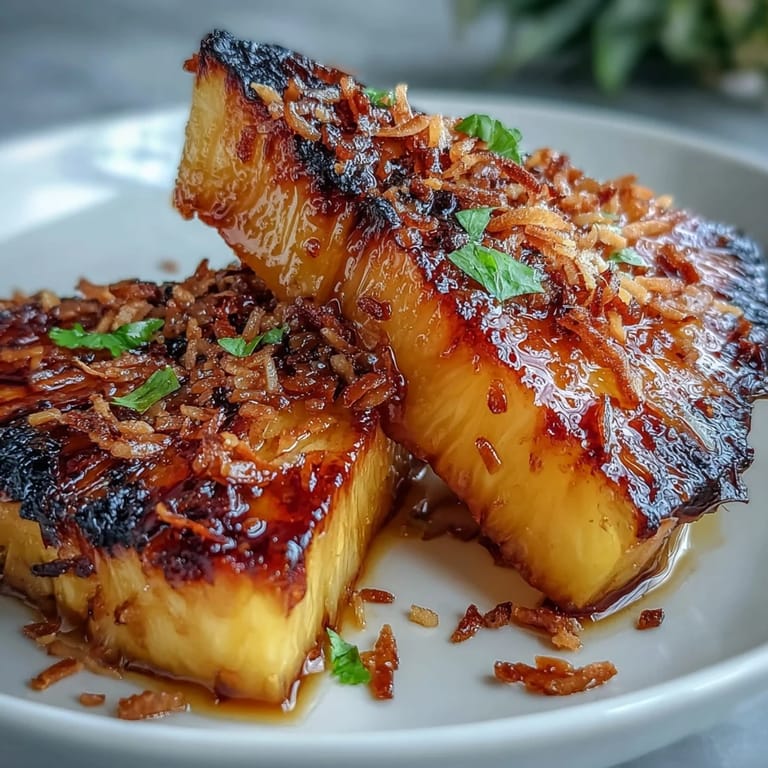
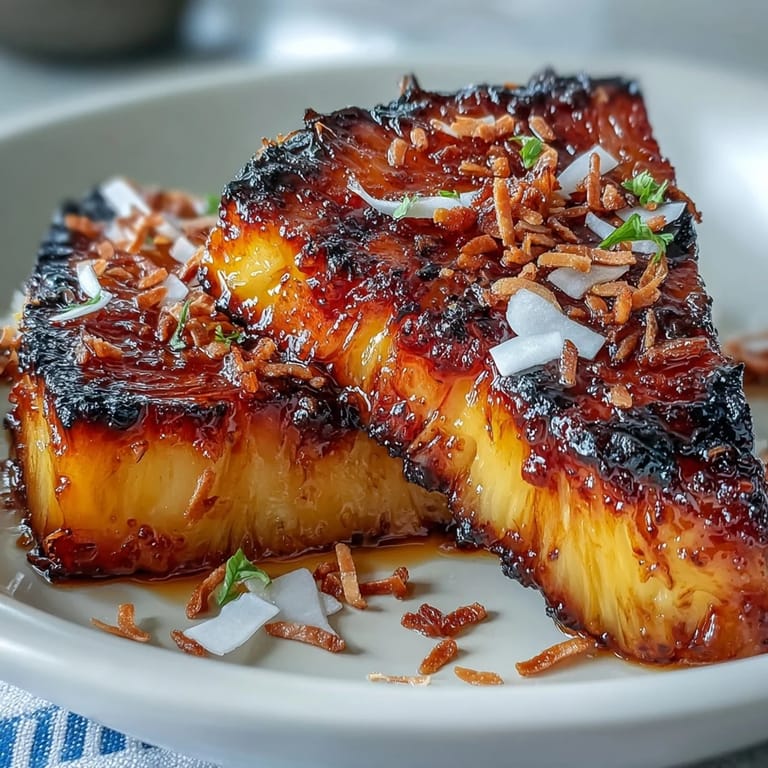
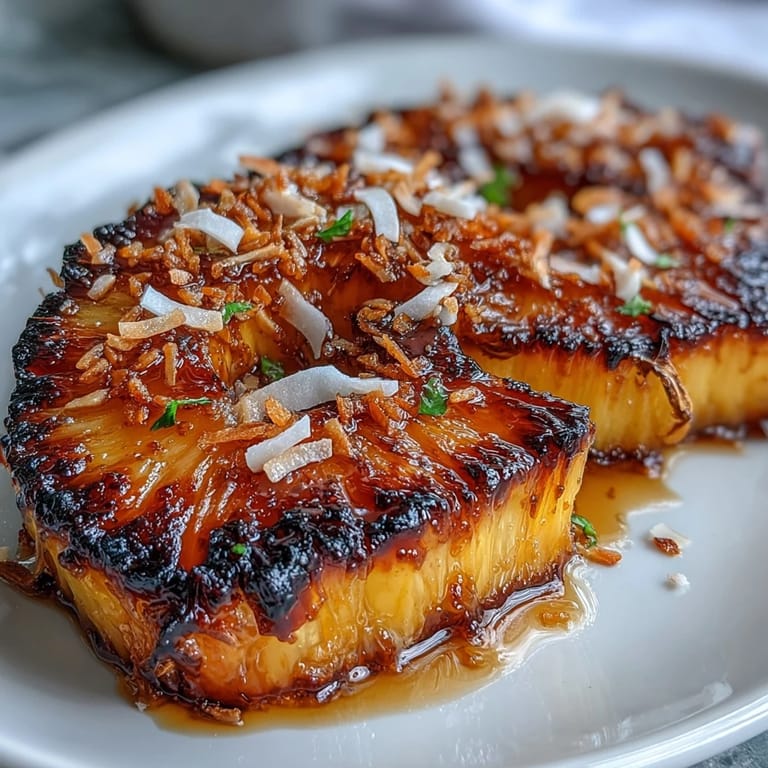
- Slide the sheet into your hot oven and set a timer for about nine minutes, then flip the wedges and roast for another nine to eleven minutes. You're looking for caramelized edges that look almost brown and a pineapple interior that's soft and juicy.
- Toast the coconut while the fruit roasts:
- Pour the shredded coconut into a dry skillet over medium heat and stir constantly—this takes only two to three minutes, but it's the difference between raw coconut and that toasty, deeply fragrant version that makes people close their eyes when they bite into it. The moment it turns golden, move it to a plate or it'll burn.
- Bring it all together:
- Arrange the warm roasted pineapple on a serving platter, scatter the toasted coconut over the top, and serve while still warm so the glaze is soft and the coconut is still slightly warm and aromatic.
 Save
Save There's a moment when you pull this out of the oven and the kitchen fills with that honey-lime-caramelized pineapple smell, and you realize you've created something that tastes like vacation but took barely any effort. That's when this dish stops being just dessert and becomes the thing people ask you to bring to dinners.
How to Pick the Perfect Pineapple
The best pineapples feel heavy and dense when you hold them, and they smell sweet at the base without being overwhelming. Color isn't everything—a slightly greenish pineapple can be just as ripe as a golden one, so trust your nose and your hand more than your eyes. If you press gently on the body and it gives just slightly, you've got a ripe fruit ready for the oven.
Why Heat Changes Everything
Roasting pineapple breaks down its natural sugars and intensifies them, concentrating all the tropical flavor into something that tastes more like itself than it ever does raw. The high heat also creates those beautiful caramelized edges that add depth and a hint of bitterness that balances the sweetness perfectly. It's the same reason caramelized anything tastes better than plain—heat is a flavor amplifier.
Serving and Variations
This dessert is lovely on its own, but it also plays beautifully with other things if you want to expand it. Vanilla ice cream melting over warm roasted pineapple is classic for a reason, and Greek yogurt adds a tangy richness that feels lighter. If you're feeling adventurous, a pinch of chili powder scattered with the coconut adds a subtle heat that makes people pause and ask what you've done differently.
- For a vegan version, swap the butter for coconut oil and use maple syrup instead of honey for the same warm sweetness.
- Try serving this at room temperature the next day with breakfast yogurt for a completely different dessert experience.
- Leftover roasted pineapple works beautifully in smoothies or chopped over oatmeal if you somehow have any left over.
 Save
Save This recipe proved to me that some of the most memorable food moments come from the simplest combinations—when you respect each ingredient and let them do what they're meant to do. Once you make this once, it becomes the thing you reach for whenever you want something that feels special without feeling stressful.
Recipe Questions
- → What is the best pineapple to use?
Choose a ripe but firm fresh pineapple for optimal sweetness and texture during roasting.
- → Can I prepare the honey-lime glaze in advance?
Yes, the glaze can be whisked together ahead and brushed onto the pineapple right before roasting.
- → How do I toast shredded coconut evenly?
Toast shredded coconut in a dry skillet over medium heat, stirring frequently until golden and fragrant.
- → What variations can enhance the flavor?
Adding chili powder to the glaze or serving with vanilla ice cream brings spicy or creamy contrasts.
- → What dairy alternatives work well?
Use coconut oil or plant-based butter instead of unsalted butter for a dairy-free option.