 Save
Save My coworker Sarah brought leftovers to the office one Tuesday that smelled absolutely incredible—creamy, savory, with this mysterious spicy sweetness I couldn't place. Turns out she'd been experimenting with Korean flavors in her mac and cheese, and one bite completely changed how I thought about comfort food. That night I called her for the recipe, but she admitted she'd winged most of it, so I spent the next weekend reverse-engineering what made it so addictive. What started as curiosity became my go-to weeknight dinner, the kind of dish that makes people ask for seconds before they've even finished their first bite.
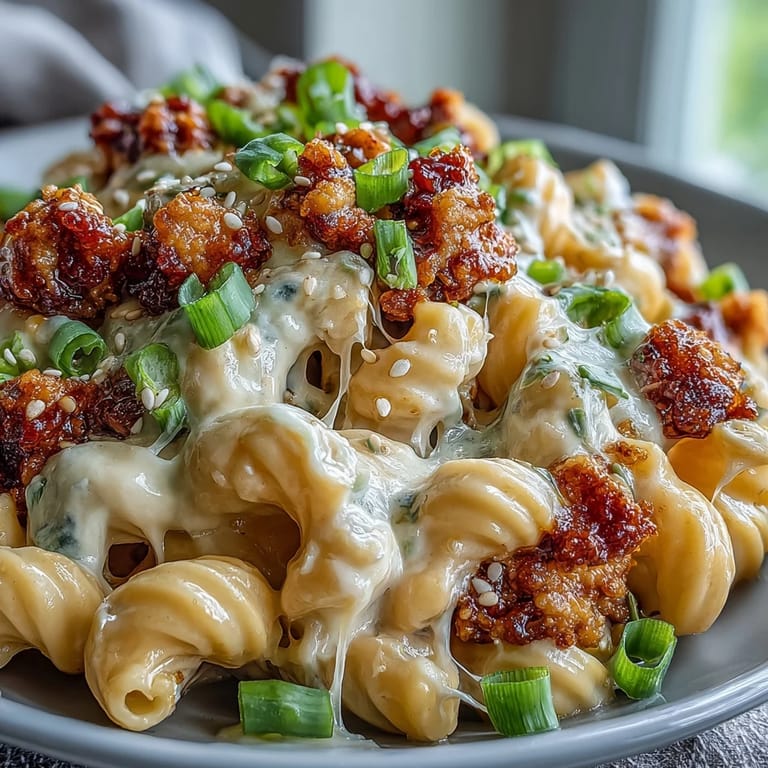
I made this for my sister's casual dinner party where everyone was supposed to bring something simple, and I almost didn't because it felt too experimental. But watching people's faces when they tasted that first forkful of creamy cheese mixed with gochujang-spiked turkey—that moment when someone says 'wait, what is this?'—reminded me why I love cooking for people. She's asked me to make it every time she hosts now, and honestly, I'm not mad about it.
Ingredients
- Elbow macaroni (300 g): The classic choice because the ridges actually hold the cheese sauce and turkey crumbles better than you'd think, making every bite intentional.
- Unsalted butter (2 tbsp): You want butter without salt so you control the seasoning; salted butter can sneak up on you when you're already adding soy sauce.
- All-purpose flour (2 tbsp): This is your thickener for the roux, the foundation that keeps everything creamy instead of soupy or broken.
- Whole milk (500 ml): Don't skip full-fat here—it's what makes the sauce taste rich and luxurious instead of thin.
- Sharp cheddar cheese (150 g) and mozzarella (60 g): The cheddar brings that bold, slightly tangy flavor while mozzarella adds stretch and creaminess without overpowering.
- Dijon mustard (1 tsp): A tiny amount adds depth and keeps the cheese sauce from tasting one-dimensional.
- Ground turkey (400 g): Leaner than beef but still flavorful enough to carry the Korean seasonings; it won't feel heavy or greasy.
- Gochujang (2 tbsp): This Korean chili paste is the soul of the topping—fermented, complex, spicy, and slightly sweet all at once.
- Ginger and garlic: Fresh versions matter here because they brighten the turkey and balance the richness of the cheese.
- Soy sauce, honey, rice vinegar, and sesame oil: Together these create that glossy, perfectly balanced sauce that makes people wonder what's in it.
- Scallions and sesame seeds: The garnish is where you get that final pop of freshness and nuttiness that ties everything together.
Tired of Takeout? 🥡
Get 10 meals you can make faster than delivery arrives. Seriously.
One email. No spam. Unsubscribe anytime.
Instructions
- Get your pasta cooking:
- Boil a large pot of salted water and cook the macaroni until just al dente—you want it to still have a tiny bit of resistance when you bite it, because it'll continue cooking slightly when you mix it with the hot cheese sauce. Drain it thoroughly but don't rinse it, since a light starch coating actually helps the sauce cling better.
- Build the Korean turkey magic:
- Heat oil in a skillet over medium-high heat and cook ground turkey, breaking it apart with a spoon as it browns, until there's no pink left. This takes about five minutes and the smell alone will have you wondering why you haven't made this before.
- Infuse with aromatics:
- Add minced garlic and grated ginger to the cooked turkey and let it sizzle for about a minute until your kitchen smells like a Korean restaurant. Don't skip this step or rush it—those aromatics are essential.
- Create the sweet-spicy sauce:
- Stir in the gochujang, soy sauce, honey, rice vinegar, and sesame oil, and let it simmer for two to three minutes until everything melds together into something glossy and complex-tasting. Taste it now—this is your moment to add more gochujang if you want more heat, or a touch more honey if you prefer it less aggressive.
- Make the cheese sauce base:
- In a separate saucepan, melt butter over medium heat and whisk in flour to create a roux, cooking it for a minute so the raw flour taste disappears. This paste is what transforms regular milk into proper sauce.
- Build the creamy foundation:
- Slowly whisk in milk while stirring constantly, and keep going for three to four minutes until you see the mixture thicken noticeably and coat the back of a spoon. If you rush this or stop stirring, lumps will form, so take your time here.
- Melt in the cheese and seasonings:
- Remove the pan from heat and stir in the shredded cheeses, Dijon mustard, salt, and pepper until completely smooth and creamy. The residual heat will melt the cheese perfectly without any risk of it becoming grainy.
- Marry everything together:
- Pour the cheese sauce over your drained pasta and mix gently but thoroughly so every noodle gets coated. This is the moment where it goes from components to actual dish.
- Plate and top:
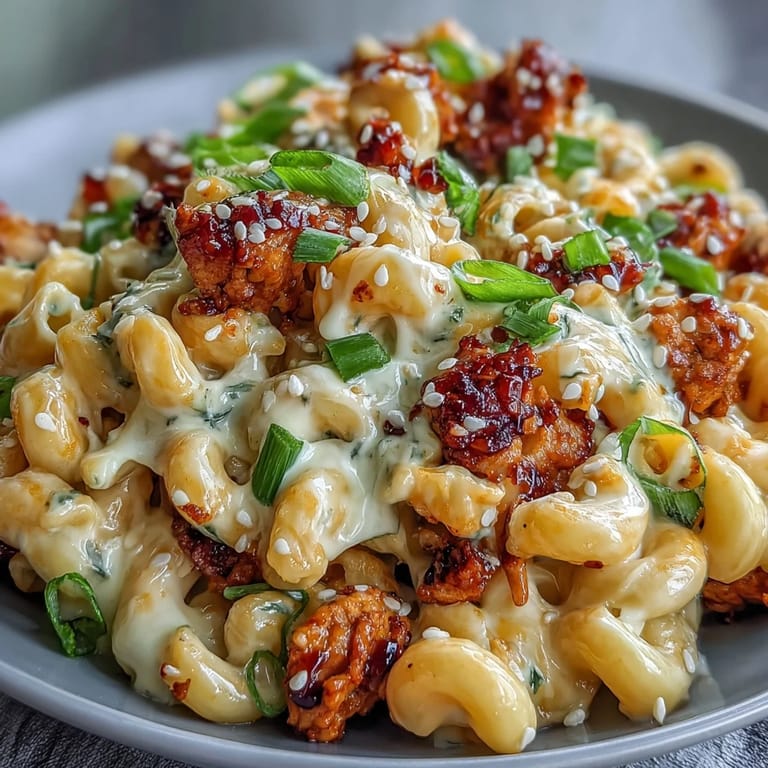
- Divide the creamy mac and cheese among bowls and crown each serving with a generous spoonful of the Korean turkey crumbles, letting some of the glossy sauce from the turkey pool around the top. Finish with a scatter of fresh scallions and sesame seeds if you have them.
 Save
Save There's something about this dish that stops conversations at the dinner table in a good way, where people pause and actually taste what's in front of them instead of just eating. The first time my neighbor had it, he told me it made him feel adventurous even though he was sitting in his own kitchen, and somehow that perfectly describes what this fusion is meant to do.
Why This Fusion Works
Mac and cheese is pure comfort—it's what you reach for when you want to feel taken care of. Korean flavors bring complexity and that umami depth that makes food memorable instead of just filling. By layering the spicy-sweet-savory turkey on top rather than mixing it in, you get moments where the flavors hit separately, creating a more interesting eating experience. The cheese sauce acts as a neutral canvas that lets the Korean seasonings shine without competing, and the rice vinegar cuts through the richness so you don't feel weighed down.
Timing and Make-Ahead Options
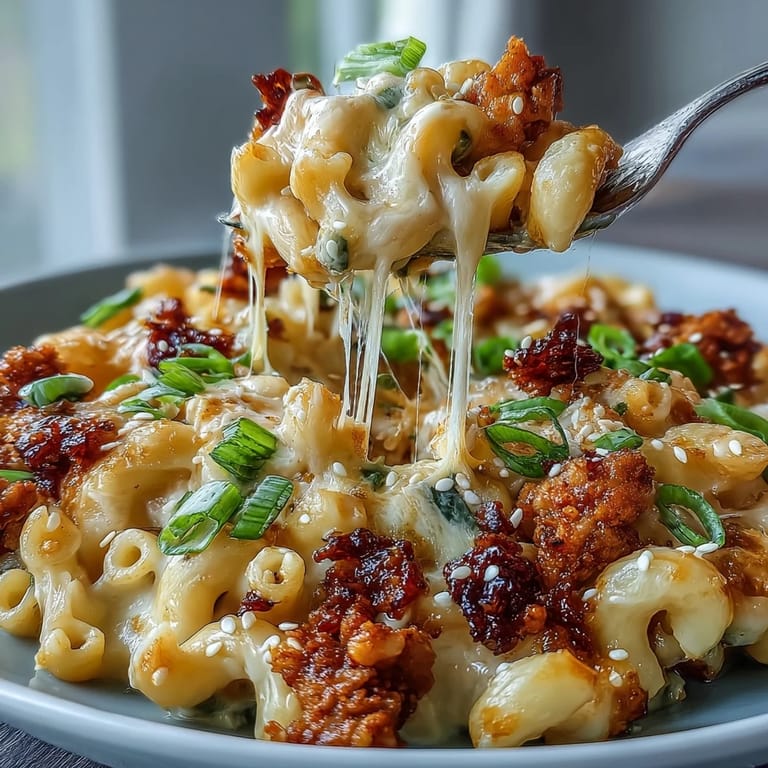
The entire dish takes fifty minutes from start to finish, which sounds like a lot until you realize you're mostly just waiting for water to boil and sauce to thicken. You can actually make the turkey topping several hours ahead and reheat it gently before serving, which means you could do the pasta and cheese sauce when people are about to eat and everything comes together fresh. The mac and cheese itself is best eaten immediately after combining, but you can keep it warm in a covered pot for maybe fifteen minutes without it getting weird.
Customization and Variations
This recipe is flexible enough to bend to what you have on hand or what you're craving that day. Ground chicken works beautifully in place of turkey if that's what's in your freezer, and beef would give you a richer, deeper flavor if you're in the mood for something heavier. If you want this vegetarian, crumbled tofu or even finely chopped mushrooms can stand in for the meat and still carry the Korean seasonings well. For extra heat, sprinkle some gochugaru (Korean chili flakes) into the turkey while it's cooking, and if sesame isn't your thing, a handful of panko breadcrumbs would add nice texture instead.
- Try it with a drizzle of extra sesame oil right before serving for an additional layer of nuttiness.
- Add a fried egg on top if you're making this for breakfast or a late-night snack—the yolk becomes sauce.
- Keep the components warm separately and plate it fresh for the best flavor and texture contrast.
 Save
Save This dish has a way of making people feel welcomed and cared for without requiring you to spend your entire evening in the kitchen. There's real comfort in food that bridges cultures and lets different flavor families play nicely together on one plate.
Recipe Questions
- → What does gochujang taste like?
Gochujang is a fermented Korean chili paste with a complex flavor profile. It's savory, slightly sweet, and moderately spicy with deep umami notes from fermentation.
- → Can I make this ahead of time?
The cheese sauce and Korean turkey can be prepared separately up to 2 days in advance. Reheat gently before combining with freshly cooked pasta for the best texture.
- → Is this dish very spicy?
The heat level is medium—gochujang provides a gentle warmth rather than overwhelming spice. You can adjust by adding more or less paste, or include gochugaru for extra kick.
- → What cheese works best?
Sharp cheddar provides bold flavor while mozzarella adds creaminess and excellent melt. You can substitute gruyère or fontina for a more sophisticated twist.
- → Can I use other proteins?
Ground chicken, beef, or pork all work beautifully with the Korean glaze. For a vegetarian version, use crumbled tofu or meat substitute.
- → How do I store leftovers?
Store in an airtight container in the refrigerator for up to 3 days. Reheat with a splash of milk to restore creaminess to the cheese sauce.