 Save
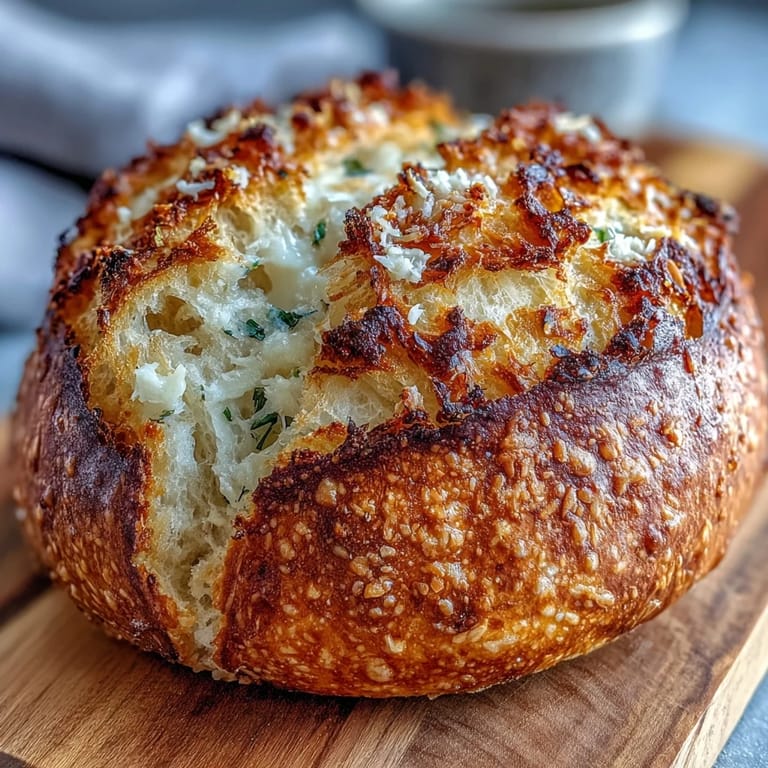
Save Imagine the aroma of roasted garlic and melting Parmesan cheese filling your home as this artisan loaf bakes to perfection. This Perfect Parmesan Garlic Artisan Bread is the ultimate rustic treat, boasting a golden, crackly crust and a soft, airy crumb packed with savory flavor. It is surprisingly simple to make, requiring no kneading—just a few basic pantry staples and the magic of a slow, overnight rise to bring bakery-quality results to your kitchen.
Save Whether you are a seasoned baker or a beginner, this recipe offers a foolproof way to create a stunning loaf. The long, 12–18 hour fermentation allows the flavors to deepen and the gluten to develop naturally, resulting in a tender, cheesy crumb that rivals your favorite local bakery. All you need is a Dutch oven and a little patience to transform simple flour and water into a culinary masterpiece.
Ingredients
Tired of Takeout? 🥡
Get 10 meals you can make faster than delivery arrives. Seriously.
One email. No spam. Unsubscribe anytime.
- Dough: 3 1/4 cups (390 g) all-purpose flour, 2 teaspoons (10 g) salt, 1 teaspoon (5 g) granulated sugar, 2 teaspoons (7 g) active dry yeast, 1 1/2 cups (360 ml) warm water (about 110°F/43°C), 2 tablespoons (30 ml) olive oil.
- Add-ins: 1 cup (100 g) freshly grated Parmesan cheese, 2–3 cloves garlic, minced, 1 tablespoon (15 g) chopped fresh rosemary or parsley (optional).
Instructions
- 1. Activate Yeast
- In a small bowl, dissolve the yeast in the warm water. Let stand for 5 minutes until foamy.
- 2. Mix Dough
- In a large mixing bowl, combine the flour, salt, and sugar. Pour the yeast mixture and olive oil into the dry ingredients and mix with a wooden spoon until a sticky dough forms.
- 3. Add Flavors
- Fold in the Parmesan cheese, minced garlic, and optional herbs. Stir until evenly incorporated.
- 4. Long Rise
- Cover the bowl with a clean towel or plastic wrap. Let rise in a warm place for 12–18 hours, or overnight, until doubled and bubbly.
- 5. Shape
- Turn the risen dough onto a floured surface. Gently shape into a round loaf, handling lightly to retain airiness. Place on parchment paper and let rest for 30 minutes.
- 6. Preheat
- Preheat your oven to 450°F (230°C), placing a Dutch oven inside to heat.
- 7. Score and Bake
- Score the top of the loaf with a sharp knife. Using oven mitts, carefully transfer the dough (with parchment) into the hot Dutch oven. Cover and bake for 30 minutes.
- 8. Final Crisp
- Remove the lid and bake for another 15 minutes, until golden and the loaf sounds hollow when tapped.
- 9. Cool
- Transfer to a wire rack and cool for at least 30 minutes before slicing.
Zusatztipps für die Zubereitung
Do not rush the rise; an overnight ferment develops better flavor and texture. Since sticky dough yields a softer, airier crumb, you should avoid adding excess flour during the mixing or shaping phases. Always ensure your Dutch oven is thoroughly preheated for a crisp, professional-style crust.
Varianten und Anpassungen
Feel free to experiment with different cheeses like Asiago, sharp white Cheddar, or Gruyère. You can also swap the herbs for dried thyme or oregano, or add a pinch of red pepper flakes to the dough for a subtle spicy kick that complements the garlic and Parmesan.
Serviervorschläge
Serve this artisan bread warm with a side of salted butter or high-quality olive oil for dipping. It is an exceptional side dish for tomato-based soups, creamy pastas, or a fresh Caesar salad. Leftovers can be toasted for sandwiches or turned into flavorful homemade croutons.
 Save
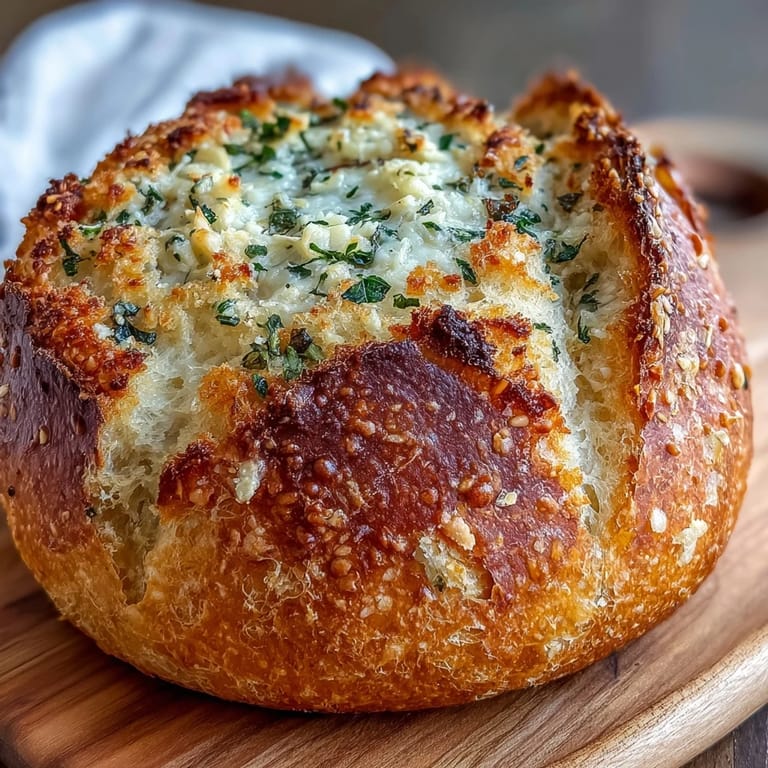
Save This Perfect Parmesan Garlic Artisan Bread is more than just a side—it is the star of the table. With its rustic appearance and gourmet flavor profile, it brings the warmth of traditional European baking straight to your kitchen. Enjoy the rewarding process of slow-fermenting and baking, and savor the delicious results with your family and friends.
Recipe Questions
- → Can I reduce the rising time?
While tempting, the long rise is essential for flavor development and texture. The yeast needs time to ferment, creating those signature air pockets and subtle sour notes. You can let it rise up to 24 hours, but anything less than 12 will compromise the final result.
- → What if I don't have a Dutch oven?
A heavy cast-iron pot with a tight-fitting lid works perfectly. Alternatively, place a baking sheet on the lowest rack and add boiling water to create steam. The moisture is crucial for achieving that crackling, golden crust.
- → Can I use pre-grated Parmesan?
Freshly grated Parmesan melts beautifully and distributes evenly. Pre-grated cheese contains anti-caking agents that prevent proper melting and can create dry spots. Invest in a good block and grate it yourself for superior results.
- → Why is my dough so sticky?
Sticky dough is actually desirable—it yields a softer, airier crumb. Resist adding extra flour, which will make the final loaf dense. The Dutch oven baking method handles high-hydration dough beautifully, so embrace the stickiness.
- → Can I freeze this loaf?
Absolutely. Once completely cooled, wrap tightly in plastic and freeze for up to 3 months. Thaw at room temperature, then refresh in a 350°F oven for 10 minutes to restore the crispy crust. Slice before freezing for convenient individual portions.
- → What other cheeses work well?
Asiago offers a sharper bite, while Gruyère adds nutty sweetness. Aged cheddar creates bold flavor, though it melts differently. For a Mediterranean twist, try crumbled feta or shredded mozzarella with fresh basil instead of rosemary.