 Save
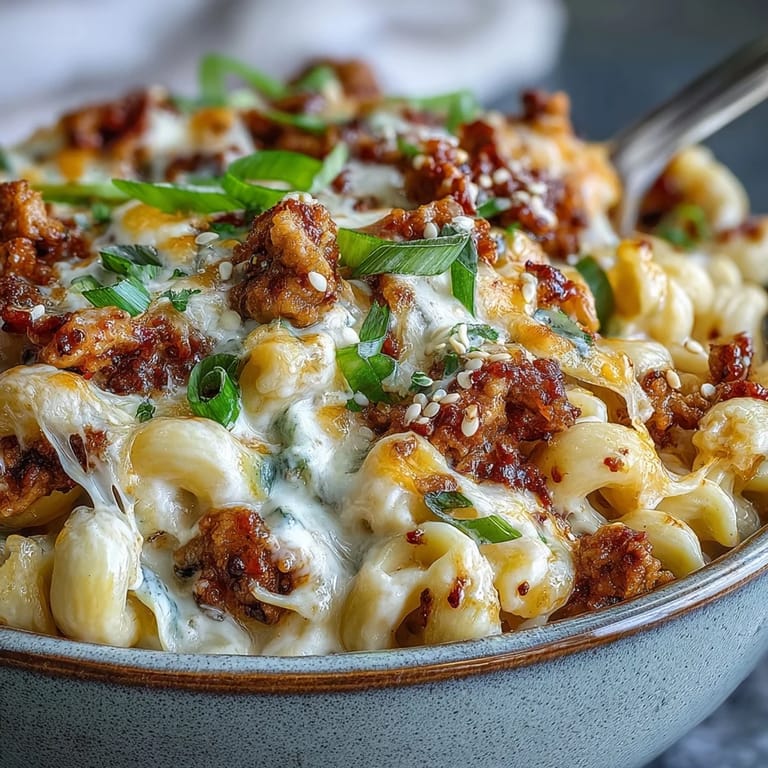
Save My friend Sarah texted me one Tuesday evening asking if I could help her use up some ground turkey before it went bad. She had this wild idea of adding gochujang to mac and cheese, inspired by a Korean restaurant we'd gone to the week before. I was skeptical at first—mac and cheese felt like sacred comfort food territory—but something about the combination intrigued me. Two hours later, we were both sitting at her kitchen counter with bowls of the creamiest, most unexpectedly delicious fusion dish, wondering why we'd never thought to do this sooner.
I made this for my family last month, and my dad—who is notoriously picky about his mac and cheese—ate two huge servings without a word of complaint. My mom kept asking for the recipe before she'd even finished her first bowl. That's when I knew this wasn't just a fun experiment; it was something worth making again and again.
Ingredients
- Elbow macaroni (12 oz): The classic pasta shape holds onto sauce beautifully, and this amount gives you enough substance without being overwhelming.
- Whole milk (2 cups): Don't skimp here—whole milk creates that silky sauce you're craving, and lower-fat versions can feel thin and disappointing.
- Unsalted butter (2 tbsp): This is your base for the roux, so use real butter and not a substitute.
- All-purpose flour (2 tbsp): The thickening agent that transforms milk into a proper sauce without lumps.
- Sharp cheddar cheese (1.5 cups): Sharp cheddar has personality and stands up to the boldness of the Korean flavors without disappearing.
- Mozzarella cheese (0.5 cup): This softens the sharpness and adds a lovely creamy texture that cheddar alone can't achieve.
- Gochujang (2 tbsp): This fermented Korean chili paste is the star—complex, slightly sweet, with a heat that builds slowly rather than shocking your palate.
- Low-sodium soy sauce (1 tbsp): Use low-sodium so you can control the saltiness since the cheeses are already salty.
- Honey (1 tbsp): A touch of sweetness that balances the spice and adds depth to the turkey coating.
- Toasted sesame oil (2 tsp): This isn't cooking oil—it's a flavor booster that smells incredible and adds an earthy, nutty quality.
- Garlic and ginger: These aromatics are what make your kitchen smell like a Korean restaurant in the best possible way.
- Scallions (4 fresh): The bright, fresh finish that cuts through all that richness and makes the dish feel alive.
Tired of Takeout? 🥡
Get 10 meals you can make faster than delivery arrives. Seriously.
One email. No spam. Unsubscribe anytime.
Instructions
- Cook the pasta until just tender:
- Bring a large pot of salted water to a rolling boil—salt it like sea water so the pasta actually tastes like something. Follow the package instructions but aim for al dente rather than soft, since the pasta will continue cooking slightly when combined with the hot cheese sauce.
- Build your cheese sauce from a roux:
- Melt butter over medium heat, then whisk in flour to create a paste that smells nutty and toasted. This roux is your friend—it's what prevents lumps and creates a silky, cling-to-the-pasta sauce.
- Add milk slowly while whisking:
- Pour gradually while whisking constantly, watching as the mixture transforms from thick and paste-like into something smooth and pourable. This step takes about 3 to 4 minutes and feels magical once you see it come together.
- Melt the cheeses into submission:
- Lower the heat to medium-low and stir in both cheeses, letting them dissolve completely into the warm sauce. Season with salt and pepper, tasting as you go because cheese saltiness varies.
- Build the Korean turkey layer:
- Heat sesame oil in a separate skillet, then sauté minced garlic and ginger for about a minute until the fragrance fills your kitchen. Add ground turkey and use a wooden spoon to break it into small, even crumbles as it cooks through.
- Coat the turkey with gochujang sauce:
- Once the turkey is cooked through, stir in gochujang, soy sauce, and honey, letting everything cook together for 2 to 3 minutes so the flavors marry. The sauce should coat each piece, and you'll notice the color shift to a deeper, richer tone.
- Combine pasta with sauce:
- Toss the drained pasta with the warm cheese sauce, stirring until every noodle is coated. Then gently fold in half the turkey mixture, preserving some texture in the meat.
- Serve with toppings:
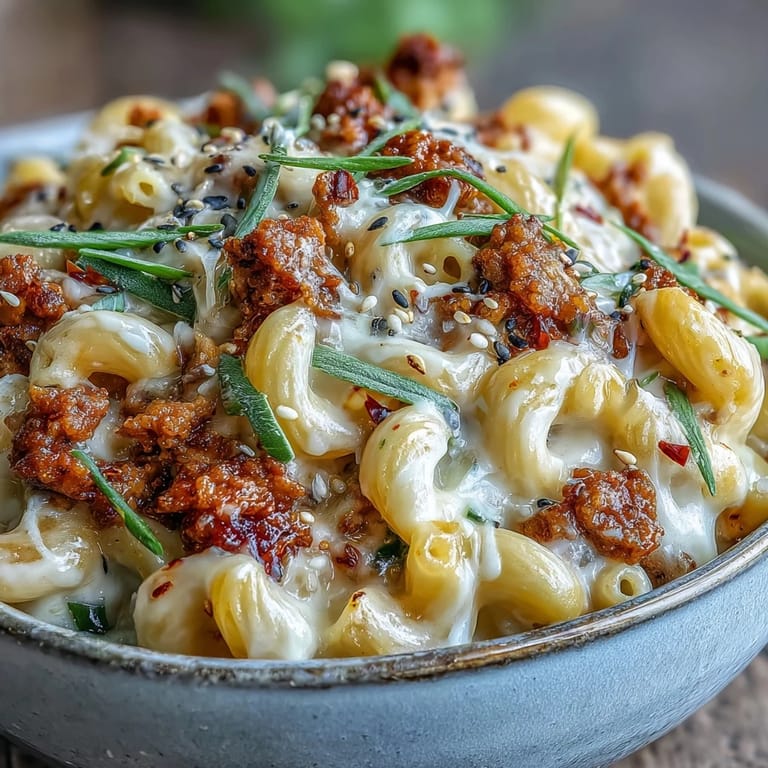
- Divide into bowls and top with the remaining turkey crumbles, fresh scallions, and sesame seeds if you have them. The contrast between hot and creamy on the bottom and fresh and crunchy on top is what makes this dish sing.
 Save
Save There's something special about watching someone taste this for the first time and see their face shift from curiosity to genuine delight. It's not just that the flavors work together—it's that they make each other better, like they were always supposed to be on the same plate.
Why This Fusion Works
At first glance, Korean-inspired turkey and creamy mac and cheese seem like they're from different worlds. But think about it: both are about coating, richness, and big flavors. The gochujang brings heat and umami that cuts through dairy richness in exactly the way you need, while the creaminess of the cheese sauce keeps the spice from becoming aggressive. It's the kind of combination that feels intuitive once you taste it, even if it sounds unusual on paper.
Make It Your Own
This recipe is flexible enough to adapt to what you have on hand or what you're craving. Some nights I add sautéed bell peppers or steamed broccoli for vegetables. Other times I use ground chicken instead of turkey if that's what's in the fridge. The formula stays the same: creamy sauce, seasoned protein, fresh scallion finish.
Serving and Storage Tips
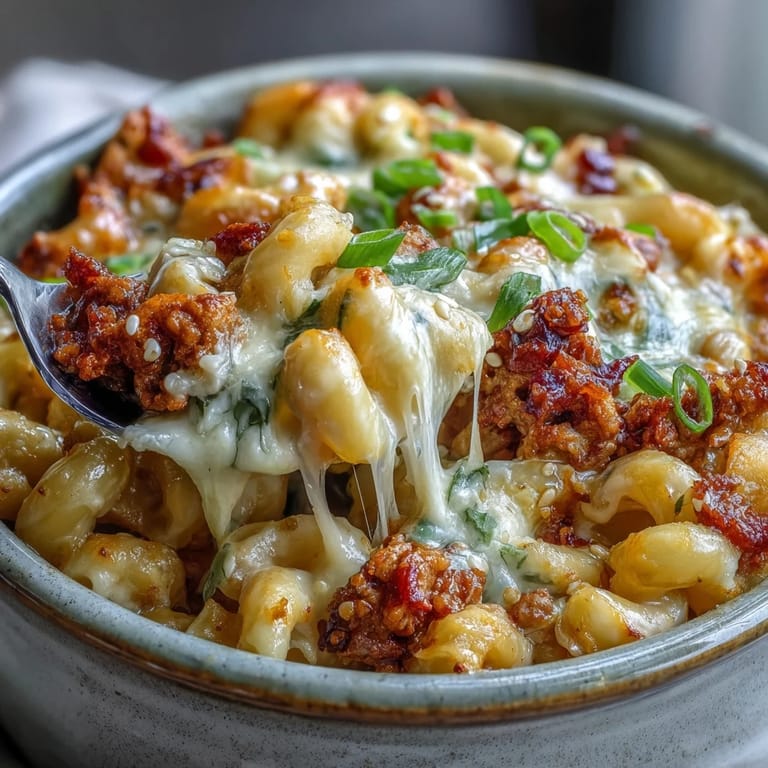
Serve this immediately while the pasta still has some tooth and the cheese sauce coats everything beautifully. Leftovers can be refrigerated for up to three days, though the texture changes slightly when reheated. To refresh leftovers, warm gently on the stovetop with a splash of milk to restore creaminess rather than microwaving, which tends to make the sauce break.
- Add an extra splash of milk when reheating to keep the sauce from tightening up as it cools.
- If you're feeding a crowd, you can double this recipe without any issues—just give yourself extra time for cooking the turkey evenly.
- A crisp lager or even a lightly chilled rosé pairs beautifully with the richness and spice of this dish.
 Save
Save This dish reminds me that some of the best food moments happen when you're willing to blend traditions instead of keeping them separate. It's become a regular in my rotation, and I keep making it because it never disappoints.
Recipe Questions
- → Can I make the turkey mixture less spicy?
Absolutely. Reduce the gochujang to 1 tablespoon and omit the red pepper flakes. The honey helps balance the heat, so you can also increase it slightly for a milder flavor profile.
- → What can I substitute for gochujang?
Sriracha mixed with a teaspoon of miso paste works well. Alternatively, use a Korean chili flake paste (gochugaru) combined with a small amount of soy sauce and sugar to mimic the fermented depth.
- → Can I prepare this ahead of time?
The components can be made separately up to 2 days in advance. Store the cheese sauce and turkey crumbles in airtight containers. Reheat gently with a splash of milk before combining with freshly cooked pasta.
- → Is there a way to add more vegetables?
Stir in steamed broccoli, sautéed bell peppers, or spinach into the cheese sauce. You can also mix finely chopped carrots or zucchini into the turkey while it cooks for extra nutrition.
- → What type of cheese works best?
Sharp cheddar provides bold flavor while mozzarella creates that signature stretch. For a more complex taste, try adding smoked gouda or gruyère. Just avoid pre-shredded cheese, as anti-caking agents can make the sauce grainy.
- → Can I use a different protein?
Ground chicken, turkey, or even crumbled tofu work beautifully with the Korean glaze. Adjust cooking time accordingly—lean meats may cook faster, while tofu only needs 3-4 minutes to absorb the flavors.