 Save
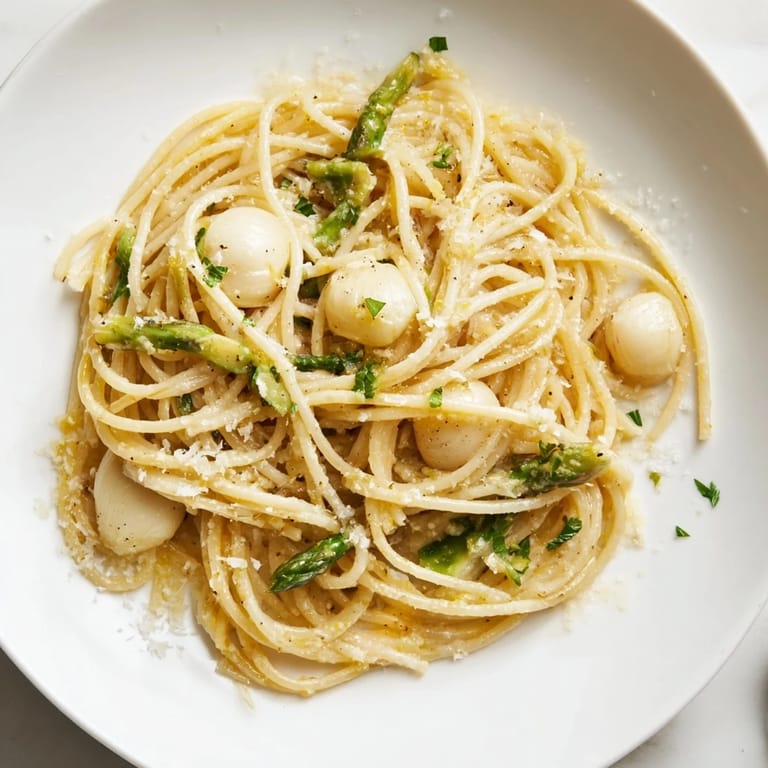
Save My kitchen window was wide open the first week of May, and I stood there breaking asparagus spears by hand, listening to the birds argue in the magnolia tree. I had a head of garlic wrapped in foil already warming in the oven, filling the room with that slow, sweet smell that makes you forget you ever bought the jarred stuff. This pasta came together on a Tuesday when I had nothing planned and everything felt possible. The garlic roasted until it was soft as butter, the asparagus turned tender and bright, and the spaghetti tied it all together with just oil, cheese, and a little lemon. It was the kind of meal that reminded me why spring matters.
I made this for my sister the night she came over to help me hang curtains, and we ended up eating it straight from the skillet on the counter because we were too tired to set the table. She kept fishing out the garlic cloves and spreading them on the pasta like little pockets of flavor. We drank too much wine, laughed about the crooked curtain rod, and she asked for the recipe before she left. That was two years ago, and she still texts me every spring when asparagus goes on sale.
Ingredients
- Garlic head: Roasting a whole head transforms it into something completely different, soft and caramelized with none of the sharpness, and you can squeeze the cloves right out of their skins like toothpaste.
- Fresh asparagus: Look for firm stalks with tight tips, and dont worry too much about thickness, just snap off the woody ends where they naturally break.
- Spaghetti: Any long pasta works here, but spaghetti has just the right surface area to grab onto the garlicky oil without feeling heavy.
- Extra virgin olive oil: This is where you use the good stuff, the oil you keep on the counter, because its not just cooking fat here, its the actual sauce.
- Parmesan cheese: Freshly grated makes all the difference, it melts into the hot pasta and clings to every strand instead of sitting on top like dust.
- Lemon zest: Just the yellow part, not the white pith, and it adds a brightness that keeps the dish from feeling too rich or one note.
- Fresh parsley: I used to skip this, but the green herby flavor actually matters, it wakes everything up right before serving.
- Red pepper flakes: Optional, but a small pinch gives you just enough heat to notice without making it spicy.
Tired of Takeout? 🥡
Get 10 meals you can make faster than delivery arrives. Seriously.
One email. No spam. Unsubscribe anytime.
Instructions
- Roast the garlic:
- Slice off the very top of the garlic head so the cloves peek out, drizzle it with olive oil, wrap it snugly in foil, and let it roast at 400°F for 30 minutes until the cloves turn golden and soft enough to spread. The smell will make you want to roast garlic every single day.
- Roast the asparagus:
- About 15 minutes into the garlic roasting time, toss your asparagus pieces on a baking sheet with olive oil, salt, and pepper, then slide them into the same oven for 12 to 15 minutes until theyre tender but still have a little snap. Dont let them go mushy or sad.
- Cook the pasta:
- Bring a big pot of water to a rolling boil, salt it like the sea, and cook your spaghetti until its al dente with just a little bite in the center. Before you drain it, scoop out half a cup of that starchy pasta water, it will save your sauce later.
- Prep the roasted garlic:
- Once the garlic is cool enough to handle, squeeze the cloves out of their skins into a small bowl and mash them gently with a fork. Theyll turn into a sweet, spreadable paste that smells like heaven.
- Build the sauce:
- Heat a quarter cup of olive oil in a large skillet over medium heat, add the mashed garlic, and let it sizzle gently for a minute or two until the kitchen smells like an Italian grandmothers house. Dont let it brown or itll turn bitter.
- Toss it all together:
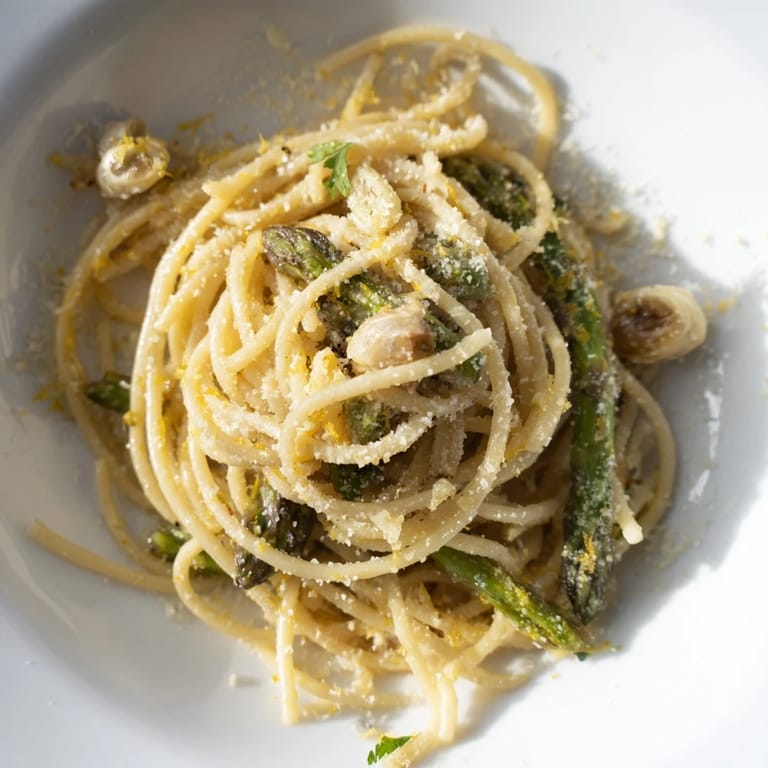
- Add the roasted asparagus and drained spaghetti to the skillet, toss everything with tongs, and splash in some of that reserved pasta water a little at a time until the sauce turns silky and clings to the noodles. It should look glossy, not dry.
- Finish and serve:
- Stir in the Parmesan, lemon zest, parsley, and red pepper flakes if youre using them, then taste and adjust the salt and pepper. Serve it right away with extra cheese on the side and maybe another drizzle of olive oil if youre feeling generous.
 Save
Save The last time I made this, my neighbor knocked on the door right as I was tossing the pasta, and I invited him in without thinking. He stood in the kitchen holding a bag of tomatoes from his garden, and we ended up eating together in comfortable silence, just twirling spaghetti and nodding at each other. He left the tomatoes on the counter and said hed be back when I made it again. Food has a way of doing that, turning strangers into friends and Tuesday nights into something worth remembering.
How to Pick the Best Asparagus
Look for stalks that are firm and smooth with tightly closed tips, avoid any that feel squishy or have tips that are starting to flower and spread out. Thinner asparagus cooks faster and tastes sweeter, but thicker stalks have a meatier texture that holds up better in the oven. I usually grab whatever looks brightest and smells faintly grassy, and I snap off the ends right there in the kitchen instead of measuring anything. If the bottom inch or two feels tough and fibrous, it will snap naturally where the tender part begins, and you can save those woody ends in the freezer for stock. Asparagus season is short, so when you see good bunches in April or May, buy extra and make this twice in one week.
What to Do with Leftover Roasted Garlic
If you roast two heads of garlic instead of one, which I almost always do now, you can store the extra cloves in a small jar covered with olive oil in the fridge for up to a week. Spread it on toast, stir it into mashed potatoes, or whisk it into salad dressing for a mellow garlicky flavor that doesnt bite back. I once folded leftover roasted garlic into scrambled eggs and it was so good I made it three mornings in a row. You can also freeze the cloves in a silicone ice cube tray, pop them out once theyre solid, and keep them in a freezer bag for whenever you need a little roasted garlic magic. Just remember that roasted garlic is soft and sweet, not sharp, so it wont replace raw garlic in recipes that need that punch.
Pairing and Serving Ideas
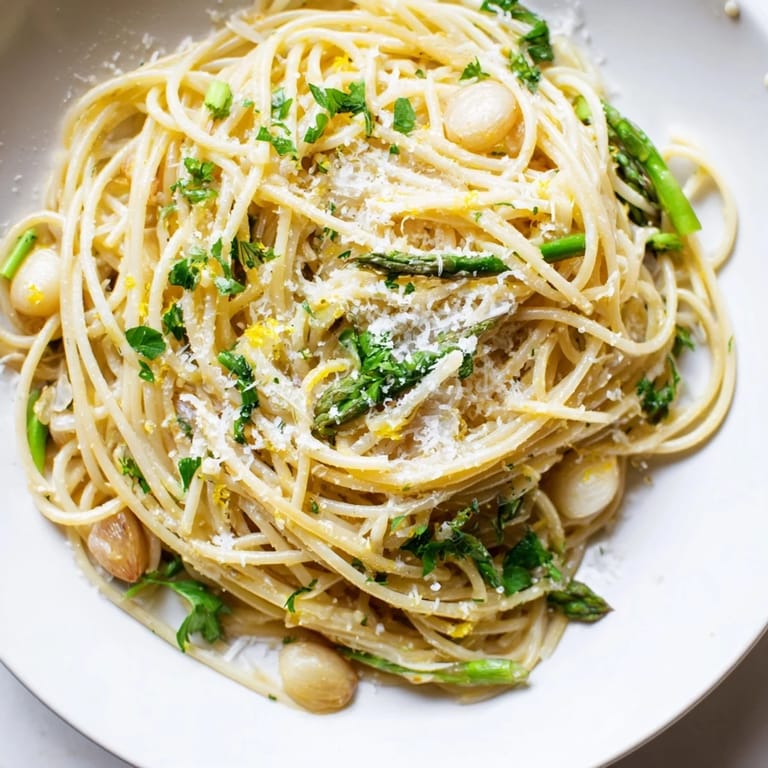
This pasta is light enough that it doesnt need much on the side, but I like to serve it with a simple arugula salad dressed with lemon juice and olive oil, or a few slices of crusty bread to soak up any extra garlic oil left on the plate. It pairs beautifully with a crisp white wine like Sauvignon Blanc or Pinot Grigio, something bright and acidic that cuts through the richness of the olive oil and cheese. If youre feeding a crowd, double the recipe and serve it family style in a big shallow bowl with extra Parmesan and a pile of napkins.
- Add a handful of toasted pine nuts or chopped walnuts right before serving for crunch and richness.
- For a heartier meal, toss in some white beans or chickpeas with the asparagus.
- Leftovers can be turned into a frittata the next morning by mixing them with beaten eggs and baking until set.
 Save
Save This is the kind of pasta that makes you feel like you know what youre doing in the kitchen, even if you dont. Make it on a weeknight, make it for someone you love, or make it just for yourself with the windows open and the radio on.
Recipe Questions
- → Can I prepare the roasted garlic ahead of time?
Yes, roast the garlic up to 2 days in advance and store it in an airtight container in the refrigerator. Reheat gently or use at room temperature when ready to assemble the pasta.
- → What if my asparagus is very thick?
Thicker asparagus works well but may need an extra 3-5 minutes in the oven. Cut larger spears in half lengthwise for more even cooking and better texture throughout.
- → How do I know when the garlic is perfectly roasted?
The garlic is ready when the cloves feel soft when pierced with a fork and the exterior is lightly golden. They should squeeze easily from their skins like butter.
- → Can I make this dish dairy-free?
Absolutely. Simply omit the Parmesan or substitute it with nutritional yeast or a dairy-free Parmesan alternative. The pasta remains creamy from the olive oil and pasta water.
- → What wine pairs best with this pasta?
A crisp Sauvignon Blanc complements the fresh asparagus and roasted garlic beautifully. The wine's acidity balances the rich olive oil and brings out the delicate spring flavors.
- → Can I add protein to make it heartier?
Yes, consider adding grilled shrimp, sautéed mushrooms, or crispy pancetta. You can also sprinkle toasted pine nuts or walnuts on top for added crunch and nutrition.