 Save
Save My neighbor Elena stopped by one autumn afternoon with a basket of tomatoes so ripe they were almost bursting through their skin. She insisted I roast them with onions and garlic, swearing it would change how I thought about soup entirely. Skeptical but curious, I did exactly what she suggested, and when that first spoonful hit my tongue—silky, intensely tomato-forward, with basil singing through like a whispered secret—I understood why she'd been so adamant.
Years later, I made this soup for my daughter's first day home from university, ladling it into bowls while she told me stories about her new friends and classes. She ate three helpings without pausing to talk, and when she finally looked up, she said it tasted like home. That bowl of soup became shorthand between us for those quiet moments when nothing else needs to be said.
Ingredients
- Ripe tomatoes, halved (1.5 kg): The quality of tomatoes makes or breaks this soup; choose ones that smell fragrant and feel heavy for their size, as peak ripeness brings natural sweetness without needing added sugar.
- Yellow onion, quartered (1 large): The slow roast turns onions into jammy, caramelized sweetness that balances the tomatoes' acidity.
- Garlic cloves, peeled (6): Roasted garlic becomes mellow and sweet rather than harsh; don't skip leaving them whole.
- Extra-virgin olive oil (2 tbsp): Use your best oil here since it's not heated aggressively and will shine through in the final flavor.
- Kosher salt and freshly ground black pepper: Season generously on the pan before roasting to draw out moisture and concentrate flavors.
- Vegetable broth, low sodium (2 cups): Low sodium lets you control the seasoning and taste the roasted vegetables instead of salt.
- Fresh basil leaves, packed (1/2 cup): Add this after the soup simmers, not before, so the color stays vibrant green and the flavor bright rather than dull.
- Unsalted butter (1 tbsp, optional): Just a touch adds a whisper of richness that makes the whole thing feel indulgent without being heavy.
- Sugar (1 tsp, optional): Only use this if your tomatoes are acidic; taste first before adding anything.
- Heavy cream or crème fraîche (1/4 cup, optional): A drizzle on top creates a beautiful contrast and adds velvety mouthfeel.
- Fresh basil leaves for garnish: Tear these by hand just before serving so they stay tender and aromatic.
- Croutons or toasted bread (optional): The crunch is essential if you're serving this as a main course rather than a starter.
Tired of Takeout? 🥡
Get 10 meals you can make faster than delivery arrives. Seriously.
One email. No spam. Unsubscribe anytime.
Instructions
- Heat your oven and prepare:
- Preheat to 220°C (425°F) and line a baking sheet with parchment paper so nothing sticks and cleanup is effortless. You're setting yourself up for success here.
- Arrange and season the vegetables:
- Spread the tomato halves cut-side up, scatter the onion quarters and garlic cloves around them, then drizzle everything with olive oil and season generously with salt and pepper. Toss gently to coat; you want the oil to reach every surface.
- Roast until caramelized:
- Slide into the oven for 35 to 40 minutes, watching for the tomato edges to darken and the juices to concentrate. The kitchen will smell like concentrated tomato perfume; that's how you know it's working.
- Transfer and simmer:
- Scrape every bit of roasted vegetable and golden pan juices into a large pot, add the vegetable broth, and bring to a gentle simmer over medium heat. Don't rush this step; let the flavors meld for a moment.
- Stir in basil and optional richness:
- Add the fresh basil leaves, butter if using, and a pinch of sugar only if needed, then let it bubble softly for 5 minutes. Taste as you go; this is when you're building the final flavor profile.
- Blend until silky smooth:
- Use an immersion blender directly in the pot for ease, or work in batches with a countertop blender for a more refined texture. If you want restaurant-level smoothness, strain through a fine sieve afterward.
- Taste and adjust seasoning:
- This is non-negotiable; salt and pepper might need adjustment depending on your broth and tomatoes. A tiny squeeze of lemon or splash of balsamic can brighten things if they feel flat.
- Serve with intention:
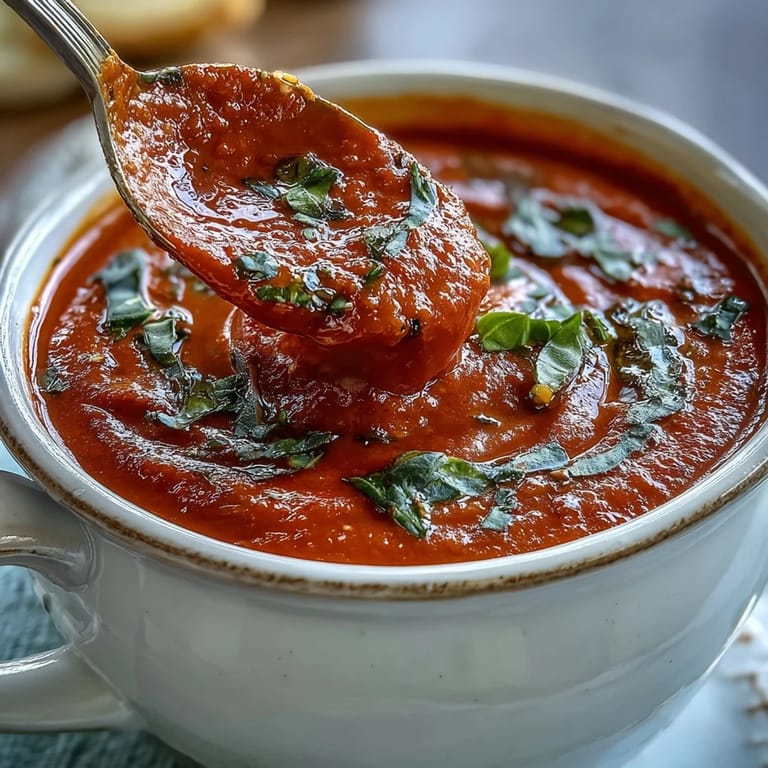
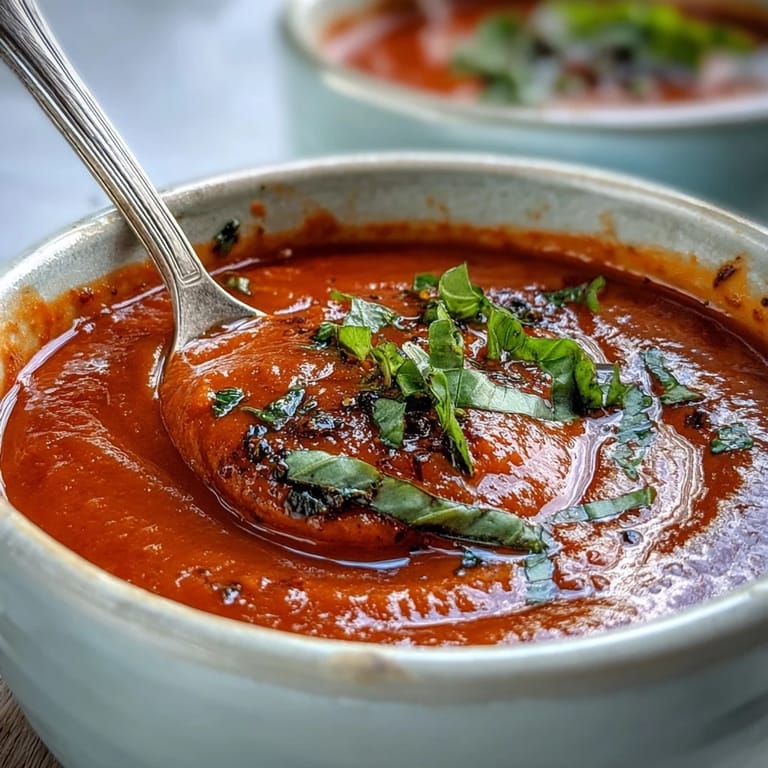
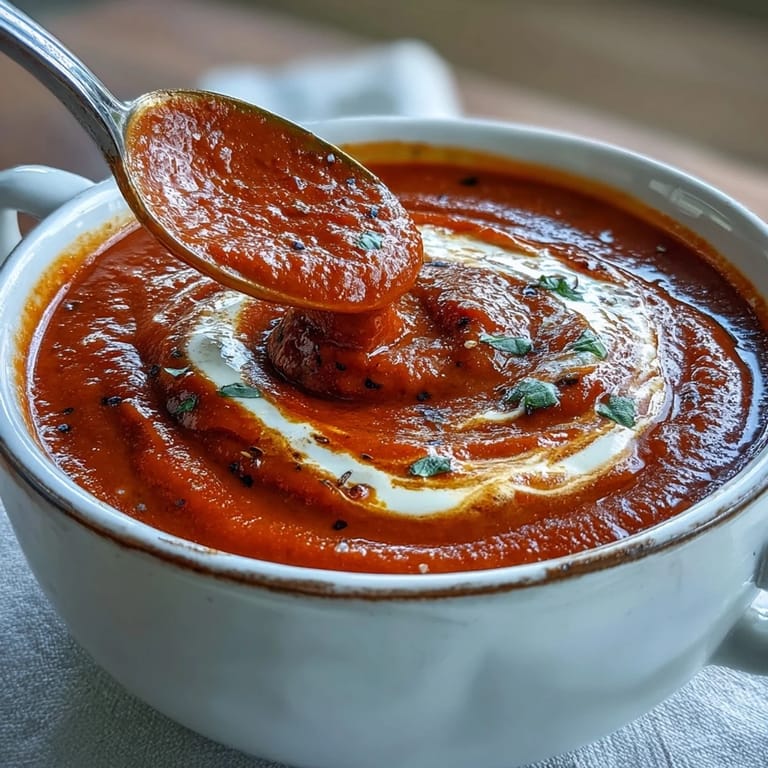
- Ladle into warm bowls, add a swirl of cream, scatter fresh basil on top, and crack some croutons over it if you're in the mood. This soup deserves a moment of attention before eating.
 Save
Save There's something quietly powerful about transforming a handful of humble ingredients into something that tastes like you spent all day on it. This soup has a way of making people slow down and actually taste what they're eating.
When to Roast the Vegetables
I used to rush the roasting time and wondered why my soup tasted flat compared to restaurants. The magic happens in those final 10 minutes when the tomato edges start to caramelize and the juices reduce into concentrated sweetness; don't open the oven door constantly checking on things. Let the heat do its work undisturbed, and you'll hear the edges crackling and smell that deep, almost caramelized tomato fragrance that signals everything is ready.
Blending Matters More Than You'd Think
The first time I used a regular blender instead of an immersion blender, I noticed the texture was somehow different—smoother but also oddly thin. An immersion blender, held stationary while the soup churns around it, creates tiny air pockets that make the soup feel silkier and more luxurious. If you only have a regular blender, work in smaller batches and blend longer; the extra time incorporates more air and creates a better mouthfeel.
Custom Finishing Touches
This soup is a blank canvas for your mood on any given day, and that's part of its charm. Stir in a tiny pinch of red pepper flakes if you want gentle heat, add a splash of aged balsamic vinegar for depth, or whisk in a dollop of pesto at the last second for herbaceous punch. The base is so clean and well-balanced that it welcomes nearly any addition you dream up.
- A swirl of good olive oil and fresh basil works for elegant simplicity, while crispy prosciutto crumbles add smoky richness for something heartier.
- Serve it chilled on warm summer evenings, or hot in deep bowls with crusty bread when the weather turns cold.
- Make a double batch and freeze half in portions; it thaws beautifully and tastes just as good days later.
 Save
Save This soup is proof that the simplest ingredients, treated with respect and patience, become something genuinely special. Make it once and you'll understand why Elena was so insistent about sharing her secret.
Recipe Questions
- → Can I make this ahead of time?
Absolutely. This actually tastes better the next day as flavors meld together. Store in an airtight container in the refrigerator for up to 4 days. Reheat gently on the stove, adding a splash of broth if needed to adjust consistency.
- → What type of tomatoes work best?
Roma or plum tomatoes are ideal due to their meaty texture and lower water content, but any ripe tomatoes will produce delicious results. In summer, use vine-ripened heirlooms for exceptional sweetness. During winter, quality canned tomatoes can substitute fresh ones.
- → How do I achieve the smoothest texture?
Use an immersion blender directly in the pot for convenience, or process in batches using a countertop blender. For ultimate silkiness, pass the pureed mixture through a fine-mesh sieve to remove any remaining fibers or seeds. The optional butter also contributes to a luxurious mouthfeel.
- → Can I freeze this soup?
Yes, it freezes beautifully for up to 3 months. Cool completely before transferring to freezer-safe containers, leaving space for expansion. Thaw overnight in the refrigerator and reheat on the stove. If you plan to freeze, omit the cream and add it fresh when reheating.
- → What can I serve with this?
Crusty bread, garlic knots, or homemade croutons are classic accompaniments. A grilled cheese sandwich makes for a timeless pairing. For a lighter option, serve alongside a simple green salad with balsamic vinaigrette. Wine-wise, a crisp Sauvignon Blanc or Pinot Grigio complements the tomato acidity beautifully.
- → How can I add more protein?
Stir in cannellini or Great Northern beans during the simmering stage for a creamy, protein-packed version. Alternatively, serve with a protein-rich side like herbed chicken meatballs or a slice of crusty bread topped with ricotta and honey.