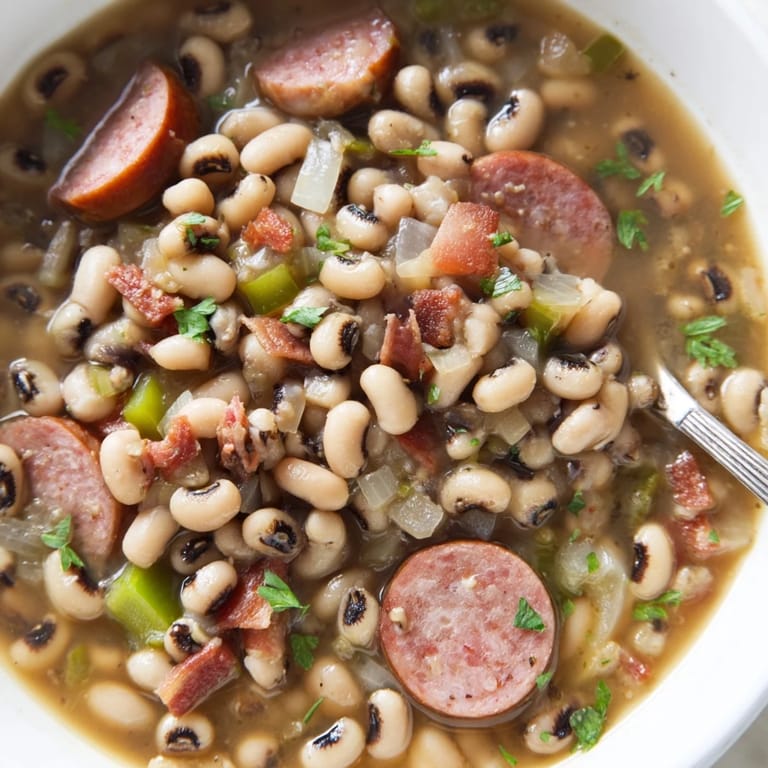
 Save
Save My grandmother swore by black-eyed peas every New Year's Day, but I didn't truly understand the tradition until I spent my first January alone in a tiny apartment with a bag of dried peas and a determination to make something that felt like home. The smell of rendering bacon and simmering spices filled every corner of that cramped kitchen, and suddenly I wasn't so far away anymore.
Last year, I made three gallons for a Super Bowl party and watched people hover over the pot like it was a magnet. Someone's uncle from Alabama took one bite and asked if I'd been hiding Southern grandmothers in my kitchen, which might be the best cooking compliment I've ever received.
Ingredients
- 225 g (8 oz) smoked sausage: Andouille brings authentic Cajun heat but Kielbasa works perfectly if you prefer milder smokiness
- 115 g (4 oz) thick-cut bacon: The bacon fat becomes the foundation of your flavor base, so don't skimp on quality here
- 450 g (1 lb) dried black-eyed peas: Always sort through them first, tiny pebbles have ruined more than one dinner
- 1 large onion: Sweet onions work beautifully but yellow onions develop deeper sweetness during the long cook
- 1 green bell pepper: This creates the holy trinity of Southern cooking alongside the onion and celery
- 2 celery stalks: Don't skip this even if you're not a celery fan, it dissolves into the background and adds essential depth
- 3 garlic cloves: Fresh garlic is non-negotiable here, the jarred stuff can turn bitter during long simmering
- 1.5 liters (6 cups) low-sodium chicken broth: Low-sodium is crucial because the bacon and sausage bring plenty of salt
- 240 ml (1 cup) water: This prevents the broth from becoming too concentrated as it reduces
- 2 bay leaves: Remove them before serving, biting into a bay leaf is an unpleasant surprise nobody deserves
- 1 tsp smoked paprika: This doubles down on the smoky flavor and gives the peas a gorgeous reddish hue
- 1/2 tsp dried thyme: Thyme bridges the gap between the smoky meat and earthy peas beautifully
- 1/2 tsp cayenne pepper: Optional, but that gentle hum of heat makes every other flavor sing louder
- 1/2 tsp freshly ground black pepper: Grind it right before adding for the most potent aromatic punch
- 3/4 tsp kosher salt: Start with this, but always taste at the end and adjust because broth brands vary wildly
- 2 tbsp chopped fresh parsley: This isn't just garnish, the bright flavor cuts through all that rich smokiness
- Hot sauce: Put a bottle on the table and let everyone customize their own heat level
Tired of Takeout? 🥡
Get 10 meals you can make faster than delivery arrives. Seriously.
One email. No spam. Unsubscribe anytime.
Instructions
- Soak the peas:
- Cover the dried peas with plenty of water and let them sit overnight, or use the quick-soak method with boiling water if you're short on time.
- Cook the bacon:
- Render the diced bacon in your Dutch oven over medium heat until it's crispy and has released all its golden fat.
- Brown the sausage:
- Add the sliced sausage to the bacon drippings and let it develop a nice brown color, then scoop it out with the bacon.
- Build the vegetable base:
- Sauté the onion, bell pepper, and celery in the same flavorful fat until softened, then add the garlic for just a minute.
- Combine everything:
- Add the peas, broth, water, bay leaves, spices, and return the cooked meats to the pot.
- Simmer slowly:
- Bring to a bubble, then lower the heat and let it simmer gently for 1 to 1.5 hours until the peas are creamy and tender.
- Finish with care:
- Fish out those bay leaves, taste for salt adjustments, and sprinkle with fresh parsley before bringing it to the table.
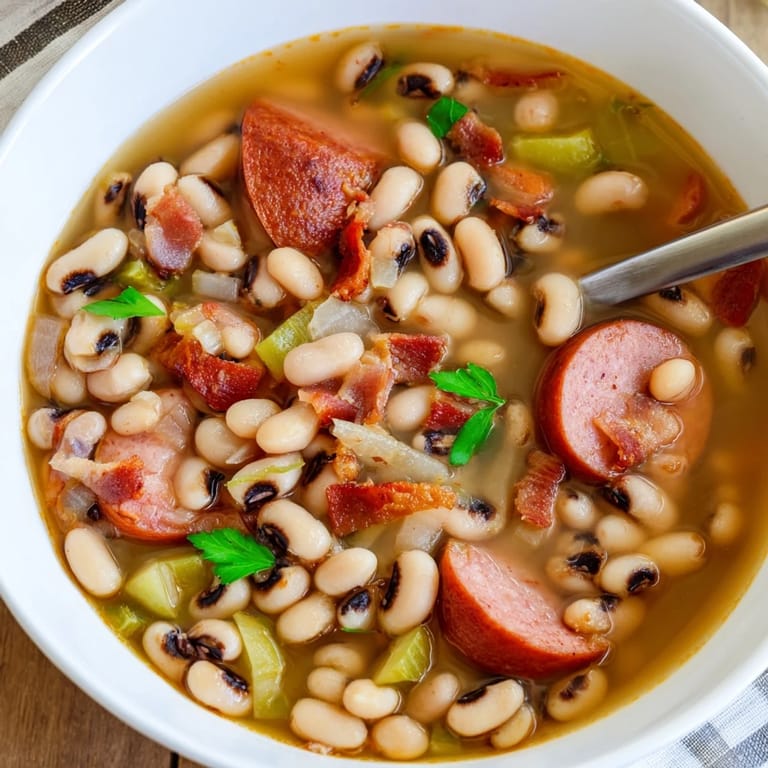 Save
Save I once made these for a friend who had just gone through a breakup, and she told me later that a bowl of those peas was the first time she'd felt comforted since everything fell apart. Food has this way of wrapping around you when you need it most.
The Art of the Simmer
Keep the heat low enough that you only see an occasional bubble break the surface. A gentle simmer lets the flavors meld gradually while keeping the peas intact, whereas boiling violently makes them mushy and cloudy.
Making It Your Own
Some cooks add a ham hock for extra richness, others throw in a diced tomato for acidity. I've discovered that a splash of apple cider vinegar at the end brightens everything without being obvious about it.
Serving Suggestions
These peas are substantial enough to stand alone as a main dish, especially when served over fluffy white rice that soaks up all that flavorful pot liquor. A wedge of cornbread for sopping up the bottom of the bowl is practically mandatory.
- Cornbread should be slightly sweet to balance the savory smokiness
- A simple green salad with vinaigrette cuts through the richness
- Iced sweet tea is the traditional Southern accompaniment for good reason
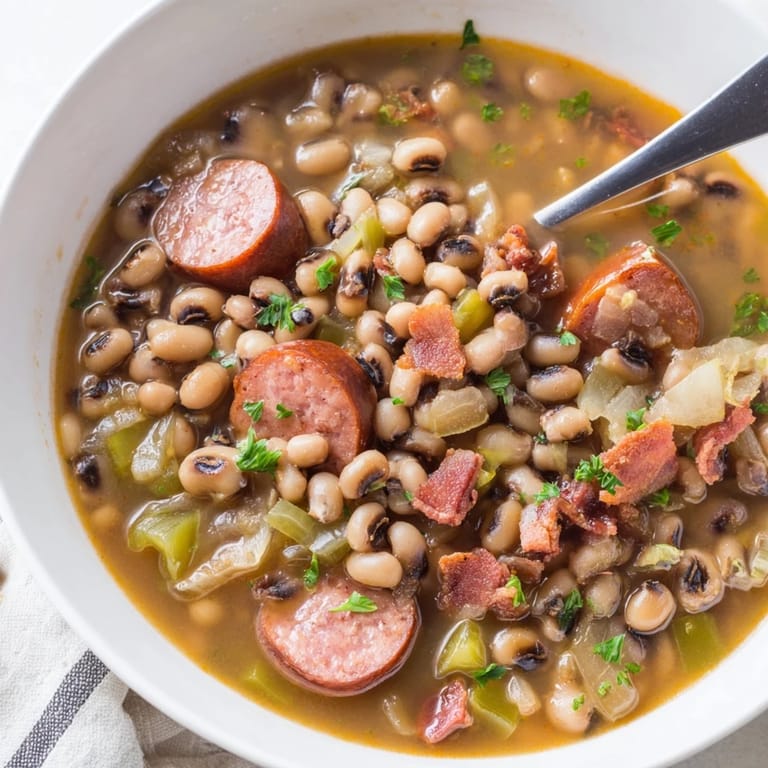 Save
Save Whether you're seeking luck for the new year or just a bowl of pure comfort, these black-eyed peas have been nourishing Southern tables for generations, and now they're part of your story too.
Recipe Questions
- → Do I need to soak black-eyed peas before cooking?
Yes, soaking dried black-eyed peas overnight helps them cook evenly and become tender. For a faster method, cover them with boiling water and let stand for one hour before draining and rinsing.
- → Can I make this vegetarian?
Absolutely. Omit the bacon and sausage, then use vegetable broth instead of chicken broth. Add extra smoked paprika or a few drops of liquid smoke to maintain that smoky depth of flavor.
- → What's the best way to serve these black-eyed peas?
Traditionally served over steamed white rice with a side of cornbread and sautéed greens like collards or kale. Offer hot sauce at the table so everyone can adjust the heat to their preference.
- → How long do leftovers keep?
Store cooled leftovers in an airtight container in the refrigerator for up to 4 days. The flavors often deepen and improve after a day. Reheat gently on the stovetop, adding a splash of broth or water if needed.
- → Can I use canned black-eyed peas instead?
You can substitute canned peas for convenience. Use about 4-5 cans (drained and rinsed) and reduce the simmering time to 30-40 minutes to let the flavors meld. The texture will be softer than dried peas.
- → Why are black-eyed peas eaten on New Year's?
Southern tradition holds that eating black-eyed peas on New Year's brings prosperity and luck for the coming year. The peas symbolize coins, and when paired with greens (representing money), they're believed to ensure financial fortune.