 Save
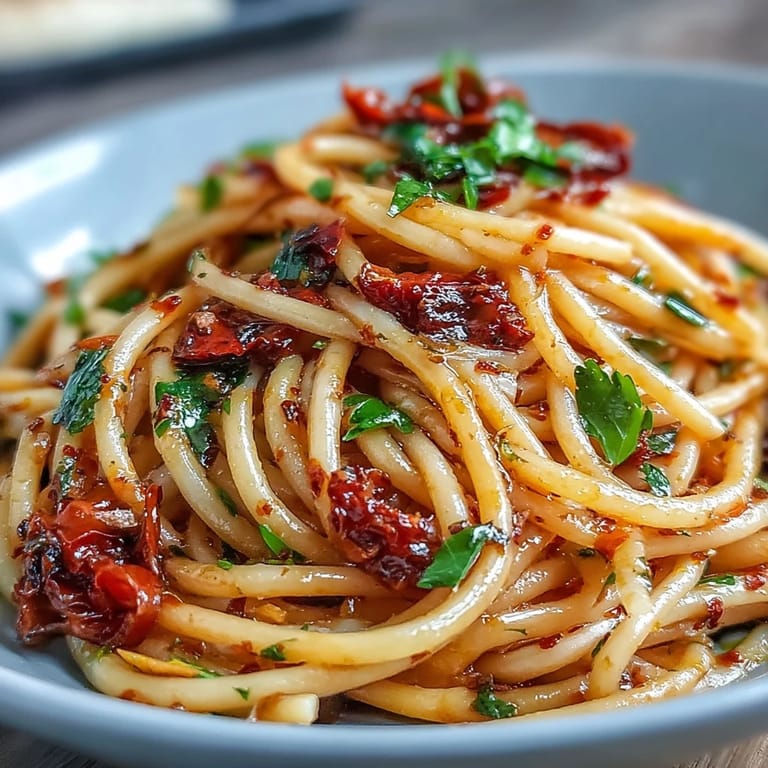
Save There's a particular kind of magic that happens when you're standing over a hot skillet at dinnertime, watching garlic and anchovies dissolve into golden oil while the kitchen fills with that unmistakable salty-savory perfume. I stumbled onto this Calabrian chili pasta during a phase where I was determined to cook my way through southern Italy without leaving my apartment, and it became the dish I'd make when I wanted to feel like I was doing something bold and a little dangerous with my dinner. The first time I got the balance right—that perfect tension between the fiery chili heat, the briny umami of anchovies, and the brightness of fresh lemon—I understood why this simple combination has been feeding people in Calabria for generations.
I made this for my friend Marcus on a Tuesday night when he texted me saying he needed something that would wake him up after a long, gray day, and watching him take that first bite—the way his eyes widened and then he immediately went back for more—reminded me that sometimes the simplest dishes are the ones that hit the hardest. He's the type who usually picks through everything asking what's in it, but this time he just ate and asked for the recipe, which felt like the highest compliment.
Ingredients
- Bucatini pasta: 400 g of this hollow spaghetti-like pasta is the perfect vehicle for clinging to the chili oil; it holds the sauce in a way that round spaghetti never quite manages.
- Extra virgin olive oil: 4 tablespoons of good quality oil forms the base of your sauce, so this is worth not skimping on.
- Calabrian chili paste: 3 tablespoons of this is the star, bringing a fruity heat that's different from regular red pepper flakes; if you can only find the chilies packed in oil, that works beautifully too.
- Garlic cloves: 4 cloves, thinly sliced, will perfume the entire dish as they cook down into soft, sweet fragments.
- Anchovy fillets: 6 fillets might sound intimidating, but they're not there to taste fishy—they dissolve into the oil and become the savory backbone that makes everything taste richer.
- Crushed red pepper flakes: 1/2 teaspoon is optional, but I always add it because the layering of heat creates complexity.
- Sea salt and freshly ground black pepper: Essential for balancing the boldness of everything else.
- Fresh flat-leaf parsley: 1/4 cup chopped at the end brings a grassy brightness that cuts through the richness.
- Lemon zest: Zest from 1 lemon adds an almost electric freshness that makes the whole dish sing.
- Pecorino Romano or Parmesan cheese: 1/4 cup grated and optional, but I've learned it's worth the extra texture if you can have it.
Tired of Takeout? 🥡
Get 10 meals you can make faster than delivery arrives. Seriously.
One email. No spam. Unsubscribe anytime.
Instructions
- Start the pasta water:
- Fill a large pot with cold water, add a generous pinch of salt—it should taste like the sea—and bring it to a rolling boil. This takes about 10 minutes, which is perfect timing to prepare everything else.
- Build the sauce base:
- While waiting for water, heat your olive oil in a large skillet over medium heat, then add the thinly sliced garlic and chopped anchovies. You'll watch the anchovies break apart and essentially melt into the oil over 2 to 3 minutes, creating this glossy, fragrant foundation—this is where the magic begins, so don't rush it.
- Infuse with chili:
- Once the garlic is softened and just starting to turn golden, stir in the Calabrian chili paste and red pepper flakes if using. Let this sit for 1 to 2 minutes so the heat and fruity flavor from the chili can fully wake up and spread through the oil.
- Cook the bucatini:
- Add your bucatini to the boiling water and cook according to the package directions, usually around 9 to 10 minutes, until it's al dente—tender but still with a slight firmness when you bite into it. Before draining, reserve at least 1 cup of that starchy pasta water in a measuring cup or bowl.
- Toss and emulsify:
- Add the drained hot pasta directly to your chili oil skillet and toss everything together using two wooden spoons or tongs, coating every strand in that beautiful red oil. If the pasta looks dry, add the reserved pasta water a splash at a time, stirring gently—the starch in the water will help create a light, silky sauce that clings to each piece of bucatini.
- Season and finish:
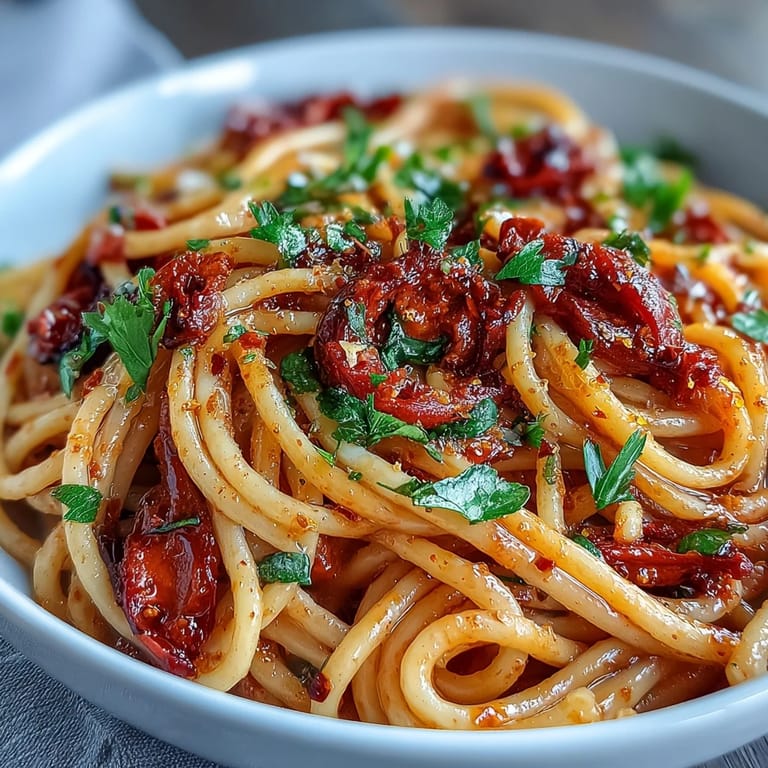
- Taste as you go and adjust the salt and black pepper to your liking, keeping in mind the cheese will add saltiness if you're planning to use it. Remove from heat, fold in the fresh parsley and lemon zest, and serve immediately in warm bowls, topped with Pecorino Romano or Parmesan if desired.
 Save
Save There was this moment last winter when my neighbor came over for a casual dinner and I made this dish, and she asked if she could turn off the lights so she could focus on the taste—which was both funny and touching, because it made me realize that food this bold and honest doesn't need anything else to shine. It's the kind of pasta that reminds you why Italian home cooking is so powerful.
The Secret of Anchovy Magic
The first time I was hesitant about the anchovies, I'll admit it, but I've learned that they're not about making your pasta taste fishy—they're about creating depth and umami that you can't quite identify but absolutely crave. Think of them as the secret ingredient that makes people say your food tastes mysteriously delicious without being able to put their finger on why. Once the garlic and anchovies have had time to dissolve into the oil, they become completely transformed into this savory, almost meaty quality that elevates everything around them.
Heat, Balanced Right
Calabrian chili paste has a different personality than regular hot sauce or fresh chilies—it's fruity and slightly sweet under the heat, which is why it works so beautifully here instead of just burning your mouth and disappearing. I've experimented with adding more or less depending on who's eating, and I've learned that the red pepper flakes are there as a backup, letting you layer the heat so it builds rather than hits all at once. The lemon zest at the end serves as your escape hatch, cooling things down just enough that you can actually taste everything else.
Timing and Temperature Matter
One night I got distracted and let my oil get too hot before adding the garlic, and the entire batch turned bitter and overpowered—it was a good reminder that medium heat isn't a suggestion, it's the actual rule here. The pasta water is your final adjustment tool, so reserve it generously and don't be afraid to use it; if your sauce looks too thick or oily, a splash or two will bring everything into balance.
- Add pasta water gradually in small splashes rather than pouring, tasting between additions until the sauce feels right.
- Fresh lemon zest makes an enormous difference, so don't skip it or substitute bottled juice—the brightness is essential.
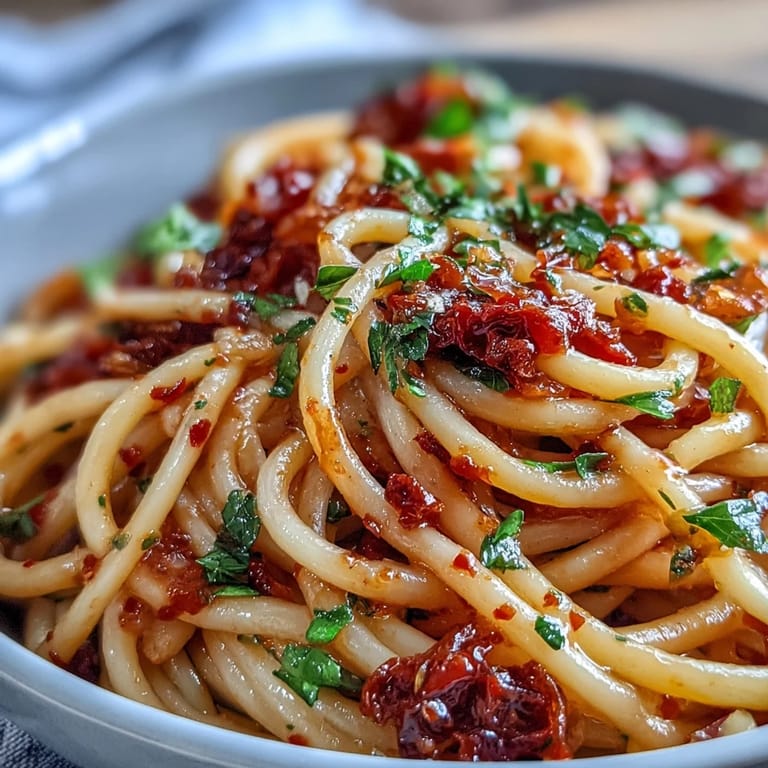
- Serve immediately in warm bowls because this dish doesn't reheat well; it's best enjoyed right from the skillet.
 Save
Save This is the kind of pasta I make when I want to feel connected to something real and uncomplicated, when I want bold flavors that don't apologize. It's been my dinner when I needed grounding and my celebration meal when things went right, and it never fails to deliver exactly what it promises.