 Save
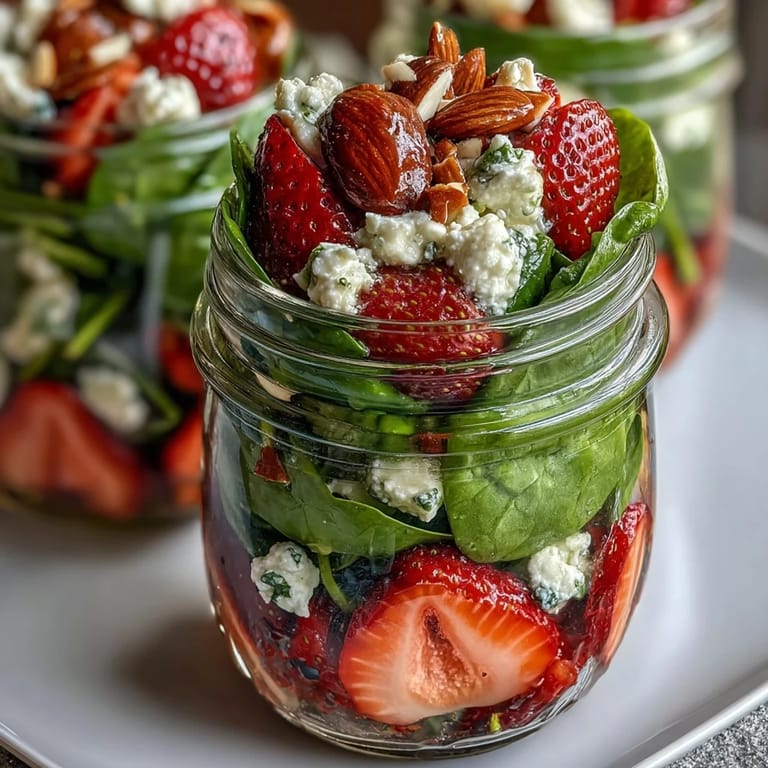
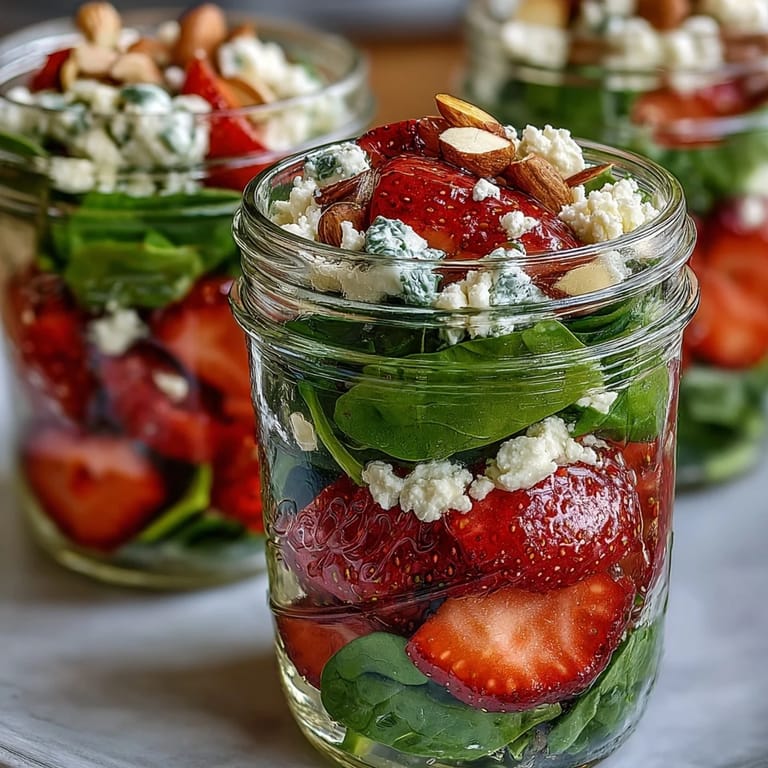
Save There's something almost meditative about layering these mason jar salads on a Sunday afternoon—the way the deep ruby strawberries catch the light against the vibrant spinach, how the balsamic pools at the bottom like liquid gold. I discovered this approach when I was tired of sad, wilted salads by Wednesday and wanted something that actually stayed fresh and exciting throughout the week. The magic isn't just in the ingredients; it's in understanding that order matters, that a little strategy keeps everything crisp and delicious until you're ready to eat.
My friend Sarah watched me shake one of these jars at lunch and asked if I'd lost my mind, then stole half of it before asking for the recipe. The layers stayed perfectly separated until I shook it all together, and she was genuinely shocked that spinach at the bottom wasn't soggy. That moment convinced me this method was worth sharing—it's not just practical, it actually tastes better than tossing everything together at home.
Ingredients
- Balsamic vinegar: Use a good quality one if you can—cheap versions taste thin and sharp, while aged balsamic adds depth and a slight sweetness that makes this vinaigrette sing.
- Honey or maple syrup: This balances the acidity and adds a subtle sweetness that makes the dressing feel complete rather than aggressively sour.
- Dijon mustard: Just a teaspoon acts as an emulsifier and brings a sharp, sophisticated note that ties everything together.
- Garlic clove: Mince it finely so it distributes throughout the dressing; if you leave it chunky, you'll get shocking bursts of raw garlic.
- Extra-virgin olive oil: This is where you taste the difference—good olive oil makes the vinaigrette silky and actually pleasant to eat, not just a vehicle for vinegar.
- Baby spinach: Wash and thoroughly dry it, or the water will dilute your dressing and create a soggy mess by day three.
- Strawberries: Fresh and in season makes all the difference; out-of-season berries can be mealy and disappointing, so adjust your expectations accordingly.
- Feta or goat cheese: The tang here is essential—it echoes the balsamic and keeps the salad from feeling too sweet.
- Toasted almonds: Toast them yourself if you have time; they're crunchier and more flavorful than store-bought, and the aroma alone is worth the five minutes.
- Red onion: Thin slices matter because you want them to distribute evenly and add bite without overwhelming anything, especially since they're sitting in vinaigrette all week.
- Quinoa or farro: Cooked and cooled, this adds staying power and makes the salad feel like an actual meal rather than a side dish.
Tired of Takeout? 🥡
Get 10 meals you can make faster than delivery arrives. Seriously.
One email. No spam. Unsubscribe anytime.
Instructions
- Make your vinaigrette with intention:
- Whisk the vinegar, honey, mustard, garlic, salt, and pepper together first, tasting as you go—you want the acid and sweetness balanced before you add the oil. Then slowly drizzle the olive oil while whisking constantly so it emulsifies into something creamy and cohesive rather than separating into vinegar soup.
- Understand the jar architecture:
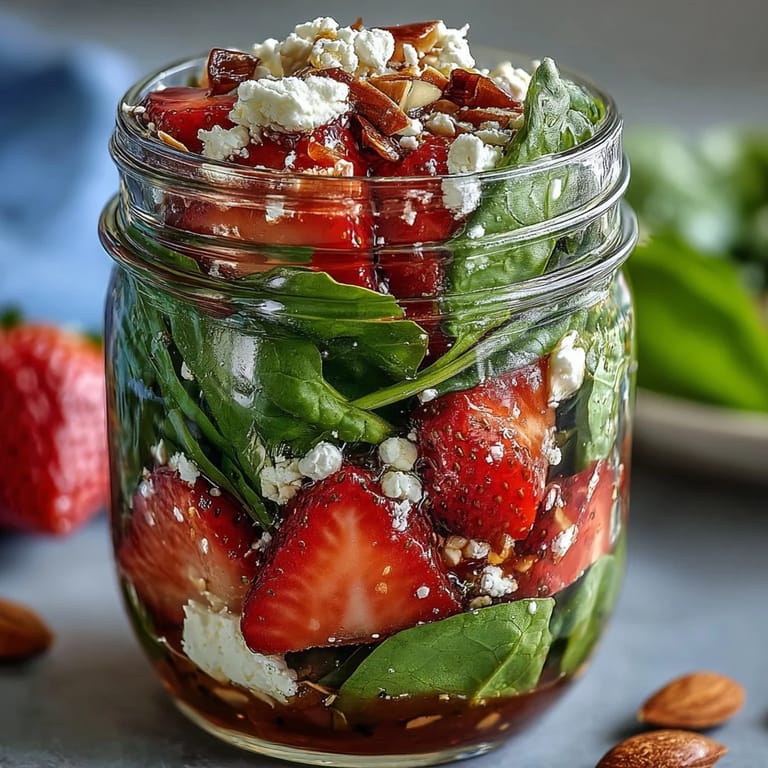
- Dressing goes on the bottom because it's heavy and stays put, then raw vegetables that won't wilt (red onion, cucumber) create a barrier between the wet dressing and the greens. This is the secret that keeps everything fresh—it's like building a protective fort for your spinach.
- Add grains strategically:
- If you're using quinoa or farro, layer it after the vegetables but before the berries—it absorbs some of the vinaigrette flavor and creates another buffer between dressing and delicate greens. This cooked grain layer is honestly what transforms this from a light side salad into something substantial enough for lunch.
- Layer berries and cheese:
- Strawberries go over the grains, then feta, then nuts—they're not in the dressing, so they stay fresh and don't get soggy. The cheese adds richness and the nuts stay crispy because they're at the top where they don't soak up moisture.
- Crown it with spinach:
- Fill the jar generously with baby spinach at the very top, packing it down gently—it compresses when the dressing saturates it, but starting with plenty ensures you have enough green when you eat it. This spinach sits above everything, protected from the wet dressing below.
- Seal and refrigerate:
- Tight lids are essential; they keep oxygen out and prevent your greens from browning at the edges. These jars actually improve after a day or two as flavors meld, so don't stress about making them at the last minute.
 Save
Save There's a quiet satisfaction in opening the fridge and seeing four jars lined up like little edible art projects, knowing that this week you actually have beautiful lunches waiting instead of reaching for crackers and cheese at 1 p.m. It's one of those small kitchen wins that makes the whole week feel more intentional.
The Shake-and-Serve Moment
When you're ready to eat, shake that jar like you mean it—hold the lid on tight and give it a good thirty-second vigorous shake so the vinaigrette coats everything evenly. You can eat straight from the jar if you're at your desk, or pour it into a bowl to make it feel more like an actual meal; either way, that shake is the moment when all those separate layers become one cohesive, delicious thing. The sound of it—the gentle clink and slosh—is oddly satisfying, like you're doing something right.
Variations That Actually Work
This salad is flexible enough that you can pivot based on what's in your fridge or what you're craving that week. Swap the strawberries for sliced peaches in summer or pomegranate seeds in fall, trade the feta for crumbled goat cheese or a vegan cashew spread if that's your thing, or add grilled chicken breast if you need extra protein and bulk. The balsamic vinaigrette is the constant—that's what makes it taste intentional—but everything else can shift based on season, preference, or what's on sale at the farmer's market.
Storage and Make-Ahead Magic
These jars actually keep better than you'd think—the sealed container prevents oxidation and wilting, so they genuinely stay fresh for four to five days in the fridge. The first day tastes bright and fresh, by day three the flavors have melded into something deeper and more complex, and even day five is still perfectly edible if you're organized. Make them on Sunday and you've solved your lunch problem through Thursday, which is a form of time travel I genuinely appreciate on groggy Monday mornings.
- If you're adding cooked grains like quinoa, cool them completely first—warm grains will wilt everything around them and feel odd when you eat it cold.
- Prep your vegetables the night before if it helps you feel less rushed; they keep well in the fridge and can go straight into the jars in the morning.
- Label your jars with a dry-erase marker or masking tape so you know exactly when you made them and don't accidentally eat the one from last week.
 Save
Save These jars became my answer to the eternal question of what to eat when you're busy and tired but still want to feel good about your food choices. They're beautiful enough to be proud of, practical enough to actually get made, and delicious enough that you'll look forward to lunch instead of dreading it.