 Save
Save There's something about the smell of ginger and turmeric hitting hot oil that instantly transports me to a small kitchen in London where my friend Priya taught me that dahl isn't just food—it's medicine disguised as comfort. She'd always say the secret isn't in following the recipe exactly, but in tasting as you go, letting the spices bloom, and knowing when to add that final squeeze of lime. This one-pot version came together one rainy Tuesday when I wanted something warm that didn't require a dozen dishes afterward, and it's become my go-to when I need to feed people without fuss.
I made this for my roommate during her first week working the night shift, and watching her face light up when that first spoonful hit was worth every minute. She came home exhausted at 6 AM, and instead of the usual toast, she found a warm pot waiting with cilantro scattered on top like confetti. That's when I realized this dahl works at any hour—it's honest, grounding food that makes people feel cared for.
Ingredients
- Red lentils: These break down into a silky base faster than green or brown varieties, creating that signature creamy texture without any cream at all.
- Yellow onion: The foundation for everything, and dicing it fine means it practically dissolves into the sauce, building layers of sweetness.
- Fresh ginger and garlic: Don't even think about using jarred—the brightness you get from fresh is the difference between a good dahl and one that makes you close your eyes when you taste it.
- Curry powder, cumin, turmeric, coriander: These spices need 30 seconds in hot oil to wake up; toasting them is non-negotiable.
- Coconut milk: Full-fat is essential here—light coconut milk won't give you that luxurious mouthfeel that makes this dish special.
- Vegetable broth: The liquid backbone that keeps everything balanced; I've learned to use low-sodium so you can control the salt level yourself.
- Fresh spinach: Added at the very end so it stays bright and tender, never mushy.
- Tomato and lime: These provide acid and freshness that cut through the richness and make your palate sing.
Tired of Takeout? 🥡
Get 10 meals you can make faster than delivery arrives. Seriously.
One email. No spam. Unsubscribe anytime.
Instructions
- Sauté your aromatics:
- Heat the coconut oil over medium heat and add your diced onion, letting it soften for 3–4 minutes until the edges turn golden and translucent. Listen for that gentle sizzle, and when the kitchen starts smelling sweet, you know you're right on track.
- Bloom the garlic and ginger:
- Add your minced garlic and grated ginger, stirring constantly for just 1 minute—this is when the magic starts and your kitchen smells like warmth incarnate. Don't let it burn; you're just waking up those flavors.
- Toast your spice blend:
- Pour in all your spices and stir for 30 seconds, and I mean really stir—this small moment transforms dry powder into something alive and fragrant. Your nose will tell you when it's ready.
- Build the base:
- Mix in your rinsed lentils and diced tomato, coating them in those toasted spices. This is your foundation, so take a second to appreciate the colors.
- Add your liquids and bring to a boil:
- Pour in the coconut milk and vegetable broth, stirring to combine, then increase heat to bring everything to a gentle boil. Once you see those first bubbles breaking the surface, you're moving forward.
- Simmer low and slow:
- Reduce heat to low, cover the pot, and let it bubble gently for 20–25 minutes, stirring every few minutes so nothing sticks to the bottom. The lentils will gradually soften and start to break down, thickening the sauce naturally.
- Finish with spinach:
- Toss in your fresh spinach and stir until wilted, about 2 minutes—this is where you add a final touch of color and nutrition. The warmth of the dahl will wilt it perfectly without overcooking.
- Taste and adjust:
- This is your moment to taste and add more salt, pepper, or even a pinch more cayenne if you want it warmer. Trust your palate.
- Plate and garnish:
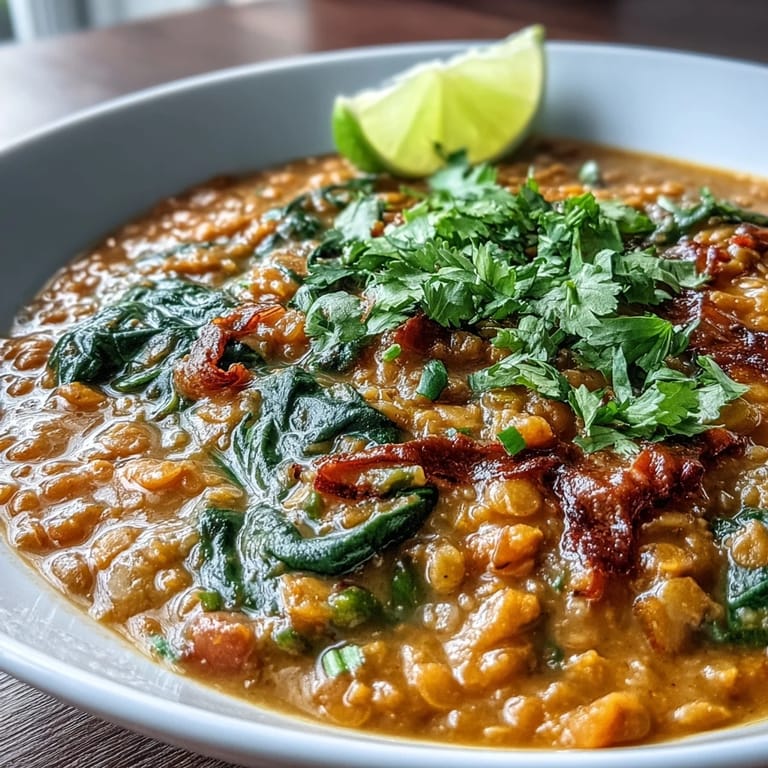
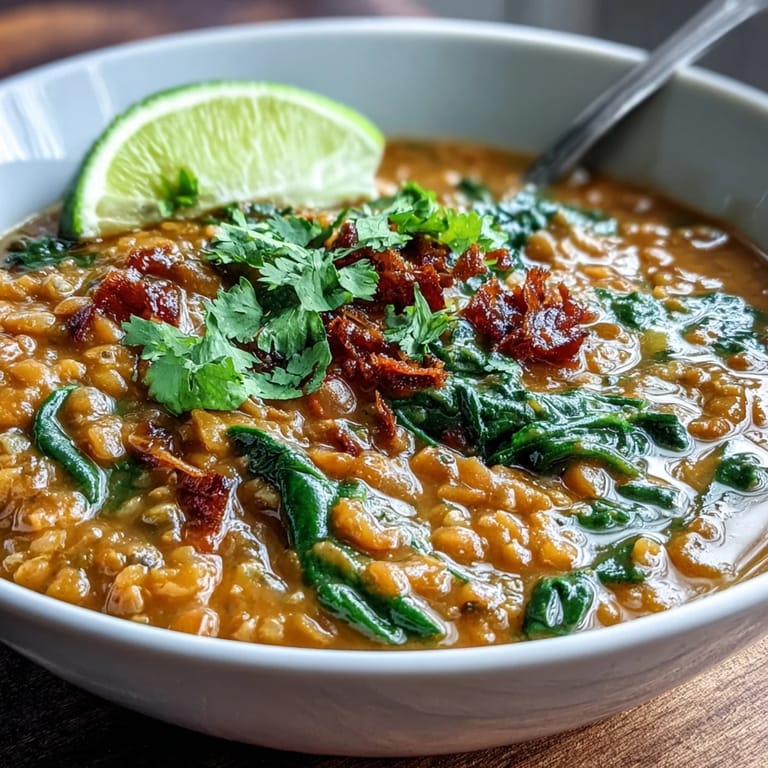
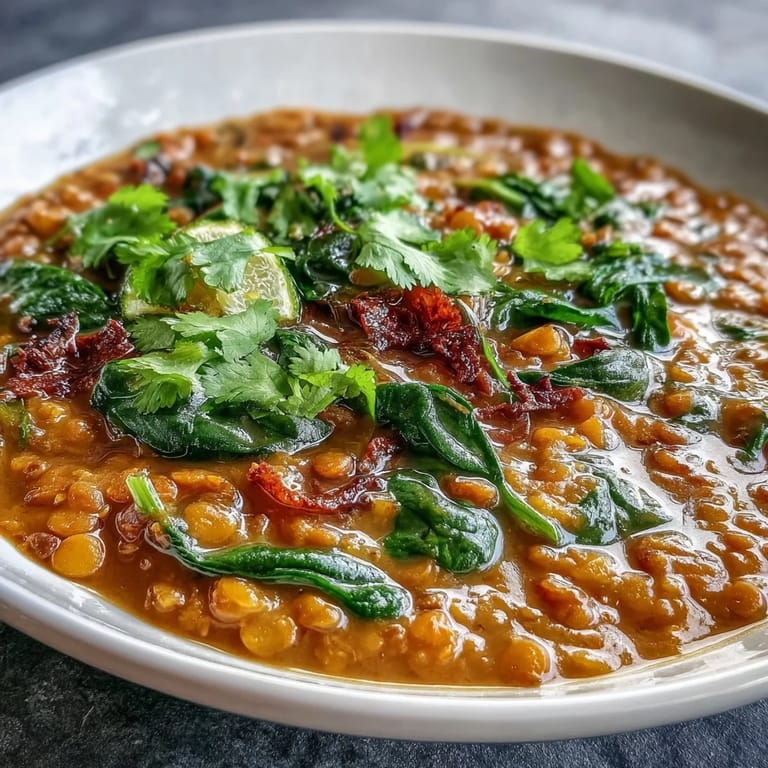
- Serve into bowls and finish with a squeeze of fresh lime and a scatter of cilantro. The lime is essential—it's the final note that ties everything together.
 Save
Save My partner once said this dahl reminded them of eating comfort itself, and I've never forgotten that. It's the kind of dish that heals without being heavy, nourishes without feeling like an obligation, and somehow tastes even better as leftovers the next day.
When to Add Extra Vegetables
If you want your dahl to be more substantial or veggie-forward, dice up carrots, bell peppers, or zucchini and add them with the tomato in step 4. They'll soften right alongside the lentils, and you'll get pockets of flavor throughout. I learned this from trial and error, and now I always keep these options in mind depending on what needs using up in my crisper drawer.
Pairing Suggestions and Serving Ideas
This dahl shines alongside basmati rice, which soaks up the sauce beautifully, but I've also served it with warm naan bread for dipping and found it equally satisfying. A crisp cucumber and tomato salad on the side adds freshness that cuts through the richness, and honestly, a simple green salad with lemon dressing works wonderfully too. The beauty is that dahl adapts—it's equally at home as a standalone bowl or as part of a larger spread.
Storage and Make-Ahead Tips
This dahl actually improves after a day in the fridge as the flavors deepen and meld together, making it perfect for meal prep or having ready for busy weeknights. Refrigerate in an airtight container for up to 4 days, or freeze portions in glass containers for up to 3 months—just thaw overnight and reheat gently on the stove, adding a splash of broth to loosen it back to your preferred consistency. I've found that freezing it in individual portions means I always have a home-cooked meal waiting, even on my most chaotic days.
- Store in glass containers rather than plastic to keep it fresher longer and avoid any lingering coconut smell.
- When reheating, add water or broth gradually rather than all at once, tasting as you go to get the texture just right.
- The lime should always be fresh and squeezed just before serving for maximum brightness and impact.
 Save
Save This dahl has become my answer to almost every question—whether I'm feeding friends, cooking for myself on a quiet night, or needing something that feels both nourishing and joyful. It's proof that simple, honest cooking doesn't need to be complicated to be absolutely delicious.
Recipe Questions
- → What lentils work best for this dish?
Red lentils are ideal as they cook quickly and break down to create a creamy texture.
- → Can I adjust the spice level?
Yes, cayenne pepper is optional and can be added or omitted to suit your preferred heat level.
- → How do I prevent the lentils from sticking?
Stir occasionally during simmering and maintain a gentle boil to avoid sticking at the bottom.
- → What can I serve alongside this dish?
Basmati rice or warm naan bread complement the flavors and add a filling element.
- → Can I add more vegetables?
Yes, diced carrots or bell peppers can be added with the tomato for extra texture and nutrition.