 Save
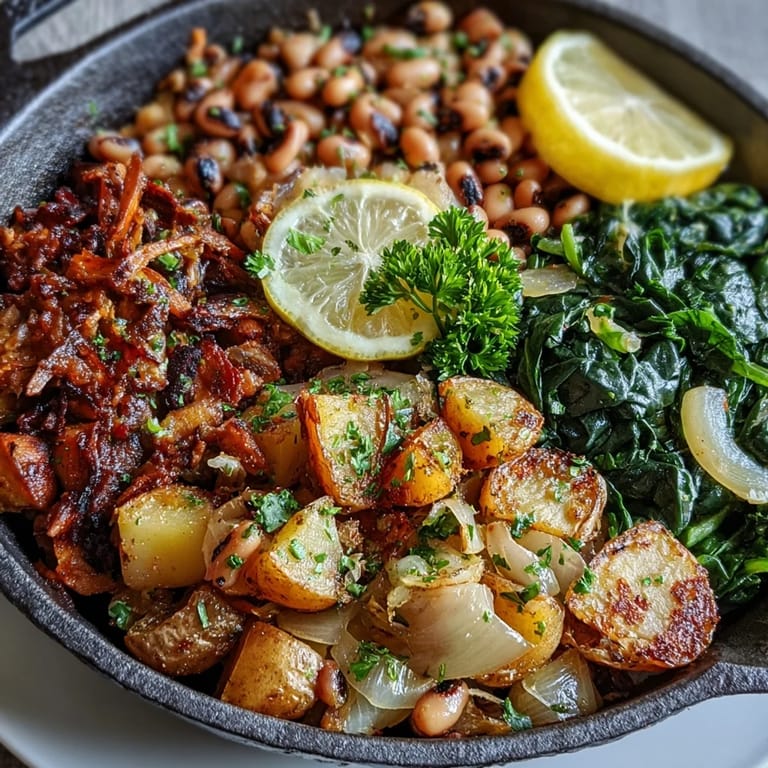
Save There's something about a cast iron skillet that makes even the simplest ingredients feel like they're becoming something special. I discovered this black-eyed pea dinner on a Tuesday evening when I had spinach that needed using and a can of black-eyed peas staring at me from the pantry. What started as a quick attempt at clearing my fridge turned into a weeknight staple I now make without thinking twice. The way everything softens together, the onions almost melting into the potatoes, the peas lending their subtle earthiness—it just works.
My neighbor stopped by one afternoon while I was making this, and the smell of caramelizing onions mixed with that smoky paprika had her asking questions before she even said hello. She ended up staying for dinner, and watching her face light up when she tasted how the creamy peas balanced with the bright lemon wedge—that's when I realized this recipe was worth keeping close.
Ingredients
- Olive oil (2 tablespoons): Use a good quality oil since it's one of the few fats in this dish—it carries flavor and helps everything brown properly.
- Large yellow onion (1, thinly sliced): Don't rush the onions; they should become soft and slightly caramelized, which takes about 3 to 4 minutes and transforms the entire skillet's flavor base.
- Yukon Gold potatoes (3 medium, diced): These waxy potatoes hold their shape beautifully and have a buttery quality that makes the dish feel richer than it is.
- Fresh spinach (3 cups, roughly chopped): Add it at the very end so it wilts just enough to soften but stays vibrant and full of nutrients.
- Black-eyed peas (2 cups cooked or 1 can, drained and rinsed): If using canned, rinse them thoroughly to remove excess sodium and any metallic taste that can sometimes linger.
- Garlic (3 cloves, minced): Add it after the potatoes have started to soften so it perfumes the skillet without burning.
- Smoked paprika (1 teaspoon): This is the secret ingredient that gives the dish its warmth and a hint of smokiness that feels almost sophisticated.
- Dried thyme (1/2 teaspoon): Thyme bridges the gap between the earthiness of the peas and the sweetness of the onions.
- Crushed red pepper flakes (1/4 teaspoon, optional): Add this if you like a gentle kick, or skip it entirely if you're serving to people who prefer milder flavors.
- Vegetable broth (1/2 cup, low-sodium): This liquid becomes almost a sauce as it reduces, so use something you'd actually drink—it matters.
- Fresh parsley (2 tablespoons chopped, optional): A last-minute sprinkle brings freshness and makes the finished dish look intentional and inviting.
- Lemon wedges (optional): Squeezing bright lemon juice over the warm skillet is optional but absolutely worth doing—it wakes up every flavor.
Tired of Takeout? 🥡
Get 10 meals you can make faster than delivery arrives. Seriously.
One email. No spam. Unsubscribe anytime.
Instructions
- Warm your skillet and start with onions:
- Pour the olive oil into your cast iron skillet and let it heat over medium heat until it shimmers slightly. Add the sliced onions and let them soften for 3 to 4 minutes, stirring occasionally, until they turn translucent and start to develop golden edges.
- Brown the potatoes gently:
- Stir in the diced Yukon Gold potatoes and cook for 10 to 12 minutes, stirring occasionally. You want them to develop a light golden color on the edges and become tender enough that a fork can pierce them easily.
- Bloom the spices:
- Add the minced garlic, smoked paprika, thyme, and red pepper flakes. Stir constantly for about 1 minute until the spices become fragrant and coat everything in the skillet—this is when the magic happens.
- Simmer everything together:
- Pour in the vegetable broth and add the black-eyed peas, stirring well. Cover the skillet and let it simmer for 8 to 10 minutes until the potatoes are completely tender and most of the liquid has been absorbed.
- Wilt the spinach and finish:
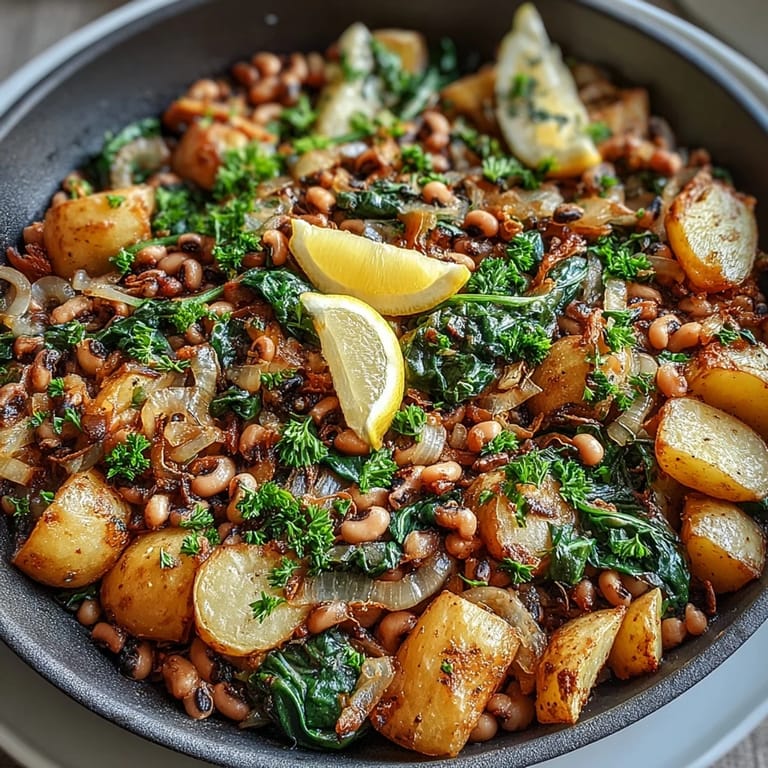
- Uncover the skillet and add the chopped spinach, stirring gently for 2 to 3 minutes until it becomes soft and dark green. Taste and add salt and pepper until everything feels balanced, then top with fresh parsley and serve with lemon wedges.
 Save
Save There was a moment when I made this for a friend who'd been feeling under the weather, and she sat at my kitchen counter with a bowl of this warm, comforting skillet dinner and actually smiled—not just smiled, but relaxed. It reminded me that food this unpretentious, this nourishing, has its own quiet power.
Why Cast Iron Makes a Difference
A cast iron skillet does something special with this dish that other pans don't quite manage. The heat distributes so evenly that the onions caramelize beautifully without any burnt spots, and the potatoes brown in a way that feels intentional rather than accidental. Plus, there's something about the weight of the skillet, the way it holds heat even after you uncover it, that keeps everything warm from the first bite to the last.
Customizing Your Skillet Dinner
The wonderful thing about this recipe is how flexible it actually is without losing its identity. You can switch the spinach for kale or Swiss chard if you want something with more structure and chew. If you're looking for extra protein, sautéed tempeh or tofu cubes stirred in at the end transforms it into something that feels even more substantial without changing the basic charm of the dish.
Serving and Pairing Ideas
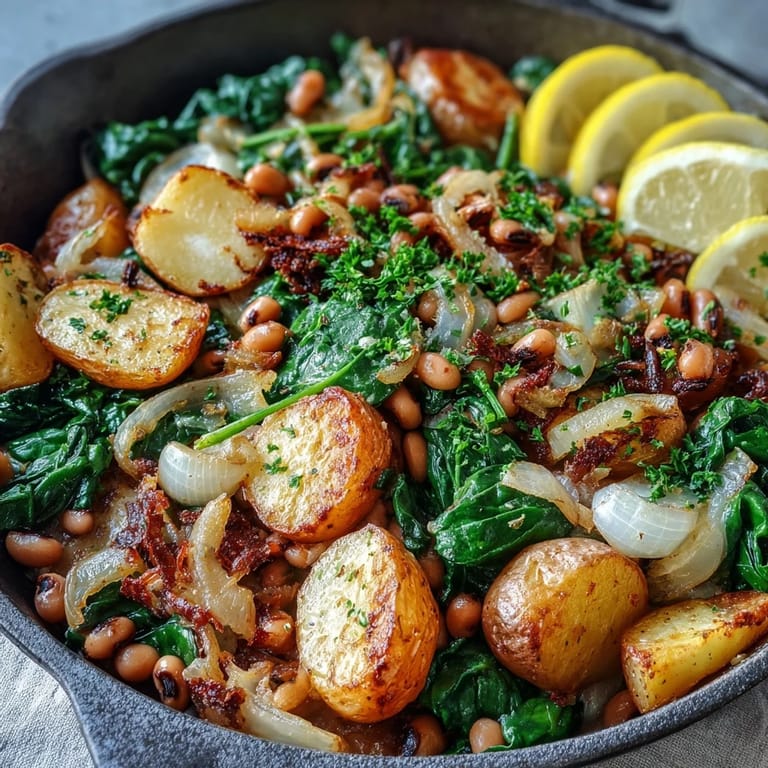
I usually serve this straight from the skillet if I'm eating casually, but if people are coming over I'll transfer it to a serving bowl and let everyone help themselves. A slice of cornbread on the side soaks up the flavors beautifully, or you can serve it over rice if you want something more filling. The lemon wedges are essential—they're not optional once you've tried them.
- Warm cornbread alongside this skillet transforms a weeknight dinner into something that feels special and intentional.
- If you make extra, it reheats gently in a skillet over medium-low heat, and tastes almost better the next day as flavors deepen.
- Leftover portions keep in the fridge for about three days and work beautifully as a cold lunch with a dollop of plain yogurt stirred through.
 Save
Save This skillet dinner has become my go-to answer when I'm tired but still want to eat something that feels like it was made with intention. It's honest food that doesn't pretend to be anything other than exactly what it is.
Recipe Questions
- → Can I use dried black-eyed peas instead of canned?
Yes, soak dried peas overnight and cook them separately until tender before adding to the skillet. This adds about 2-3 hours to the total preparation time.
- → What other greens work well in this skillet?
Kale, Swiss chard, or collard greens make excellent substitutes. Adjust cooking time slightly—tougher greens like collards may need a few extra minutes to wilt completely.
- → Is this skillet dinner freezer-friendly?
Absolutely. Let the dish cool completely, then transfer to airtight containers. It freezes well for up to 3 months. Thaw overnight in the refrigerator and reheat gently on the stovetop.
- → Can I make this without a cast iron skillet?
Any large heavy-bottomed skillet or Dutch oven works perfectly. The key is having a lid for simmering and enough surface area for even cooking.
- → What sides pair nicely with this dish?
Cornbread, warm crusty bread, or fluffy white rice complement the flavors beautifully. A simple side salad with vinaigrette also balances the hearty nature of the skillet.
- → How spicy is this dish with the red pepper flakes?
The optional 1/4 teaspoon adds gentle warmth without overpowering heat. For more spice, increase to 1/2 teaspoon or add a diced jalapeño with the onions.