 Save
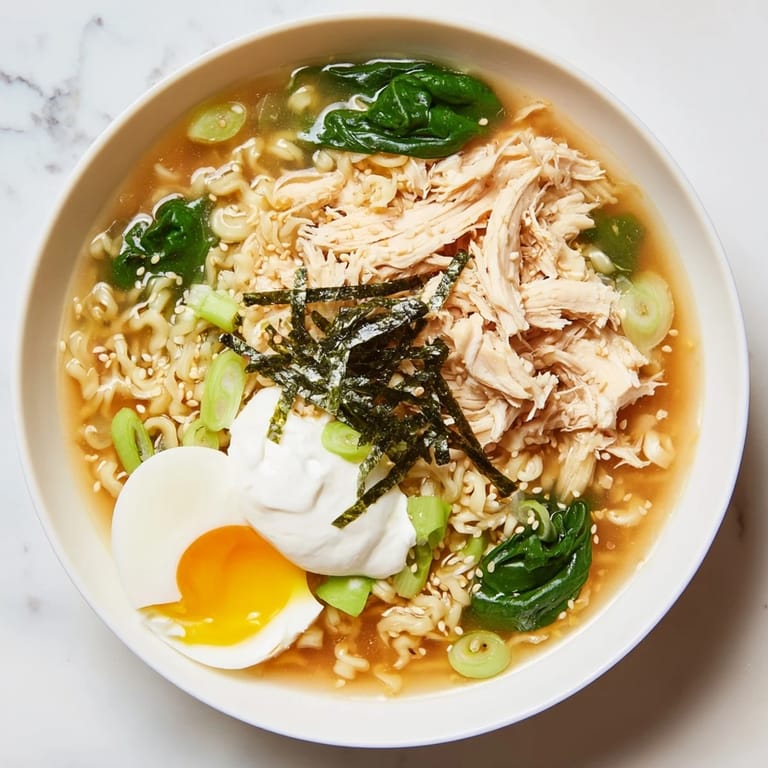
Save There's something about the smell of instant ramen bubbling away on the stove that takes me back to late nights in my apartment, but this version transformed it into something I actually looked forward to making. The turning point came when a friend brought a bottle of Kewpie mayo to a casual dinner, and I watched her swirl it into her bowl of simple ramen—the way it melted into the hot broth created this silky, tangy richness that felt luxurious. I started experimenting from there, adding a soft-boiled egg one week, some shredded chicken the next, until what once felt like a guilty-pleasure shortcut became something I'd proudly serve.
I made this for my partner on a rainy Sunday morning when neither of us wanted to leave the kitchen, and halfway through eating, he asked if I could make it again the next week. That's when I knew I'd landed on something special—not because it was complicated, but because it felt intentional in a way that instant ramen usually doesn't. The soft-boiled egg broke open at just the right moment, the yolk turning the broth into liquid gold, and suddenly we were both reaching for seconds.
Ingredients
- Instant chicken ramen (2 packs): The seasoning packets are doing the heavy lifting here, so don't skip them; they're what give this dish its backbone of flavor without any fuss.
- Cooked chicken breast: Shredded or sliced, it only needs warming through in the broth, so rotisserie chicken from the store works beautifully if you're short on time.
- Soft-boiled eggs (2): The 6–7 minute window is crucial; any longer and the yolk gets too firm, any shorter and it's too runny to halve neatly on top.
- Baby spinach or bok choy (1 cup): The heat of the broth wilts it down in seconds, so don't be shy with how much you add to the pot.
- Scallions (2), thinly sliced: Keep some raw on top for a sharp bite that cuts through the richness of the mayo and broth.
- Nori sheets: A strip or two adds that oceanic umami note that makes people pause mid-bite and ask what you did differently.
- Toasted sesame seeds (1 tablespoon): Toast them yourself if you have time; the difference in flavor is subtle but noticeable.
- Kewpie mayonnaise (2 tablespoons): This isn't regular mayo—it's richer and tangier, and it's the secret ingredient that makes people think you've done something fancy.
- Soy sauce and sesame oil: A teaspoon of each adds depth without overpowering the delicate balance of the dish.
Tired of Takeout? 🥡
Get 10 meals you can make faster than delivery arrives. Seriously.
One email. No spam. Unsubscribe anytime.
Instructions
- Boil the eggs first:
- Bring a pot of water to a rolling boil, gently lower your eggs in with a spoon, and set a timer for 6–7 minutes. You want that jammy center that breaks when you bite into it. Once the time is up, transfer them immediately to ice water so they stop cooking, then peel and set them aside.
- Get the noodles going:
- In a medium pot, bring water to a boil and add your ramen packs along with the seasoning packets according to package instructions. Don't overthink this step; the noodles know what to do.
- Warm the chicken and greens:
- During the last two minutes of cooking, add your shredded chicken and spinach (or bok choy) directly to the pot. You're not cooking them so much as gently heating them through in the broth, which takes almost no time at all.
- Season to taste:
- Stir in the soy sauce and sesame oil, tasting as you go. You're looking for that savory depth without drowning out the other flavors.
- Build the bowls:
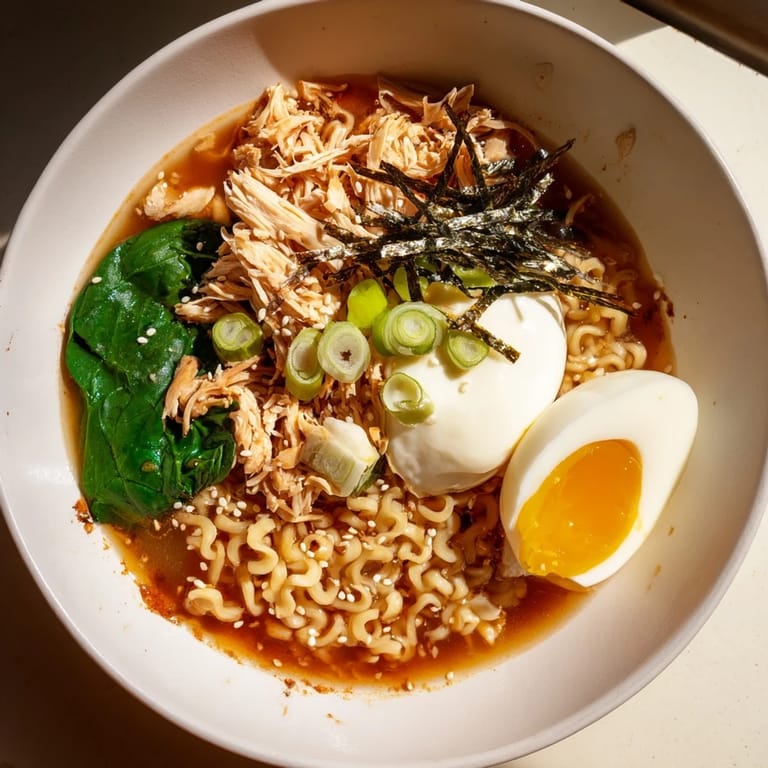
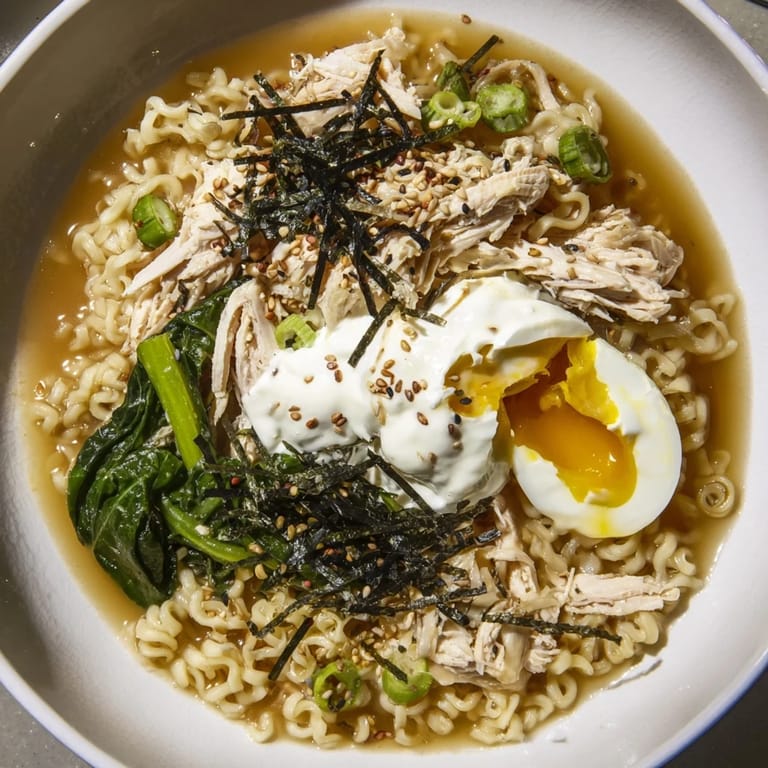
- Divide the noodles, broth, chicken, and greens between two bowls, then crown each with a halved soft-boiled egg, a generous spoonful of Kewpie mayo, a scattering of scallions, nori strips if you're using them, sesame seeds, and a crack of black pepper.
- Mix and serve:
- This is the moment where you swirl that mayo into the hot broth, watching it melt and create this silky coating on each noodle. Serve it while everything is still hot.
 Save
Save I learned the hard way that this dish lives in the moment—it's best eaten immediately, while the steam is still rising off the bowl and the egg yolk is warm enough to coat the noodles. There's something about the combination of temperatures and textures that only works in that golden window right after you've finished cooking.
The Mayo Moment
The first time I understood why Kewpie mattered was when I watched it swirl into the hot broth, creating this creamy, almost velvety texture that regular mayo just can't achieve. It's not about being fancy; it's about understanding that certain ingredients have specific jobs, and mayo from a Japanese grocery store was specifically designed for moments like this. If you can't find it, regular mayo will work, but you'll notice the difference—Kewpie has more egg yolks and less oil, giving it that distinctive tanginess and richness that feels almost luxurious when it dissolves into ramen.
Building Your Perfect Bowl
The order of toppings matters more than you'd think because it changes how you experience each bite. When the egg goes in first, it creates a little well in the center of the noodles where the yolk pools, seasoning each forkful. The scallions on top stay fresh and sharp, cutting through the richness, while the sesame seeds add a subtle nuttiness that makes you taste the broth differently. Think of it like composing a dish in layers—each element has a job, and they all work together to create something more interesting than the sum of their parts.
Customizing for What You Have
One of the best things about this recipe is how forgiving it is when you need to improvise. Don't have spinach? Use whatever greens are in your fridge—kale, arugula, even thinly sliced cabbage works beautifully. Rotisserie chicken from the grocery store is honestly better than cooking your own for this because it's already seasoned and you save 20 minutes. The nori is optional because not everyone loves seaweed, and that's completely fine; the dish stands on its own without it.
- Drizzle a little chili oil or a sprinkle of shichimi togarashi (Japanese seven-spice blend) over the top if you want heat and complexity.
- Add a splash of mirin or a pinch of sugar to the broth if your instant ramen tastes too salty—it balances everything out beautifully.
- Cook an extra egg if you're feeling indulgent; a second yolk is never a mistake in this bowl.
 Save
Save This is the kind of recipe that teaches you something every time you make it, whether it's about timing, flavor balance, or just how much better food tastes when you're thoughtful about putting it together. It's proof that ramen doesn't have to be rushed.
Recipe Questions
- → Can I use leftover chicken instead of fresh chicken breast?
Yes, shredded rotisserie or roast chicken works well and adds convenience without sacrificing flavor.
- → How do I prepare the soft-boiled eggs perfectly?
Boil eggs gently for 6–7 minutes, then transfer to ice water to stop cooking, producing creamy yolks and tender whites.
- → What is the role of Kewpie mayonnaise in the dish?
Kewpie mayo enriches the broth with a creamy texture and mild umami, enhancing the noodles’ flavor and smoothness.
- → Can I substitute baby spinach with other greens?
Bok choy makes a great alternative, offering a fresh, crisp texture that complements the other ingredients.
- → Are there optional toppings to enhance flavor?
Adding chili oil or shichimi togarashi introduces a spicy kick, while nori strips and sesame seeds provide extra aroma and crunch.