 Save
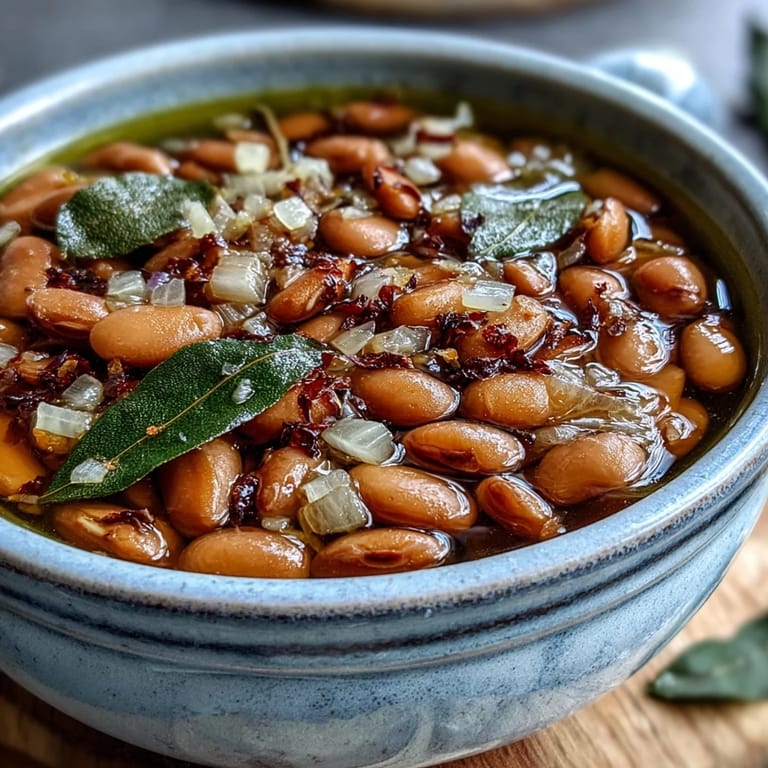
Save The smell of pinto beans simmering on the back burner takes me straight to my grandmother's tiny kitchen, where a single pot would feed the whole neighborhood. She never measured anything, just knowing by instinct when the beans were tender enough to serve. I've spent years trying to recreate that magic, watching pot after pot turn out too firm or mushy, until I finally understood that patience and a few aromatics make all the difference.
Last winter, my neighbor came over during a snowstorm with nothing but a bag of tortillas. We sat at my kitchen table for hours, eating these beans straight from the pot while watching the flakes pile up outside. She told me about her childhood in Mexico, where her mother would cook beans exactly like this every Monday. That afternoon turned into a monthly tradition, and now neither of us can imagine letting winter pass without a pot of beans on the stove.
Ingredients
- 1 pound dried pinto beans, rinsed: Sorting through the beans first catches any small stones or shriveled pieces that will not soften
- ½ medium yellow onion, finely diced: The onion melts into the beans as they cook, adding sweetness without any texture
- 2 teaspoons garlic, minced: Fresh garlic gives a mellow flavor compared to garlic powder
- 2 bay leaves: This subtle aromatic is the secret to beans that taste like they came from a restaurant kitchen
- ⅓ cup extra-virgin olive oil: The fat coats each bean, making them silky and rich
- 4 cups cold water: Cold water prevents the beans from toughening up when they hit the heat
- 1 tablespoon kosher salt: Adding salt at the end keeps the bean skins from getting tough
Tired of Takeout? 🥡
Get 10 meals you can make faster than delivery arrives. Seriously.
One email. No spam. Unsubscribe anytime.
Instructions
- Soak the beans:
- Place the beans in a large bowl and cover with cold water by about 3 inches. Let them sit at room temperature for 8 to 24 hours.
- Start cooking:
- Drain and rinse the beans, then put them in a Dutch oven with the water, onion, garlic, bay leaves, and olive oil.
- Bring to a boil:
- Set the pot over medium-high heat and wait for bubbles to form, skimming off any foam that rises to the top.
- Simmer gently:
- Lower the heat to medium-low and let the beans cook uncovered, stirring now and then and adding water if they start to peek above the surface.
- Season and finish:
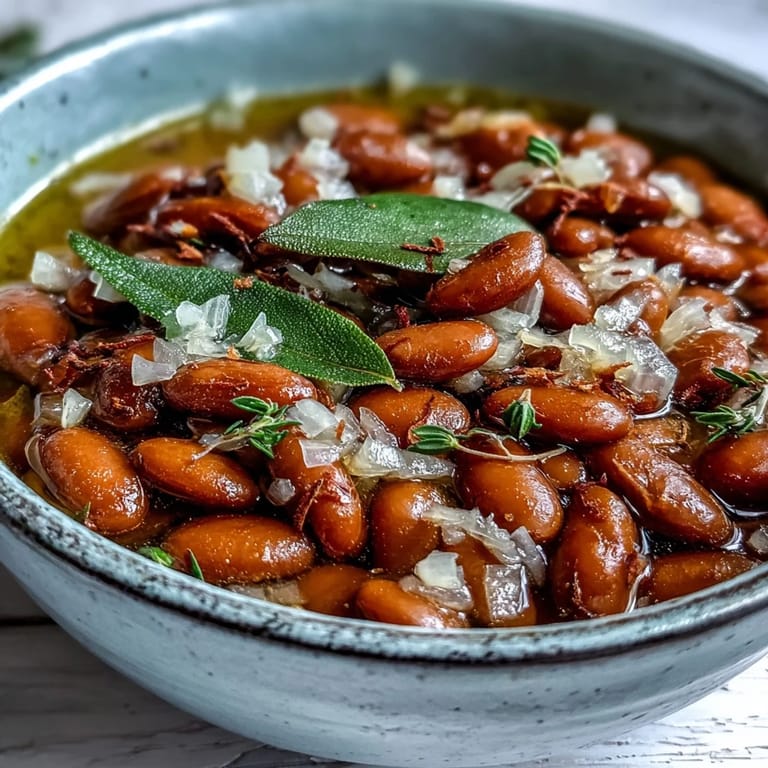
- Stir in the salt during the last 10 minutes of cooking, then discard the bay leaves when the beans are tender.
 Save
Save 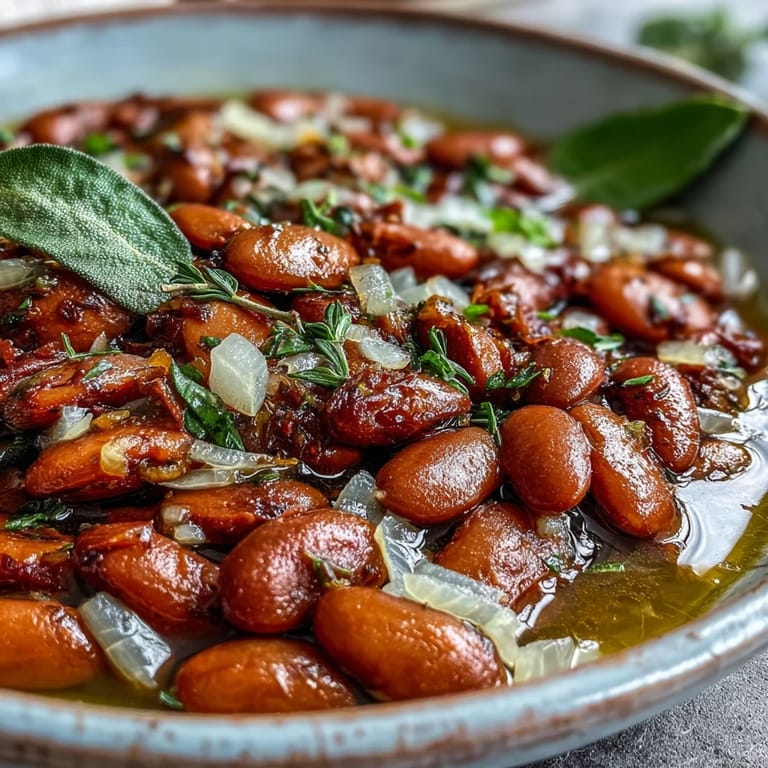 Save
Save These beans have become my go-to gift for new parents and friends recovering from surgery. I pack them in mason jars with some of the cooking liquid, and somehow something so simple feels like a genuine offering of care. One friend told me the beans got her through an especially difficult week, eating them for breakfast with a fried egg on top.
Making Ahead
The beans actually taste better the next day, once they have had time to sit in their own liquid. I often cook a batch on Sunday and use them throughout the week in everything from breakfast burritos to quick lunches. The flavor develops as they rest, becoming deeper and more rounded.
Variations
A smoked ham hock or a piece of bacon transforms these into something entirely different, smoky and substantial. My vegetarian sister swears by adding a dried chipotle pepper during cooking for that same depth of flavor without meat. Sometimes I throw in a diced jalapeño if I want extra heat.
Serving Ideas
Mash some of the beans against the side of the pot to thicken the liquid, then serve over rice with pickled onions and hot sauce. They also make the simplest taco filling, topped with crumbled queso fresco and cilantro.
- Warm corn tortillas and a squeeze of lime turn these beans into a complete meal
- Fry leftovers in a skillet with some oil and cumin for instant refried beans
- Stir into soup or chili for extra body and protein
 Save
Save 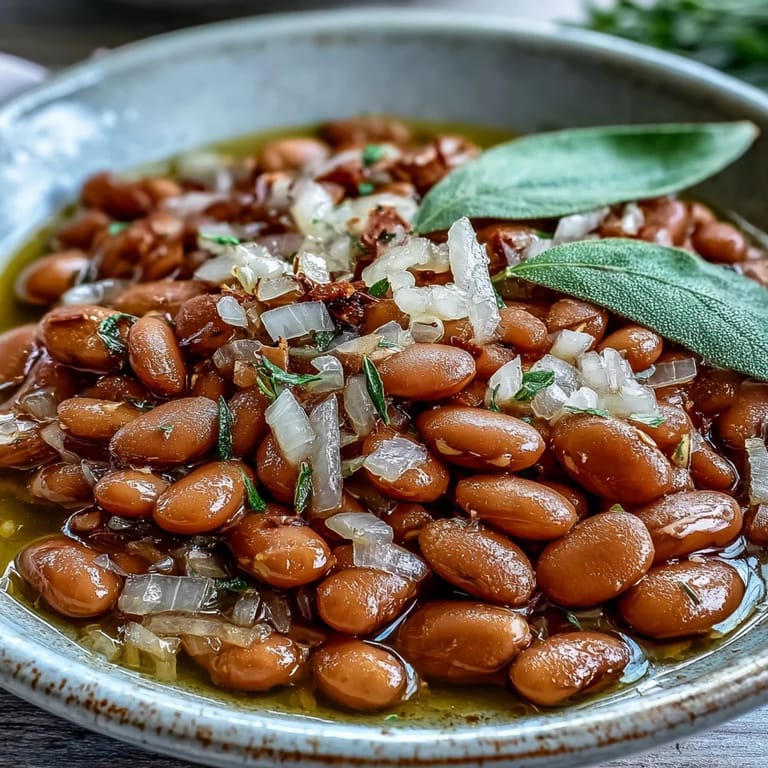 Save
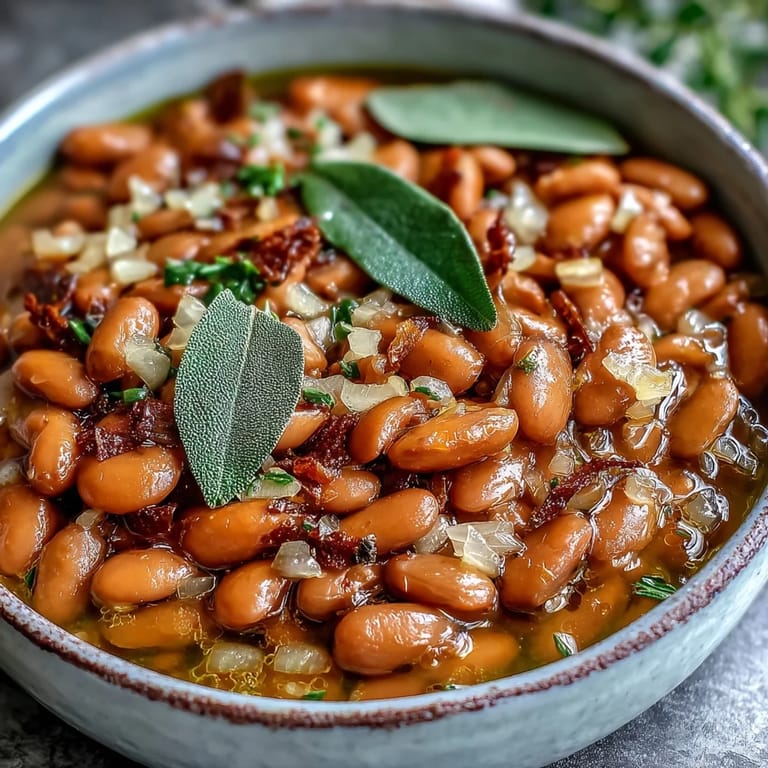
Save There is something deeply satisfying about transforming dried beans into something nourishing with so little effort. Every batch brings me closer to understanding what my grandmother knew all along, that good food is mostly about showing up and waiting.
Recipe Questions
- → Do I need to soak pinto beans before cooking?
Yes, soaking dried pinto beans for 8-24 hours rehydrates them evenly, reduces cooking time, and helps break down compounds that can cause digestive discomfort.
- → Why add salt in the last 10 minutes?
Adding salt near the end prevents the beans from becoming tough during cooking. This timing ensures proper seasoning while maintaining tenderness.
- → Can I skip the olive oil?
You can use a neutral oil or omit it entirely for a lower-fat version, though olive oil contributes to the creamy texture and rich mouthfeel.
- → How do I know when the beans are done?
Beans are ready when they're tender and creamy inside but still hold their shape. Taste test a few beans—they should offer no resistance when gently pressed between tongue and palate.
- → What's the purpose of skimming foam?
Skimming removes foam that forms from proteins and impurities released during boiling, resulting in cleaner-tasting beans and clearer cooking liquid.
- → Can I cook these without soaking?
You can cook unsoaked beans, but they'll require 2-3 hours of simmering and may cook less evenly. Soaking remains the recommended method for best texture.