 Save
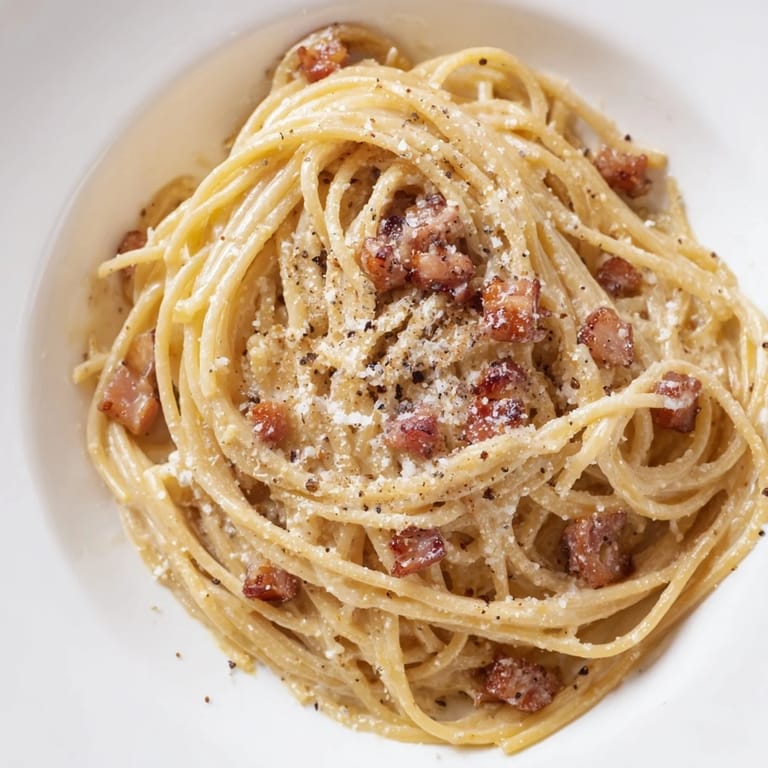
Save The first time I made carbonara on a weeknight, I had maybe fifteen minutes before my partner got home hungry from work. No fancy ingredients, no time for fussing—just eggs, bacon, and pasta already in the pantry. What came out of that skillet was pure magic: creamy, rich, and somehow elegant despite the rush. That's when I realized this Roman dish isn't about complexity; it's about knowing exactly what you're doing and moving fast.
I remember cooking this for a friend who claimed she couldn't make pasta sauces without burning things. Watching her face when that silky sauce came together perfectly in the pan—no cream, no cream, no cream, just eggs turning into velvet—made her a believer. She's made it at least twice a week since.
Ingredients
- Spaghetti: 200 g (7 oz) dried—the shape matters less than using what you love, but spaghetti's thickness holds the sauce just right.
- Eggs: 2 large—room temperature if you remember, straight from the fridge if you don't, but the warmer the pasta the safer you are.
- Parmesan cheese: 40 g (1/3 cup) freshly grated—pre-grated cheese has anti-caking agents that can make your sauce grainy, so spend thirty seconds with a grater.
- Black pepper: 1/4 tsp freshly ground—this isn't a pinch, it's a real flavor player in carbonara.
- Bacon or pancetta: 100 g (3.5 oz) diced—pancetta is more traditional and smoother, but crispy bacon brings its own honest charm.
- Extra Parmesan and cracked black pepper: for finishing the plate, because the last thing you taste sets the mood.
Tired of Takeout? 🥡
Get 10 meals you can make faster than delivery arrives. Seriously.
One email. No spam. Unsubscribe anytime.
Instructions
- Get the water going:
- Fill a large pot most of the way with water and salt it generously—it should taste like the sea. Bring it to a rolling boil while you prep everything else.
- Mix your sauce base:
- Whisk the eggs, grated Parmesan, and black pepper together in a bowl until smooth and combined. This is your insurance policy against scrambled eggs; having it ready means no hesitation when things move fast.
- Start the bacon:
- While the water's heating, dice the bacon and put it in a large skillet over medium heat. You want golden edges and some crispy bits, which takes about three to four minutes. Listen for the sizzle to quiet down—that's your cue it's done.
- Cook the pasta:
- Drop the spaghetti into boiling water and cook until al dente, following the package time but checking a minute early. Before draining, scoop out about 80 ml (1/3 cup) of that starchy water into a cup—this liquid gold is what turns eggs into silk.
- The magic moment:
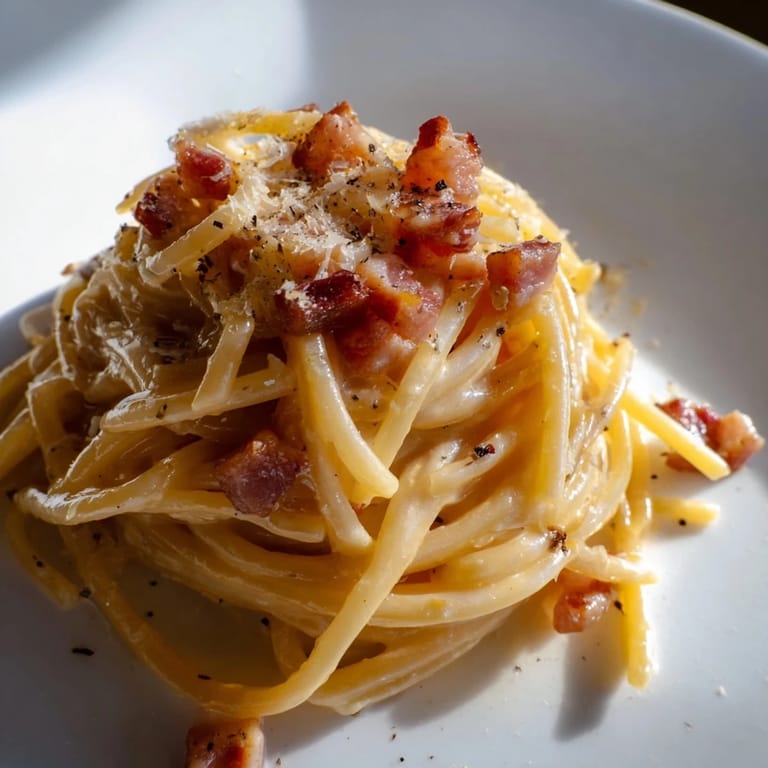
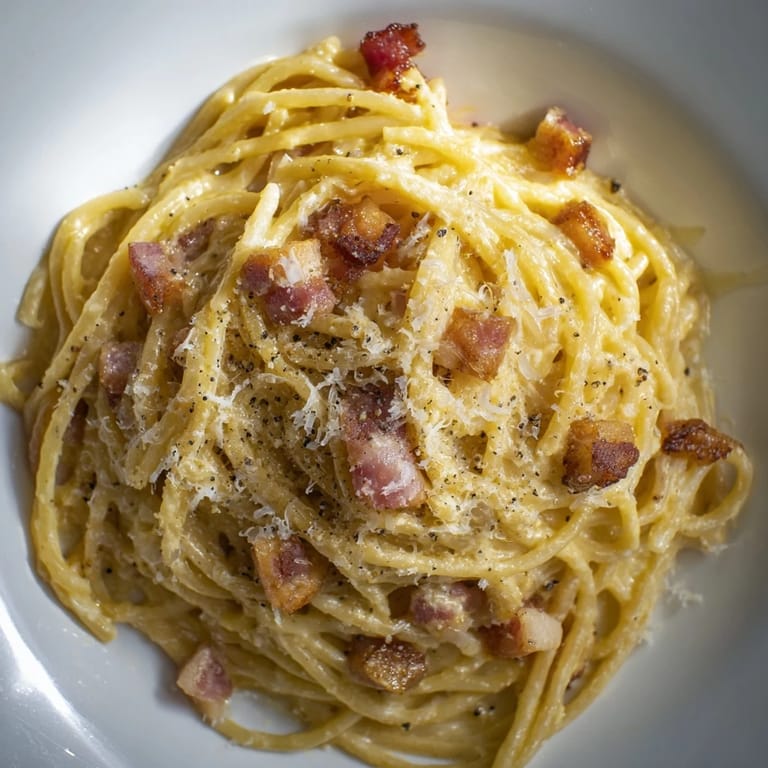
- Take the skillet with bacon off the heat first. Add the drained, still-hot pasta directly into the bacon and toss it around for a few seconds. Pour in the egg mixture while tossing constantly and vigorously, then add the reserved pasta water a splash at a time until you see a creamy coating forming around every strand.
- Plate and serve:
- Divide between bowls immediately, top with more Parmesan and a generous crack of black pepper, and eat while it's warm.
 Save
Save Once, I got impatient and didn't stir constantly while adding the eggs, and ended up with a weird texture—some bits creamy, some bits with flecks of scrambled egg. It was a humbling reminder that carbonara rewards focus. Now I treat those thirty seconds of vigorous tossing like meditation, and it's never failed me since.
The Science of Creamy Pasta
There's no cream in carbonara, which baffles people until they taste it. The egg yolk acts as an emulsifier, the starch in the pasta water helps bind everything together, and the residual heat of the hot pasta cooks the eggs just enough to thicken them without scrambling. It's chemistry you can taste, and understanding how it works makes you a better pasta cook overall.
Why This Recipe Works in a Rush
Every ingredient in carbonara is essential and nothing is decorative. The bacon brings smokiness and salt, the eggs provide richness and body, the Parmesan adds umami and a slight tang, and the pasta water is the silent hero that holds it all together. There's nowhere to hide if something's mediocre, which is exactly why it matters so much to use good eggs and freshly grated cheese.
Variations Worth Trying
If you can't find pancetta, bacon works beautifully and tastes like honest cooking. Some cooks add a minced garlic clove to the bacon in the last minute, which adds a whisper of flavor if you're generous with it. Pecorino Romano instead of Parmesan gives you a sharper, more peppery bite that some say is more Roman—try both and decide which feels like home on your plate.
- A small pinch of red pepper flakes stirred into the eggs brings welcome heat without drowning the delicate flavors.
- If you only have half the bacon you need, stretch it by tossing in some peas or mushrooms alongside the pasta.
- Fresh cracked pepper is non-negotiable; the bottle stuff tastes like dust compared to what a grinder gives you.
 Save
Save Carbonara taught me that the best meals aren't the ones that take hours; they're the ones made with attention and care, even when you're moving fast. This dish reminds you every time you make it that simplicity, done right, is all you ever need.
Recipe Questions
- → How do I prevent the eggs from scrambling?
Toss the pasta off the heat and add the egg mixture gradually, stirring quickly and adding reserved pasta water to create a smooth, creamy sauce.
- → Can I use pancetta instead of bacon?
Yes, pancetta works perfectly, offering a traditional smoky flavor and crisp texture when cooked before mixing with pasta.
- → What type of cheese works best here?
Freshly grated Parmesan is ideal, but Pecorino Romano can be used for a sharper, authentic taste.
- → Why is reserved pasta water added?
Adding reserved pasta water helps loosen the sauce, creating a silky texture that clings to the spaghetti evenly.
- → How long does this dish take to prepare?
The entire process takes about 20 minutes, including boiling pasta and cooking bacon, making it a quick and satisfying option.
- → Can garlic be added to enhance flavor?
Yes, adding minced garlic while frying bacon adds depth; just remove cloves before combining with pasta to keep balance.