 Save
Save I discovered the Infinity Loop Flow on a sun-drenched afternoon in a small coastal restaurant where the chef plated dishes like they were creating art installations. Watching salmon flakes nestle into a figure-eight of couscous, surrounded by jewel-toned vegetables, I realized this wasn't just dinner—it was a conversation between ingredients. That moment sparked the idea to recreate it at home, and now it's become my signature way of saying I care through food.
The first time I made this for my sister, she literally paused mid-bite and asked how long I'd been secretly training as a chef. That moment—when someone experiences food as art—is when you understand why this dish matters. It's become the centerpiece of every gathering since.
Ingredients
- Fresh salmon fillets: Two 150-gram fillets of skinless salmon provide the protein anchor that makes this dish feel substantial. I learned the hard way that salmon should be at room temperature before cooking, which ensures it cooks evenly without drying out at the edges.
- Pearl couscous: Half a cup is your foundation for the figure-eight, holding its shape beautifully and providing a canvas for everything else. It absorbs the vegetable broth's subtle flavors without becoming mushy.
- Zucchini, carrot, and fennel: Slice these on a mandoline if you have one—consistency matters when you're creating visual rhythm. The thinness lets them soften quickly while maintaining that jeweled appearance.
- Baby spinach: A full cup fills the gaps and adds a verdant contrast that brings the whole loop to life.
- Greek yogurt: Two tablespoons mixed with lemon zest and dill becomes your flavor bridge, adding creaminess without heaviness.
- Lemon zest, fresh dill, capers, and toasted pine nuts: These garnishes are where the personality emerges—don't skip them. The zest brightens everything, the dill echoes the fennel's subtle licorice notes, capers add a briny snap, and pine nuts bring a whispered crunch.
- Olive oil and seasonings: Quality olive oil makes a difference here since you're not masking it with heavy sauces. Salt and pepper are your final adjustment tools.
Tired of Takeout? 🥡
Get 10 meals you can make faster than delivery arrives. Seriously.
One email. No spam. Unsubscribe anytime.
Instructions
- Heat your oven and start the couscous:
- Set your oven to 180°C and bring that vegetable broth to a rolling boil. You'll know it's ready when it's actively bubbling. Add the pearl couscous, watch it for a moment, then lower the heat and cover. The next ten minutes are when you prepare everything else—multitasking is your friend here.
- Blanch the vegetables with purpose:
- Boil a large pot of salted water—make it taste like the sea. Drop in your thinly sliced zucchini, carrot, and fennel in batches, giving each about 1 to 2 minutes depending on thickness. You're looking for them to be just tender with a whisper of resistance. This is where your eyes and fingers matter more than the clock. The moment they're done, scoop them into ice water to lock in that vibrant color and stop the cooking.
- Bake the salmon until just cooked through:
- Pat your salmon dry, brush with olive oil, and season generously with salt and pepper. Place on parchment paper and slide into the oven. In 12 to 15 minutes, the salmon should flake easily with a fork but still have that slight translucence in the center—this is perfection. Let it cool slightly so you can handle it, then gently break it into large, elegant flakes.
- Create your yogurt dressing:
- In a small bowl, combine Greek yogurt with your lemon zest and finely chopped fresh dill. Taste it. Let the lemon and dill guide you—if you want more brightness, add another pinch of zest. This dressing is the thread connecting all the flavors.
- Compose the infinity loop:
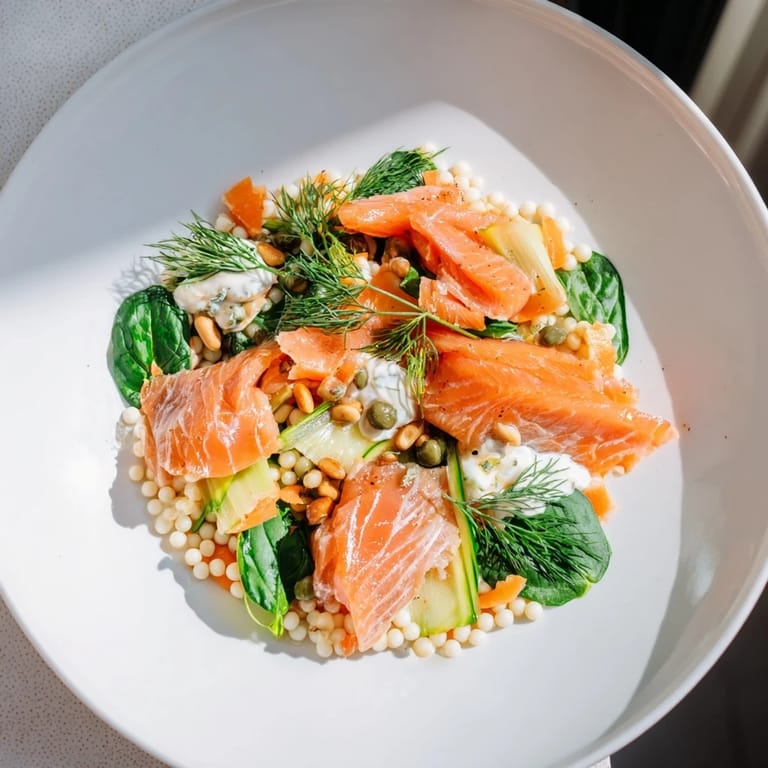
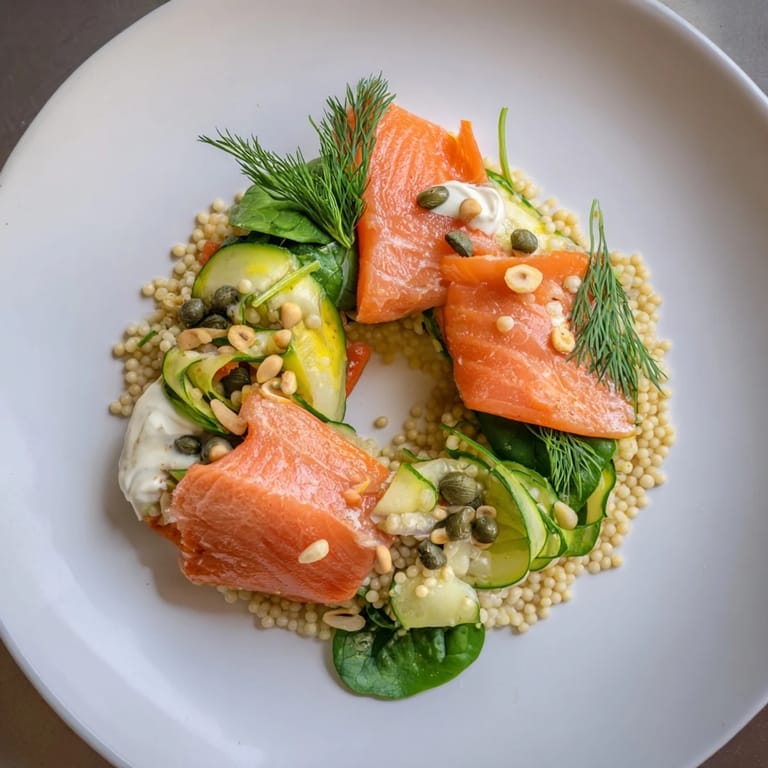
- This is where patience becomes your greatest tool. On a large platter or individual plates, spoon the fluffed couscous in a flowing figure-eight pattern. As you move along the loop, arrange your blanched vegetables and spinach, alternating colors—the orange carrot, pale green zucchini, white fennel—creating a visual rhythm that guides the eye. Nestle your salmon flakes into the natural curves of the couscous. Now dot the design with your yogurt dressing, adding small amounts strategically so each bite has access to creaminess. Finish with scattered capers and a generous shower of toasted pine nuts.
- Serve with intention:
- Bring the platter to the table as it is—let people see it before they eat it. This moment matters. If plating individually, take your time creating that same sense of flow and purpose on each plate. Serve immediately while the couscous is still warm and everything is at its most beautiful.
 Save
Save There's a quiet magic in watching people slow down when they encounter beautiful food. I'll never forget my partner asking me to make this again before they'd even finished the first bite—the conversation could wait, but this dish needed their full attention.
The Art of Plating with Purpose
The Infinity Loop Flow taught me that presentation isn't vanity—it's an extension of flavor. When ingredients are arranged with intention, people taste differently. They pause. They notice how the cool couscous meets the warm salmon, how the crisp capers punctuate the softness of blanched vegetables. The figure-eight pattern creates a narrative, a path for the fork to follow, and that creates a rhythm to the meal itself.
Adapting the Loop for Your Pantry
While salmon is the star in my version, this dish welcomes change. I've made it with trout when salmon wasn't available, and the earthier notes actually complemented the fennel beautifully. Cod creates a lighter, more delicate version. The vegetables too—if radish or beet call to you, their colors will sing in the figure-eight. The couscous can become farro for more texture, or even wild rice if you want the loop to have more structure and bite.
Wine Pairings and Table Moments
This dish sings alongside crisp Sauvignon Blanc, where the wine's herbal notes echo the dill and fennel. A light-bodied Pinot Gris brings minerality that amplifies the capers. But beyond the wine itself, this is a dish that creates space for conversation. It's not heavy, so you can linger at the table. It's beautiful enough to be the focus, but elegant enough not to demand all the attention. It's the dish that makes people grateful to be gathered together.
- If you're entertaining, you can prepare the couscous and vegetables up to four hours ahead—just store them separately and assemble just before serving to keep everything at its freshest
- The yoga dressing can be made earlier in the day and stored covered in the refrigerator, bringing it to cool room temperature before plating
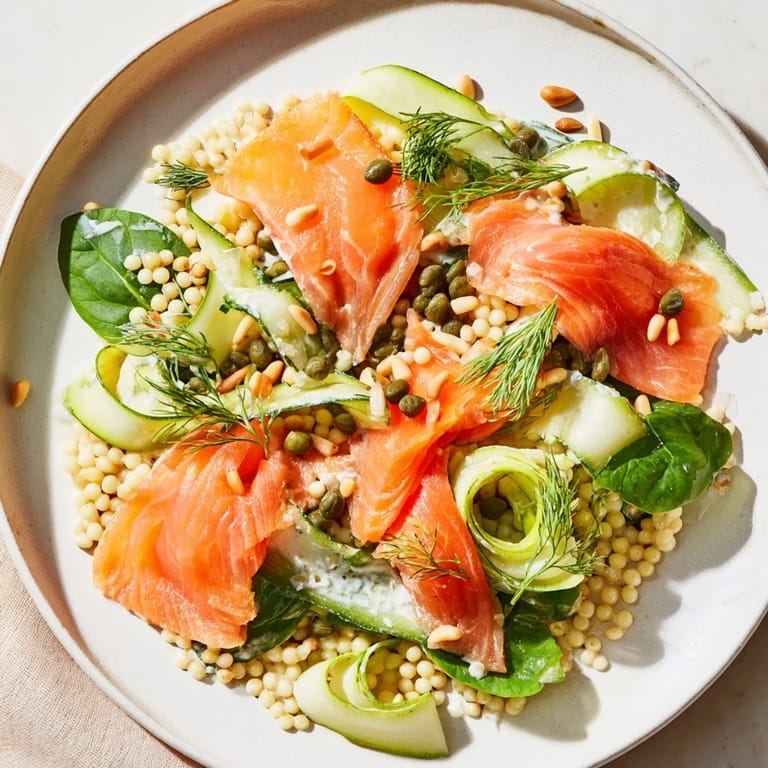
- Consider your platter's background when composing—a dark slate or neutral ceramic makes the colors pop, while white plates create an entirely different energy
 Save
Save The Infinity Loop Flow reminds us that great food is about more than sustenance—it's about creating moments. When you serve this, you're offering people an experience of calm and beauty in the midst of ordinary life.
Recipe Questions
- → How is the couscous prepared?
Pearl couscous is simmered in vegetable broth until tender, then fluffed with a fork before plating.
- → What vegetables are used and how are they cooked?
Thinly sliced zucchini, carrot, and fennel are blanched briefly to preserve color and texture, then cooled in ice water.
- → How is the salmon cooked for this dish?
Salmon fillets are rubbed with olive oil, seasoned, and baked until just cooked through, then gently broken into flakes.
- → What adds flavor and freshness to the dish?
A yogurt dressing mixed with lemon zest and fresh dill provides a tangy freshness that complements the other ingredients.
- → How is the infinity loop arrangement achieved?
The couscous is spooned on a platter in a figure-eight shape, with alternating layers of vegetables and spinach, topped with salmon flakes, capers, and pine nuts for texture and visual appeal.