 Save
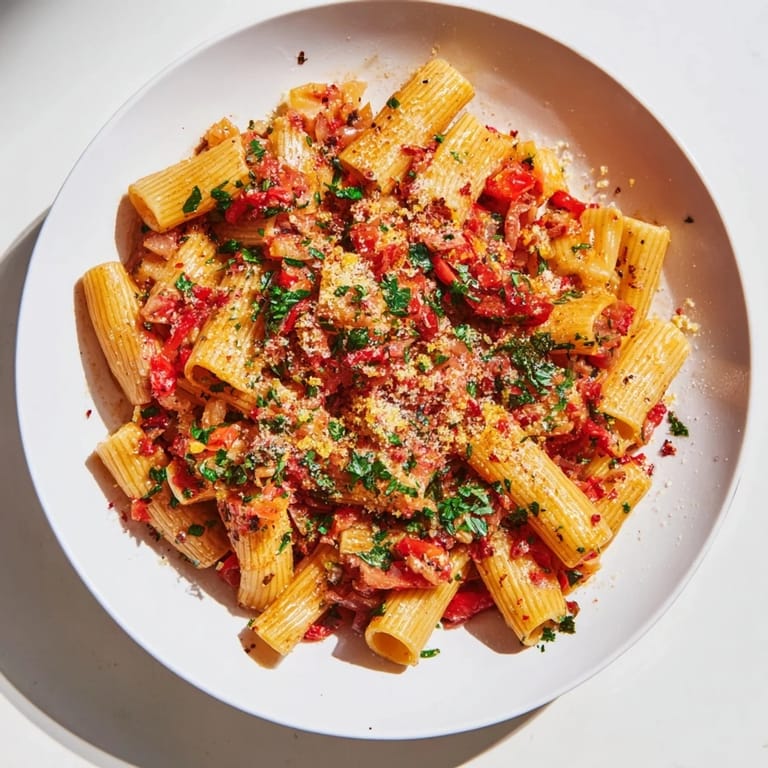
Save The first time I made Diavola pasta, I was standing in my kitchen on a random Tuesday evening, staring at an almost-empty pantry and a craving I couldn't shake. What started as a desperate attempt to turn canned tomatoes and dried herbs into something spectacular became one of those happy accidents that now shows up on my table at least twice a month. There's something about the way the heat builds with each spoonful, how the red pepper flakes seem to wake up everything they touch, that keeps me coming back to this one-pot wonder.
I'll never forget the evening I served this to my neighbor who stopped by unannounced just as I was finishing dinner. She took one bite, paused, and then asked for the recipe before she'd even sat down. That's when I realized this wasn't just convenient weeknight cooking; it was the kind of dish that makes people lean in closer and ask for more.
Ingredients
- Penne or rigatoni, 350 g: The tubes and ridges trap that fiery sauce beautifully, so don't skimp on shape here.
- Water or vegetable broth, 1 L: Broth adds depth, but water works perfectly fine if that's what you have on hand.
- Red onion, 1 medium: The sweetness balances the heat, and it softens into something almost creamy as everything cooks together.
- Garlic, 3 cloves minced: Mince it fine so it melts into the sauce rather than lurking in chunks.
- Red bell pepper, 1: Thin slices give you bursts of sweetness and texture; I learned the hard way that thick chunks stay firm.
- Canned diced tomatoes, 400 g: Don't drain them; those juices are liquid gold for building sauce.
- Olive oil, 2 tbsp: Good quality makes a difference here since it's one of your main flavor players.
- Italian seasoning, 2 tsp: This is your flavor anchor, so measure it properly.
- Crushed red pepper flakes, 1½ tsp: Start here and taste as you go; heat levels vary wildly between brands.
- Smoked paprika, 1 tsp: It adds warmth and depth without additional spice, a trick I picked up experimenting.
- Salt and black pepper: These aren't just background players; they amplify everything else.
- Parmesan cheese, 40 g: Freshly grated makes a real difference in how it melts into the hot pasta.
- Fresh parsley or basil, 2 tbsp: Add it at the end so it stays bright and alive on your plate.
- Lemon zest, ½ lemon: Optional but honestly, it's the secret that elevates this from good to unforgettable.
Tired of Takeout? 🥡
Get 10 meals you can make faster than delivery arrives. Seriously.
One email. No spam. Unsubscribe anytime.
Instructions
- Build your flavor base:
- Heat that olive oil until it shimmers, then add your chopped red onion. Listen for the gentle sizzle and watch it turn translucent and soft, about 2 to 3 minutes. This is your foundation, so don't rush it.
- Add the aromatic layer:
- Stir in the minced garlic and red bell pepper, and let the kitchen fill with that incredible fragrant smell. Two minutes is plenty; you want them softened but still holding their shape.
- Bring everything together:
- Pour in your canned tomatoes with all their juices, add the dry pasta, broth or water, and all your seasonings. Stir it well so nothing sticks to the bottom; you're making sure every strand of pasta gets coated with flavor from the start.
- Let it simmer and transform:
- Bring the whole pot to a boil, then lower the heat and let it bubble away uncovered for 12 to 14 minutes, stirring every couple of minutes. You're looking for that moment when the pasta is tender but still has a slight bite, and the liquid has mostly soaked in.
- Finish with finesse:
- Remove from heat and stir in your grated Parmesan and that lemon zest if you're using it. Taste and adjust the salt, pepper, or heat to match your mood.
- Plate and celebrate:
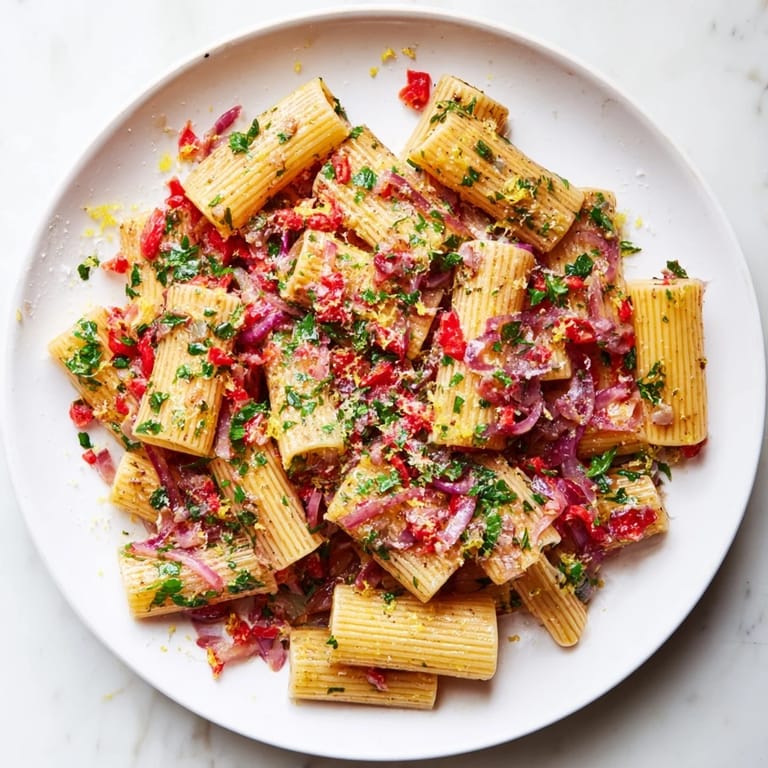
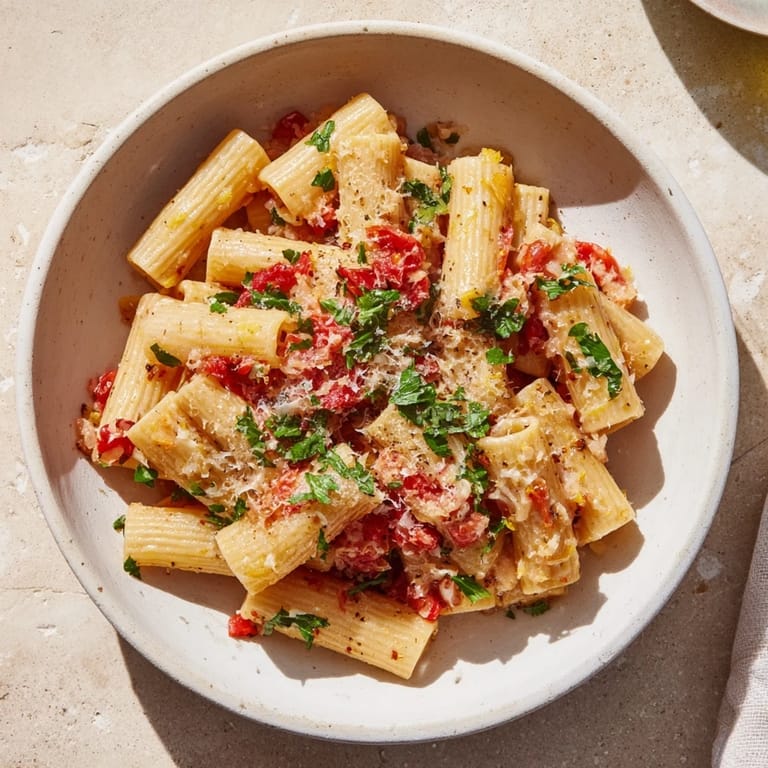
- Spoon it into bowls, top with fresh herbs and extra cheese, and take a moment to appreciate the fact that you made something this delicious without much fuss.
 Save
Save What gets me about this dish is how it turned cooking into something social even when I'm alone in the kitchen. There's a rhythm to it, a dance between the heat and the stirring, that feels meditative and alive at the same time.
The Heat Is Yours to Control
One of the beautiful things about this recipe is that spice isn't a surprise hiding in your bowl; you decide exactly how much fire you want. Start with 1 teaspoon of red pepper flakes if you're cautious, taste after everything is cooked, and add more if your heat tolerance is higher. I've found that people remember dishes that let them make choices, and this one does exactly that. Some nights I'm cooking for friends who think anything spicier than black pepper is an assault, and other nights I'm cooking for myself and pushing that heat as far as it will go.
Why One-Pot Cooking Changed My Dinner Routine
Honestly, the biggest revelation about this recipe isn't the flavor, though that's spectacular; it's the peace of mind that comes with having just one pot to clean afterward. There's something freeing about finishing dinner, looking at your sink, and seeing almost nothing there. This is real food, substantial and satisfying, but it respects your time and your sanity. I started making it on nights when everything felt chaotic, and now it's become my go-to solution whenever I want something that tastes like I spent hours cooking when I actually spent maybe thirty minutes.
When to Make This and What to Serve Alongside
I reach for this pasta on weeknights when I'm tired but still want something with personality, on weekends when unexpected guests stop by and I need to look like I have my life together, and honestly, sometimes just because I'm craving that specific blend of warmth and spice. Pair it with a crisp Pinot Grigio if you're in the mood, or just a cold glass of water if the heat is doing its job. The beauty of one-pot cooking is that you can have dinner on the table while your kitchen is still clean, which means you have energy left over for actually enjoying the meal and the company.
- A simple green salad with lemon vinaigrette cuts through the richness beautifully.
- Crusty bread is non-negotiable for soaking up every last bit of that sauce.
- If you want protein beyond what's in the pasta, sliced Italian sausage or shrimp stirred in at the end makes it feel like a completely different dish.
 Save
Save This pasta has become my answer to the question of how to cook something that feels indulgent without feeling complicated. Every time I make it, I'm reminded that the best recipes are the ones that work with you, not against you.
Recipe Questions
- → What pasta types work best for this dish?
Penne or rigatoni are ideal as their shapes hold the sauce well and maintain texture during one-pot cooking.
- → How spicy is the dish and can the heat be adjusted?
The crushed red pepper flakes provide moderate heat, which can be scaled up or down to suit personal preference.
- → Can I substitute the Parmesan cheese for a vegan option?
Yes, nutritional yeast can be used as a flavorful vegan alternative to Parmesan without compromising taste.
- → Is this dish suitable for meal prep or freezing?
It reheats well and can be stored in the refrigerator for a few days, but freezing may alter pasta texture slightly.
- → What cooking vessel is recommended for even results?
A deep skillet or Dutch oven ensures even heat distribution and enough space for pasta to cook fully in liquid.
- → Can protein be added to this pasta?
Yes, cooked chicken sausage or sautéed shrimp can be stirred in toward the end for added protein and flavor.