 Save
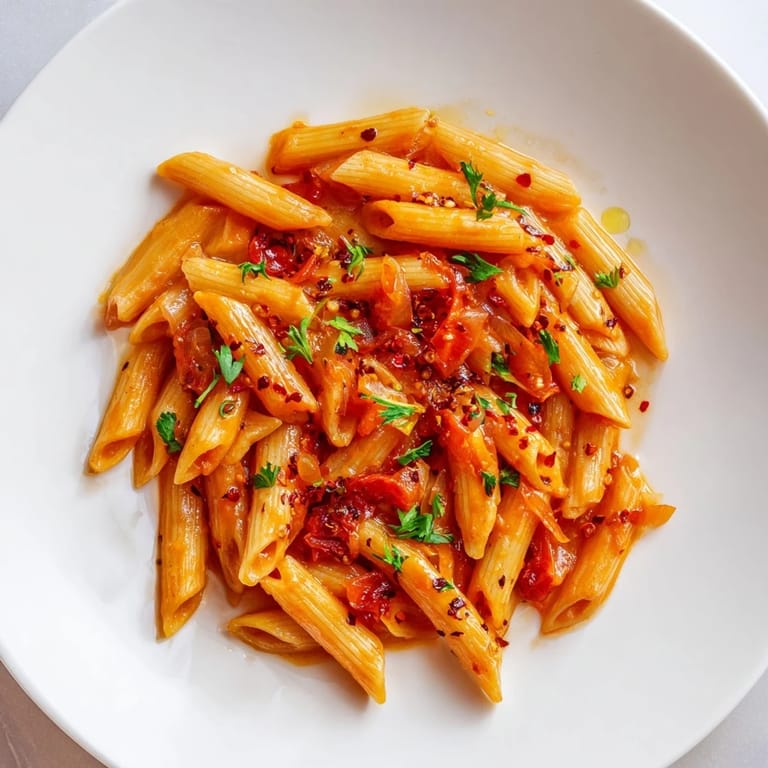
Save There's something about a Tuesday night that makes you crave the simplest, most honest meals. I was standing in my tiny kitchen in Rome, not a tourist but someone who'd finally stayed long enough to understand what the locals actually cooked. My friend Marco's mother had just shown me that arrabbiata isn't about technique or fancy ingredients—it's about respecting three things: good tomatoes, patience, and knowing when to stop. That lesson stuck with me so hard that now whenever I make it, I'm back in that kitchen, listening to the gentle crackle of garlic in oil.
I made this for my partner on the night they said yes to moving in together. Nothing elaborate, just penne arrabbiata at our small table by the window. The heat from the chili mixed with the acidity of the tomatoes felt like it matched the nervous energy between us, but by the second bite everything just felt right. Sometimes the best meals are the ones where you're not thinking about the food at all.
Ingredients
- Penne rigate (400 g): The ridges catch the sauce like little runners, so don't swap for smooth pasta—it matters more than you'd think.
- Extra virgin olive oil (3 tbsp): This is your base, your flavor, your everything; find one you actually like drinking on bread.
- Garlic cloves, thinly sliced (4 large): Sliced, not minced, so each piece stays distinct and doesn't burn into bitterness.
- Red chili flakes (1–2 tsp): Start with 1 tsp if you're cautious; you can always add heat but you can't take it back.
- Peeled whole tomatoes (800 g, canned): Crush them by hand just before they hit the pan—it's oddly therapeutic and gives you control over the texture.
- Sea salt (1 tsp) and freshly ground black pepper (1/2 tsp): These aren't afterthoughts; they balance the acid and bring the tomatoes into focus.
- Fresh flat-leaf parsley (2 tbsp, chopped): A whisper of green at the end, no more.
Tired of Takeout? 🥡
Get 10 meals you can make faster than delivery arrives. Seriously.
One email. No spam. Unsubscribe anytime.
Instructions
- Boil the pasta water:
- Fill a large pot with salted water—it should taste like the sea—and let it come to a rolling boil. This is your foundation.
- Start the sauce magic:
- While the water heats, pour olive oil into a skillet over medium heat and add your sliced garlic and chili flakes. Listen for that soft sizzle and watch the garlic just barely turn golden around the edges, about one minute. This isn't the time to rush; you want fragrance, not char.
- Add the tomatoes:
- Pour in your crushed tomatoes with their juice, then season with salt and pepper. Let everything simmer uncovered for twelve to fifteen minutes, stirring now and then, until the sauce drops in weight and deepens in color—you'll see it thicken slightly and smell it become less raw.
- Cook the penne:
- Drop the pasta into that boiling water and cook until al dente, which usually means a minute or two before the package says. Before you drain it, fish out and save about half a cup of that starchy water; it's liquid gold for loosening the sauce later.
- Bring it together:
- Drain the pasta and add it straight into the simmering sauce, then toss it around like you're dancing, adding splashes of that reserved pasta water until every strand is glossy and coated.
- Finish with intention:
- Turn off the heat, scatter the parsley over the top, and drizzle a small pool of olive oil across the surface. Taste it once more—adjust the heat if you need to—then serve immediately while the pasta is still steaming.
 Save
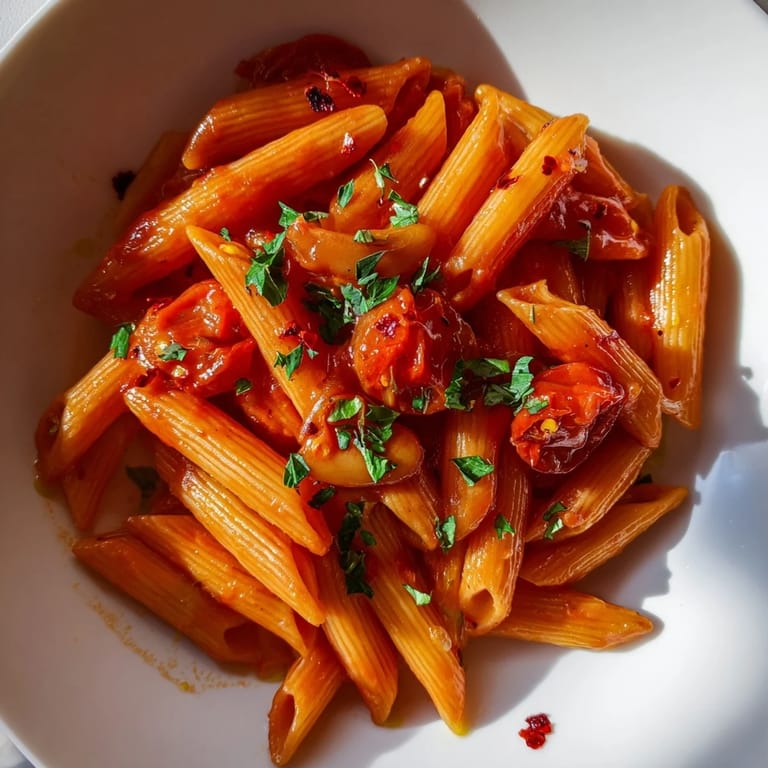
Save My roommate from university came to visit last spring, and we made this together while catching up on five years of life. She was nervous about a big decision, and somewhere between the crushing of tomatoes and the tossing of pasta, she just started talking about what she was really afraid of. We never solved anything, but we ate arrabbiata at midnight and she left feeling lighter. That's when I realized this dish is a quiet place where people find their thoughts.
The Art of the Crackle
There's a moment, just after the garlic hits the oil, where it whispers and barely sizzles. That's when you add the chili flakes and let them toast for just a few seconds. Some cooks skip this, but those few seconds transform the heat from harsh to layered and warm. It's a small thing, but it's the difference between a meal that numbs your mouth and one that makes you keep reaching for the next bite.
Why Reserve That Pasta Water
Pasta water seems worthless until you understand that the starch in it is what ties the sauce to each piece of pasta. Without it, you end up with noodles in a pool of tomato instead of pasta coated in sauce. I learned this the hard way by throwing the water away my first few times, but now I always pause over the colander and save what I need. It's the difference between a good dish and one that tastes complete.
Variations and Serving
This dish is beautiful as it is, but you can lean into it in different ways depending on your mood. Some nights I add a pinch of sugar to balance the acidity if the tomatoes feel too sharp; other nights I crack in a fresh egg yolk at the very end and toss it through for richness. Serve it in wide bowls so the sauce pools slightly, and pour a glass of something crisp alongside—Verdicchio or a light Chianti both frame the heat and acidity perfectly.
- For a milder version, start with half a teaspoon of chili flakes and taste as you go.
- Traditionally this is served without cheese, but if you want something sprinkled on top, vegan or regular Parmesan works.
- Leftovers are honestly great cold the next day, almost like a pasta salad, if you have any left.
 Save
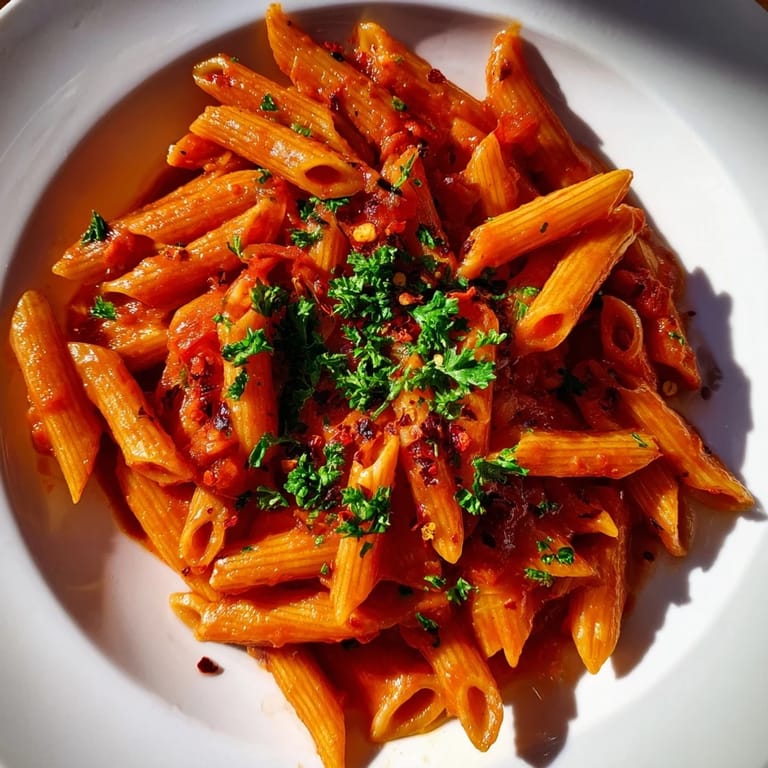
Save Arrabbiata is one of those recipes that whispers instead of shouts, and the more you make it, the more you fall in love with its honesty. It's proof that you don't need much to make something unforgettable.