 Save
Save The first time I made a poke bowl at home, I'd just returned from a trip to Hawaii where I'd eaten these gorgeous, jewel-like salads almost every day. Standing in my kitchen with a piece of sushi-grade salmon and a handful of greens, I realized I could recreate that moment whenever I wanted. What started as nostalgia turned into my go-to lunch when I needed something that felt both nourishing and a little bit like a vacation.
I remember making this for my roommate who'd just announced she was trying to eat less bread and more fish, looking a bit defeated about it. When she took that first bite and realized this wasn't deprivation food—it was actually exciting—her whole face lit up. She made it three times that week.
Ingredients
- Sushi-grade salmon or tuna (400 g): The quality of your fish makes all the difference here; ask your fishmonger specifically for sushi-grade and cut it into roughly half-inch cubes so it soaks up the marinade evenly.
- Soy sauce (2 tbsp): This is the backbone of your marinade, bringing umami and saltiness that seasons everything in one go.
- Sesame oil (1 tbsp): Just a tablespoon goes a long way; it adds richness and that toasted aroma that makes people ask what smells so good.
- Rice vinegar (1 tbsp): The acid keeps everything bright and prevents the bowl from feeling heavy.
- Ginger and garlic (1 tsp grated ginger, 1 small clove minced): These add sharpness and warmth that wakes up your palate with each bite.
- Honey or maple syrup (1 tsp): A tiny touch of sweetness balances the salty-sour profile and rounds out the marinade beautifully.
- Mixed salad greens (120 g): Use whatever you like—romaine gives you crunch, baby spinach adds earthiness, arugula brings a peppery note.
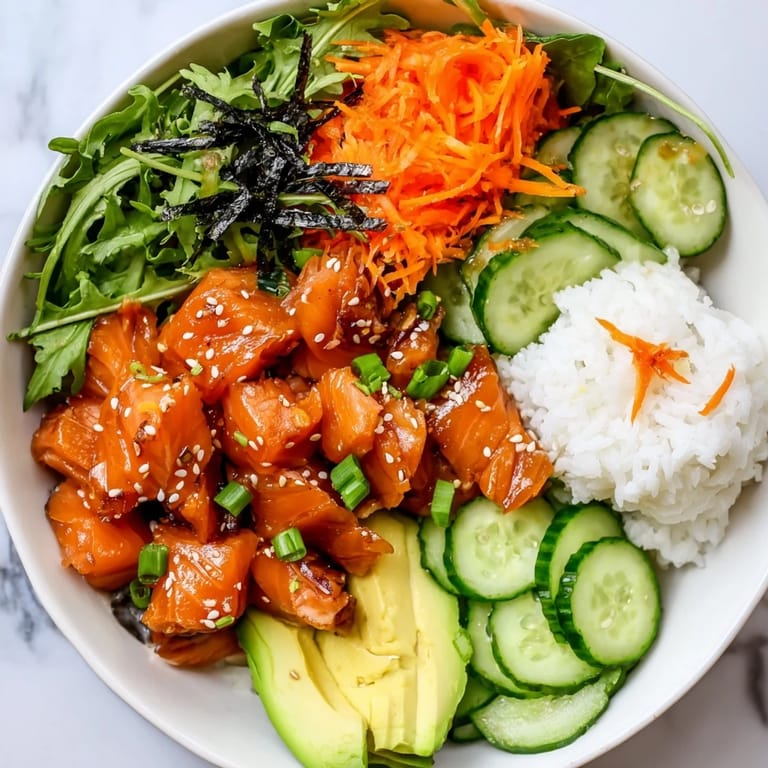
- Cucumber, avocado, carrots (1 medium, 1 large, 2 small): These vegetables provide color, texture, and freshness; slice the cucumber thin, julienne the carrots for elegance, and add avocado just before serving so it doesn't brown.
- Sushi rice or brown rice (120 g cooked): Optional but it transforms this from a side salad into a complete meal that fills you up.
- Sesame seeds, scallions, nori, pickled ginger, chili (2 tbsp, 2 tbsp, 1 sheet, to taste, optional): These toppings are where the magic happens—they add texture, visual interest, and little flavor surprises with every spoonful.
Tired of Takeout? 🥡
Get 10 meals you can make faster than delivery arrives. Seriously.
One email. No spam. Unsubscribe anytime.
Instructions
- Build your marinade:
- Whisk together soy sauce, sesame oil, rice vinegar, grated ginger, honey, and minced garlic in a bowl until the honey dissolves completely. The mixture should smell vibrant and complex—that's how you know it's right.
- Marinate the fish:
- Add your cubed salmon or tuna to the marinade and toss gently so each piece gets coated without breaking apart. Cover and slide it into the fridge for at least 10 minutes while you prep everything else; the fish will firm up slightly and absorb all those flavors.
- Prepare your salad base:
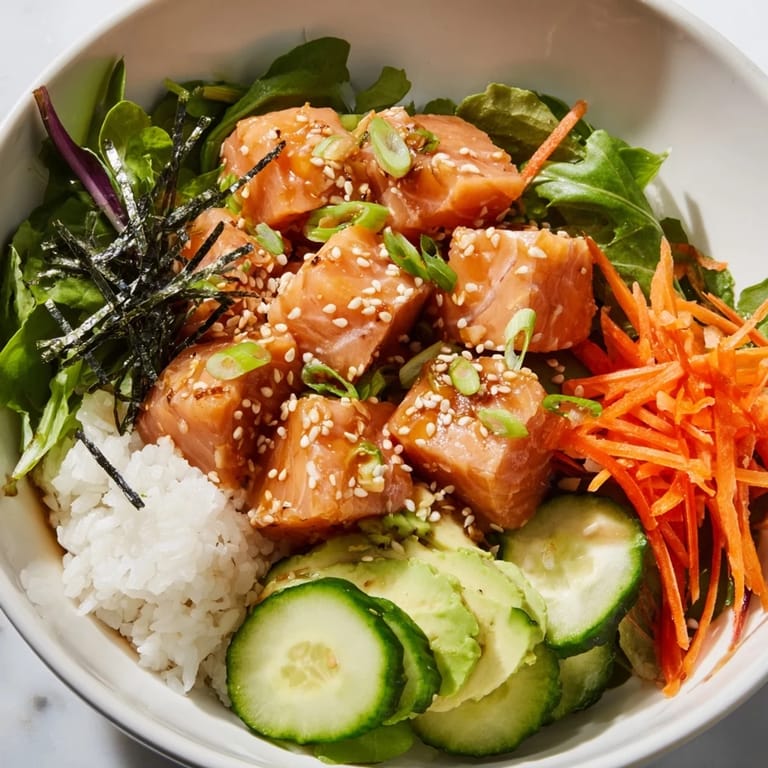
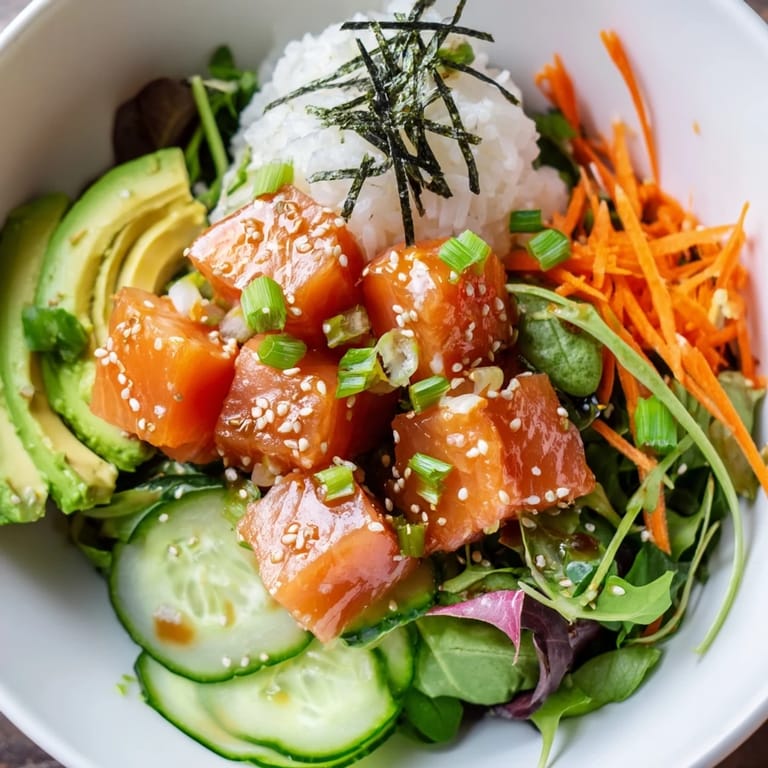
- Arrange your greens in individual bowls and top with thin-sliced cucumber, julienned carrots, and creamy avocado slices. If you're using rice, divide it among the bowls and nestle it under the greens.
- Bring it all together:
- Spoon the marinated fish and every drop of that gorgeous marinade right over the top of your salad base. The liquid will dress the greens as you eat and keep everything cohesive.
- Finish and serve:
- Scatter toasted sesame seeds, sliced scallions, and nori strips across the top; add pickled ginger and a few slices of chili if you want heat. Serve immediately while everything is fresh and the fish is at its silky best.
 Save
Save One afternoon I made this for myself and ate it standing at the kitchen counter with my eyes closed, just listening to the crunch of each bite. That's when I knew it had crossed over from being a recipe into something I actually loved—not because it was healthy or quick, but because it tasted like care and attention and exactly what I needed in that moment.
Why This Bowl Became My Favorite
Poke bowls hit a sweet spot that not many meals do—they feel indulgent and nourishing at the same time. The raw fish tastes luxurious, the vegetables add color and freshness, and everything works together without any single component overwhelming the others. Plus, there's something deeply satisfying about building your own bowl, layer by layer, knowing exactly what's going into it.
Customizing Your Bowl to Your Taste
The beauty of this recipe is how much room it gives you to play. If you're vegetarian, marinated tofu or tempeh work beautifully in place of the fish and absorb the marinade just as well. Craving extra texture? Toss in some edamame or thinly sliced radishes. Want it warmer? Add a drizzle of spicy mayo or sriracha on top. The foundational flavors are strong enough to carry whatever additions you want to make.
Pairing and Serving Ideas
I've learned that serving this with a crisp white wine like Sauvignon Blanc takes the whole experience up a notch—something about that acidity complements the fresh fish and bright vegetables. It also makes a stunning dinner when you're cooking for guests because it feels fancy but comes together so quickly they never realize how little effort it was.
- Make it gluten-free by using tamari instead of regular soy sauce and double-checking all your other ingredients.
- Prep your components in advance and assemble bowls just before serving to keep everything at its peak freshness.
- Adjust the soy sauce amount if you're watching sodium, or use a low-sodium version without sacrificing flavor.
 Save
Save This bowl has become my answer to the question 'what should we make?' on days when we want something that feels special but doesn't demand hours in the kitchen. Make it for yourself and see what I mean.
Recipe Questions
- → What fish is best for this poke bowl?
Sushi-grade salmon or tuna is ideal due to its firm texture and fresh flavor, which holds well when marinated.
- → Can I prepare this bowl without fish?
Yes, marinated tofu or tempeh makes a great alternative while maintaining similar textures and flavors.
- → How long should the fish be marinated?
Marinating the fish for at least 10 minutes allows the soy-ginger mixture to infuse flavors without overpowering the freshness.
- → Is sushi rice necessary in this dish?
Including cooked sushi or brown rice adds substance, but the bowl works well even with just the fresh greens and vegetables.
- → What are good garnishes for extra flavor?
Toasted sesame seeds, sliced scallions, nori strips, pickled ginger, and a touch of sliced red chili enhance both texture and flavor.
- → How can I make this dish gluten-free?
Use certified gluten-free soy sauce (tamari) to keep the marinade gluten-free.