 Save
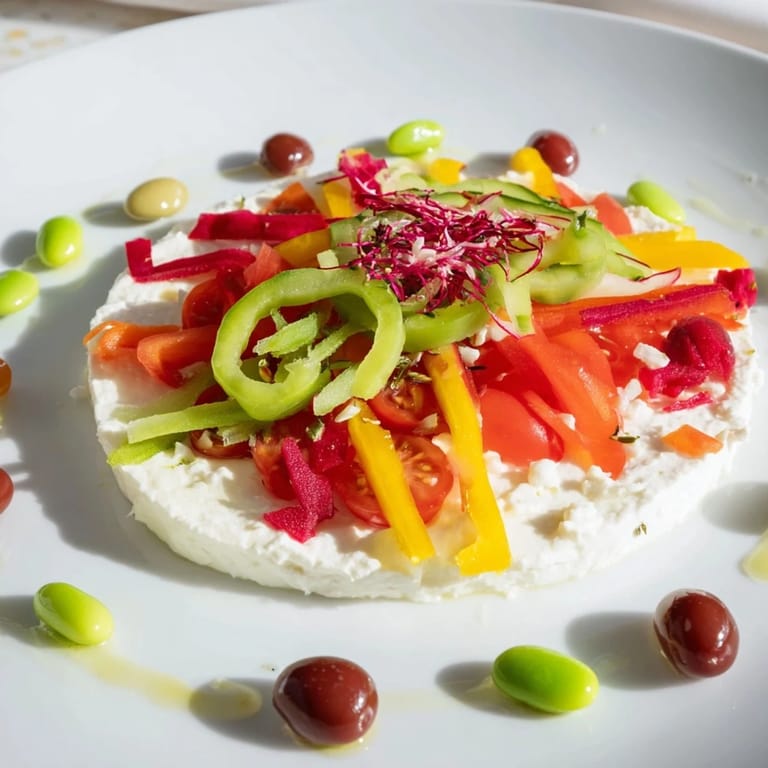
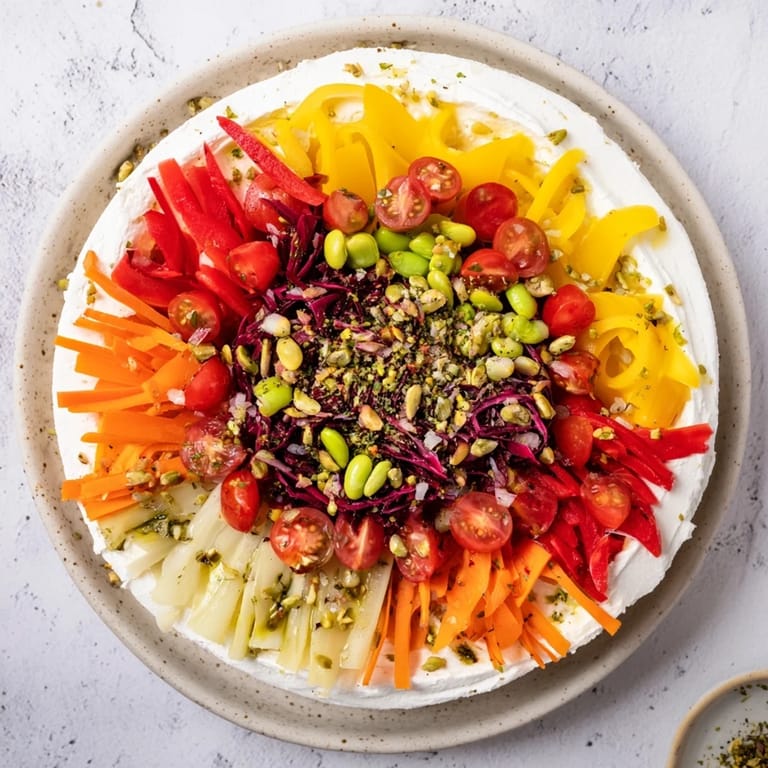
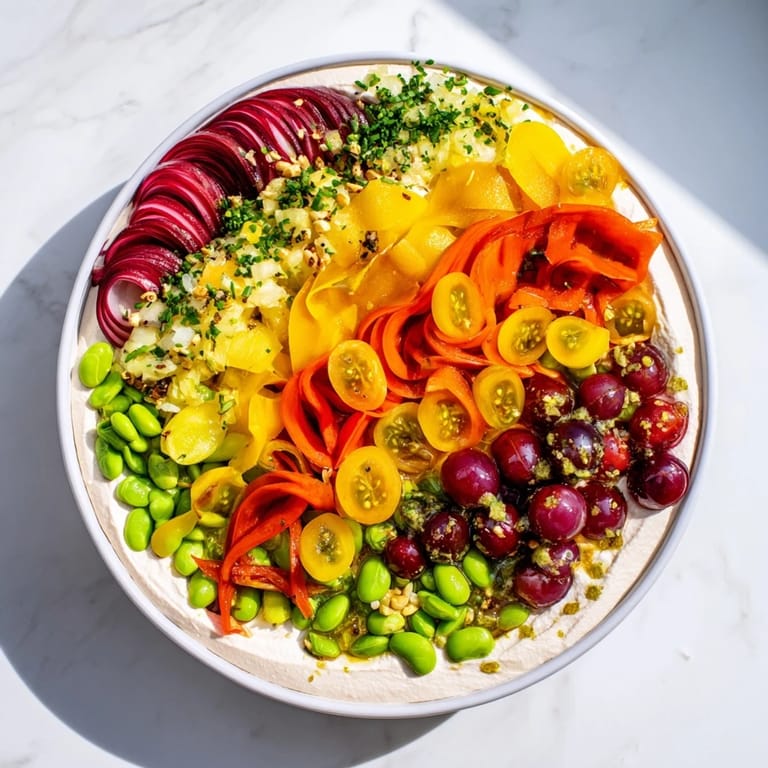
Save I discovered this salad by accident, really—I was arranging vegetables on a platter for a dinner party and realized halfway through that I'd created something that looked like light refracting through a prism. The colors just kept working: red to orange to yellow, green bleeding into blue, finishing with deep violet grapes. My guest that night, an artist, spent more time photographing it than eating, which somehow felt like the highest compliment.
I made this for a Sunday potluck where someone asked if I'd hired a caterer, which made me laugh because I was still wearing my kitchen-messy apron. That moment—when people realize something beautiful came from your own two hands—that's when food stops being fuel and becomes a small act of care.
Ingredients
- Ricotta cheese or Greek yogurt: This creamy white center is what anchors the whole visual story; I learned the hard way that spreading it gently matters more than getting it perfectly smooth.
- Cherry tomatoes: Halve them just before assembling so they're still juicy and catch the light.
- Bell peppers in red, orange, and yellow: Slice them thin enough to catch the light but thick enough to hold their shape; a sharp knife and a steady hand make all the difference here.
- Cucumber: The cool, crisp green layer that balances the sweetness of the corn.
- Blueberries and purple cabbage: Together they create the blue layer that makes people do a double-take.
- Red grapes and radishes: These finish the spectrum in violet-pink tones; the radishes add a gentle peppery bite that wakes up your palate.
- Olive oil and lemon juice dressing: Simple enough to let the vegetables speak, but essential for pulling all those colors together with flavor.
Tired of Takeout? 🥡
Get 10 meals you can make faster than delivery arrives. Seriously.
One email. No spam. Unsubscribe anytime.
Instructions
- Start with your canvas:
- Mix your ricotta with olive oil, lemon zest, and salt until it's smooth and creamy, then dollop it in the center of your largest, prettiest platter. Spread it gently into a white circle—this is your foundation, your focal point.
- Prep your colors:
- Arrange each color group in its own small bowl so you can see what you're working with. This moment of pause—actually looking at how vibrant everything is—reminds you why you're doing this.
- Build the prism:
- Starting right next to the white center, fan out your red tomatoes and peppers in a gentle arc, then move outward to orange, yellow, green, blue, and finally violet. Work slowly and trust your eye; the colors don't need to be perfect, just visible and distinct from their neighbors.
- Make your dressing:
- Whisk together olive oil, lemon juice, honey, salt, and pepper in a small bowl until it tastes bright and balanced. This simple dressing should enhance, not overshadow, the fresh vegetables.
- Finish and serve:
- Drizzle the dressing lightly over the salad just before people sit down, or let guests dress their own portions. Scatter fresh herbs and a crack of black pepper over the top if you want one final flourish.
 Save
Save There's something almost meditative about arranging this salad, the way each color finds its place next to the one that came before. It's cooking as quiet intention, a small way of saying to the people you're feeding: you matter enough to receive something made with attention.
Playing with Texture
The first time I made this, it was all soft and smooth, and it felt incomplete. I added toasted sunflower seeds the second time, and suddenly the salad had a voice—a little crunch against the creamy ricotta, a nutty note that brought everything into focus. Now I always think of texture as another color, another layer in the prism.
Building Your Own Version
This salad is a framework, not a cage. I've made it with microgreens, with edible pansies, with thinly shaved fennel in the white section for a hint of anise. One evening I even swapped the ricotta for whipped feta, which gave the whole thing a more Mediterranean spine. The point isn't to follow the prism exactly but to honor the idea—that food arranged with intentionality and color is food that feeds more than just hunger.
The Ritual of Presentation
This salad taught me that presentation isn't vanity—it's a language. When people see their food arranged with care, they eat differently, slower, more aware. I've learned to think of the platter as a canvas and myself as both artist and nourisher. The best part is when someone asks for the recipe and you realize they want to create that same moment at their own table.
- Use the widest, flattest platter you own; the salad needs room to breathe and show itself off.
- If you're making this ahead, keep each color group in its own container and assemble just before serving.
- A cold platter straight from the refrigerator helps everything stay crisp and bright longer.
 Save
Save This salad reminds me that beauty and nourishment aren't opposites; they're two expressions of the same care. Make it, serve it, watch the light catch the colors, and let that small moment of intentionality ripple outward.
Recipe Questions
- → What is the base layer made of?
The base is a creamy mixture of ricotta cheese combined with olive oil, lemon zest, and seasonings, providing a smooth and flavorful center for the colorful layers.
- → How are the colorful layers arranged?
The vegetables and fruits are arranged in fan-like stripes radiating from the central base, creating a vibrant, prism-inspired display.
- → Can this dish be prepared in advance?
It's best served fresh, but you can prepare the layers and dressing ahead of time and assemble just before serving to maintain crispness.
- → What dressing complements the layers?
A light dressing made from olive oil, lemon juice, and a touch of honey or agave syrup enhances the freshness without overpowering the natural flavors.
- → Is this suitable for dietary restrictions?
This dish is vegetarian and gluten-free. For a vegan version, substitute ricotta with vegan cream cheese or plant-based alternatives.