 Save
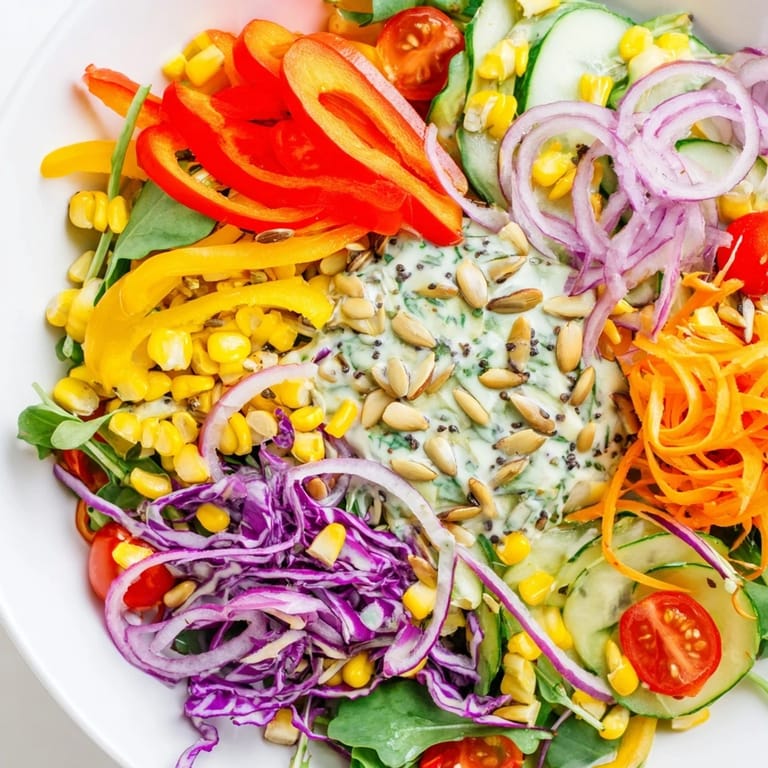
Save One summer afternoon, I was standing in my kitchen staring at a farmers market haul that looked like a paint palette had exploded across my counter. Reds, yellows, purples, and greens everywhere—so much color I felt obligated to do something worthy of it. That's when this rainbow salad came together, not from a recipe, but from the simple desire to let each vegetable shine without fussing. The first bite convinced me this was the kind of salad that makes you feel good inside and out.
I made this for a potluck once where everyone else brought heavy casseroles and cheese dips, and watching people's faces light up when they realized how fresh and different it was—that's when I knew this recipe was a keeper. My friend Sarah came back for thirds and asked for the dressing recipe right there by the serving table, which felt like the highest compliment.
Ingredients
- Red and yellow bell peppers: These are your salad's jewels—slice them thin so they stay crisp and the colors really sing on the plate.
- Carrot: Julienne it (those thin matchstick cuts) so it doesn't overpower the other vegetables and absorbs the dressing beautifully.
- Purple cabbage: This holds up beautifully to the dressing and adds an earthy sweetness that balances the brightness of everything else.
- Cucumber: Always use it the same day you slice it, or it'll start weeping water into your salad.
- Cherry tomatoes: Halving them keeps their juice from making the whole bowl soggy—trust me on this one.
- Sweet corn: Fresh corn is ideal, but frozen kernels work just fine in a pinch.
- Mixed salad greens: Pick something with personality like arugula or spinach, not the iceberg that'll turn to mush.
- Tahini: This is the secret to the creamy, nutty dressing—buy the good stuff if you can, it makes a real difference.
- Lemon juice: Freshly squeezed is non-negotiable here; bottled will taste sharp and thin.
- Maple syrup or honey: This rounds out the tahini's earthiness and keeps the dressing from tasting too savory.
- Olive oil: A good quality oil adds richness and ties all the flavors together.
- Garlic: Just one clove, minced fine, so it doesn't overpower the delicate vegetables.
- Sunflower seeds: Toast them yourself if you can—they add a satisfying crunch and nutty flavor.
- Fresh herbs: Parsley is fresh and bright, cilantro brings something unexpected, mint makes it feel summery.
Tired of Takeout? 🥡
Get 10 meals you can make faster than delivery arrives. Seriously.
One email. No spam. Unsubscribe anytime.
Instructions
- Slice and dice with intention:
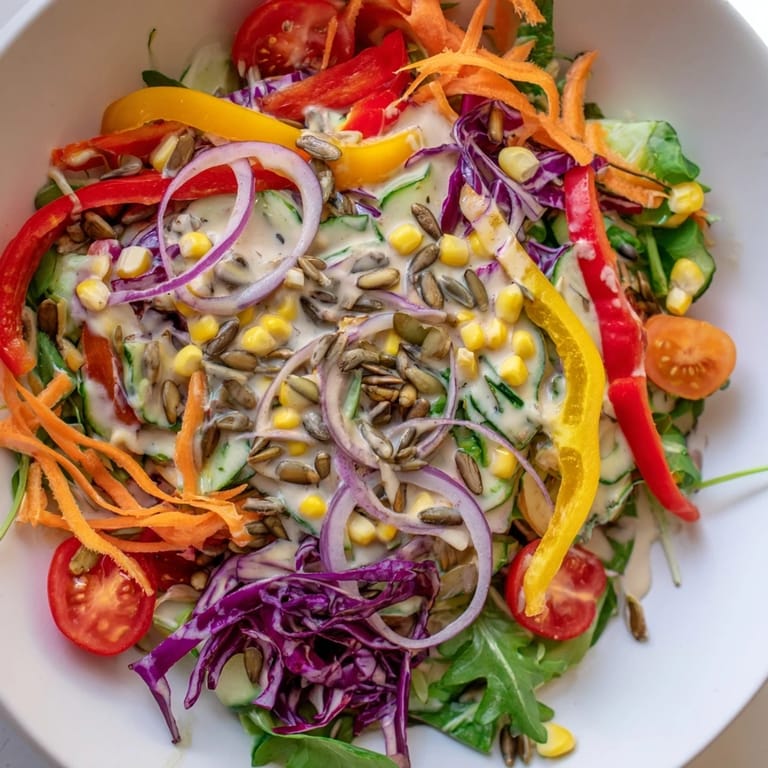
- As you prep each vegetable, place it in your big salad bowl—this saves you cleanup time and lets you see how the colors are coming together. The thinly sliced red onion goes in last since it can bleed a bit, but that's actually kind of beautiful.
- Build your dressing:
- Whisk the tahini with lemon juice first—it'll seem thick and reluctant, but that's normal. Add the maple syrup, olive oil, minced garlic, salt, and pepper, then gradually whisk in water a tablespoon at a time until it reaches that silky, pourable consistency. Taste it as you go; this is your chance to adjust the balance.
- Dress gently and serve:
- Pour the dressing over your vegetables and use a wooden spoon to toss everything with a light hand—you want to coat every piece without crushing the delicate greens. If you're not serving right away, chill it for 10 to 15 minutes, which actually makes the vegetables even crisper and lets the flavors settle in together.
 Save
Save There's something quiet and grounding about this salad, the way all those different colors and textures come together into something that just feels right. It's become my go-to when I want to feel nourished without feeling like I'm denying myself anything.
Why This Dressing Changes Everything
The tahini dressing is what separates this from just a pile of raw vegetables—it's creamy and rich without any dairy, and it has this subtle nuttiness that makes you close your eyes on the first bite. I used to think tahini was only for hummus until I discovered how beautifully it behaves when you treat it right with acid and oil. Once you master this dressing, you'll find yourself drizzling it on roasted vegetables, using it as a dip for crudités, and honestly probably eating it straight from the spoon when no one's looking.
Making It Your Own
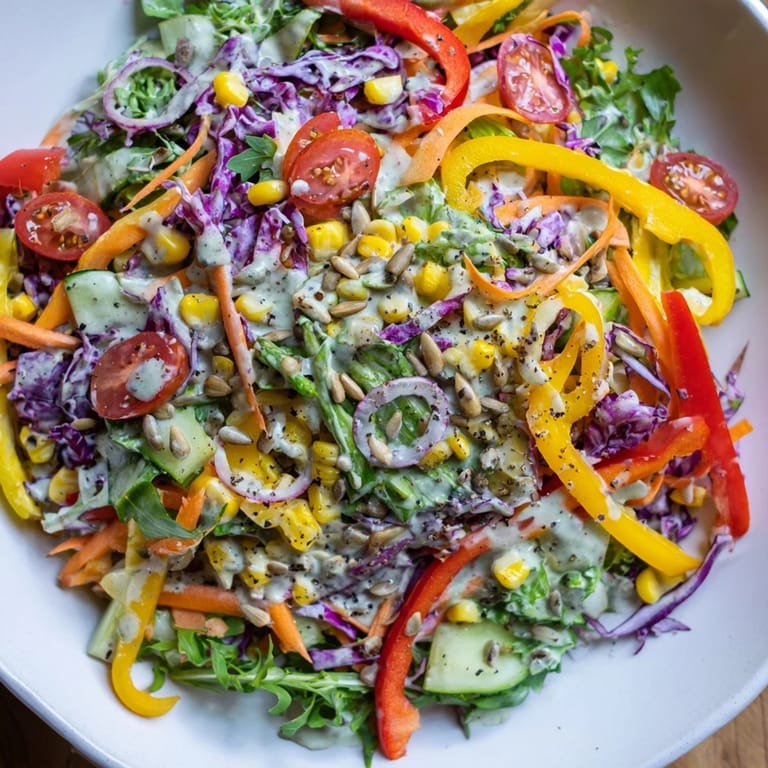
This salad is forgiving and flexible in the best way—your seasonal vegetables become the stars, and you adjust the supporting cast accordingly. In fall, I add roasted squash and swap in purple instead of red onion; in spring, fresh peas and radishes feel natural. The beauty is that there's no wrong way to do it, as long as you're thinking about balance and keeping that lovely fresh crunch.
Turning This Into a Meal
On its own, this is a generous side dish or a light lunch, but it's also a platform for adding protein if you want something more substantial. I've stirred in white beans, scattered crumbled feta (though that breaks the vegan thing), layered in grilled tofu, or tossed in chickpeas for a heartier version. The dressing is forgiving enough to carry whatever protein you choose without losing its essential character.
- Canned chickpeas, drained and patted dry, add protein and earthiness without changing the flavor profile.
- Grilled or pan-fried tofu soaks up the dressing beautifully and keeps the dish vegan-friendly.
- If you have leftover grilled vegetables from dinner, dice them up and fold them in—nothing is wasted.
 Save
Save This rainbow salad reminds me that the simplest, most honest food is often the best—no fuss, just fresh ingredients and a dressing that lets them all shine. Make it, taste how alive it makes you feel, and know that you've made something both nourishing and genuinely delicious.
Recipe Questions
- → What vegetables are used in the salad?
The salad includes red and yellow bell peppers, carrots, purple cabbage, cucumber, cherry tomatoes, sweet corn, red onion, and mixed greens like arugula, spinach, and romaine.
- → How is the tahini dressing prepared?
The dressing combines tahini, freshly squeezed lemon juice, maple syrup or honey, olive oil, minced garlic, salt, and pepper, thinned with water for a smooth consistency.
- → Can I customize the salad ingredients?
Yes, you can swap vegetables based on season or preference and add protein sources like chickpeas, grilled tofu, or edamame for extra nutrition.
- → Are there any recommended toppings?
Toasted sunflower seeds and fresh herbs such as parsley, cilantro, or mint enhance texture and flavor.
- → Is this dish suitable for vegan and gluten-free diets?
Yes, it is naturally gluten-free and vegan when maple syrup is used instead of honey in the dressing.