 Save
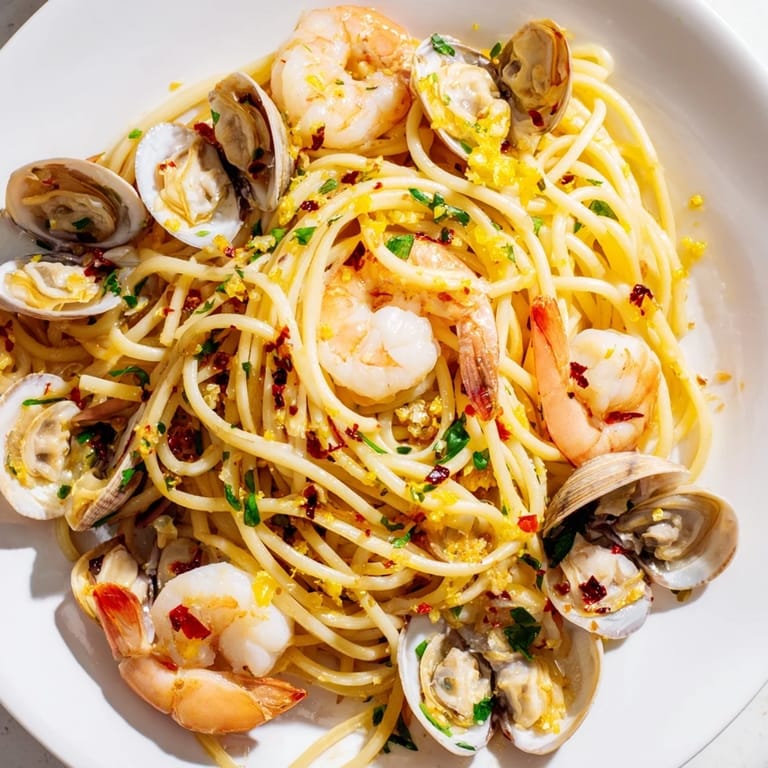
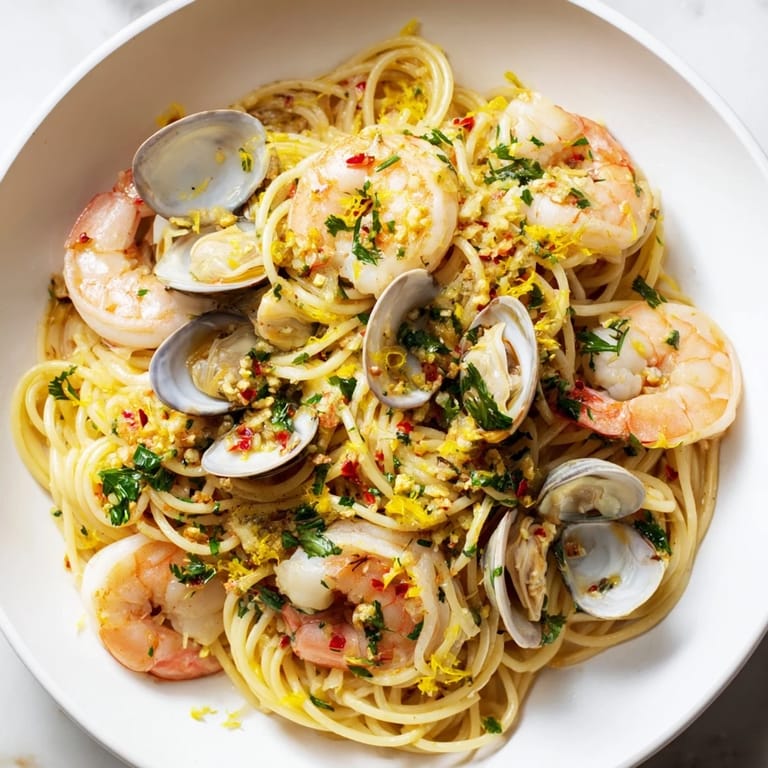
Save There's something about the smell of garlic hitting hot olive oil that makes you stop everything you're doing. I learned to make this pasta on a rainy evening when a friend texted asking if I could cook something impressive but honest, and seafood aglio e olio felt like the perfect answer—bright, unfussy, and ready in under forty minutes. The first time I made it, I burned the garlic badly, learned a hard lesson about medium heat, and somehow the dish still turned out beautiful. Now it's become my go-to when I want to feel like I'm cooking in a trattoria, right here in my own kitchen.
I made this for four of us one summer when nobody wanted to heat up the kitchen with a long braise or sauce. We sat on the patio with cold white wine, and the whole meal came together faster than the conversation got good. One of my friends asked if it was from a restaurant—I didn't correct her immediately, just smiled and poured more wine.
Ingredients
- Large shrimp (250 g): Buy them still in their shells if you can and peel them yourself—the shells make better stock, but honestly, peeled saves time and still tastes wonderful.
- Fresh clams (500 g): Ask the fishmonger which are best for pasta; littlenecks or Manila clams work beautifully and open reliably.
- Spaghetti (400 g): Don't skip good pasta here—the shape matters for catching all that silky garlic oil.
- Extra virgin olive oil (6 tbsp): This is where quality shows; use something you actually like drinking, not the cheap stuff.
- Garlic cloves (5), thinly sliced: Slice them yourself if you have time—pre-minced loses something important.
- Red chili flakes (1/2–1 tsp): Start with less; heat is easy to add but impossible to take back.
- Dry white wine (1/2 cup): Something crisp and clean, the kind you'd drink alongside dinner.
- Lemon (zest and juice): Fresh lemon brightens everything at the end—the zest especially.
- Fresh flat-leaf parsley (1/4 cup), chopped: Add it at the last moment so it stays green and alive.
- Salt and black pepper: Taste as you go; the clams bring saltiness too.
Tired of Takeout? 🥡
Get 10 meals you can make faster than delivery arrives. Seriously.
One email. No spam. Unsubscribe anytime.
Instructions
- Start the pasta water:
- Fill a large pot with cold water, salt it generously—it should taste like the sea. Bring it to a rolling boil before you add the spaghetti, and keep a timer handy so you pull it out al dente, still with just a tiny bit of resistance when you bite it.
- Coax the garlic to golden:
- Pour olive oil into a large skillet and set it over medium heat, never higher. Add your sliced garlic and let it warm slowly, swirling the pan so the oil infuses with that incredible aroma but the garlic stays pale gold, not brown.
- Awaken the shrimp:
- Once the garlic smells perfect, add the red chili flakes, count to ten, then slide the shrimp into the hot oil. Let them sear for about a minute on each side until they've turned pink but are still tender inside, then transfer them to a clean plate.
- Open the clams to steam:
- Pour white wine into the skillet with the remaining garlic oil, then add the scrubbed clams. Cover with a lid and let them steam, shaking the pan every minute or so, until they open—usually three to five minutes depending on size.
- Bring it all together:
- Return the shrimp to the pan, add your drained pasta, lemon zest, and most of the parsley. Toss everything gently, adding pasta water a few tablespoons at a time until the oil coats every strand with a silky, glossy finish.
- Taste and serve:
- Season with salt and pepper, then serve immediately while everything is still steaming, with extra parsley and lemon wedges on the side.
 Save
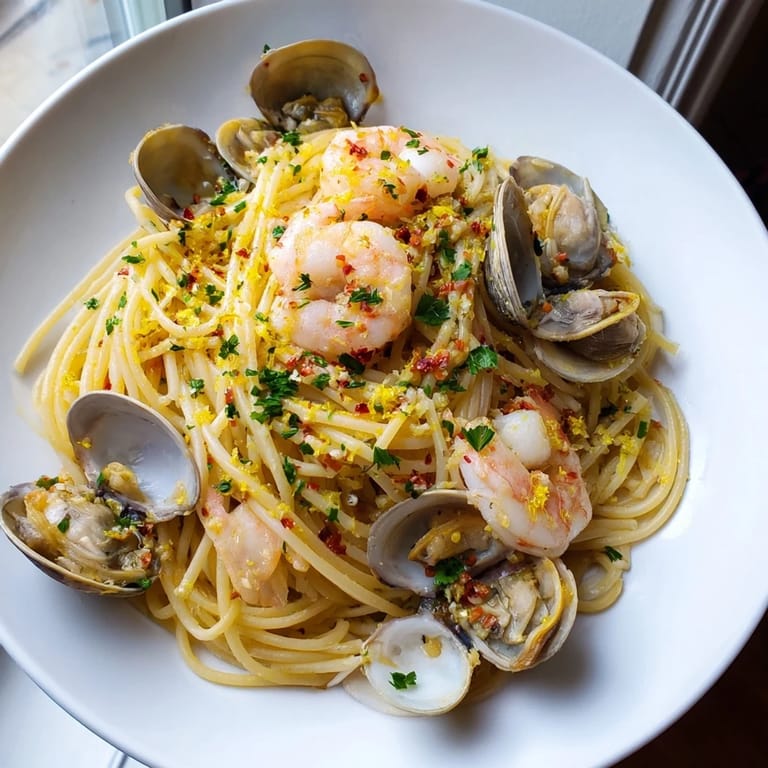
Save There was a night when someone brought their new partner over and I made this without thinking twice. Watching them twirl the spaghetti together, stealing bites from each other's forks, laughing over a clam that somehow flew across the table—that's when I realized this dish is about more than just the food. It's an invitation to sit down and be present.
Choosing Your Seafood
The quality of your shrimp and clams will shine through immediately because there's nothing to hide behind. I've learned to visit the fishmonger early in the morning when the catch is freshest, and I always ask questions about where things came from. Sometimes substituting mussels for clams works beautifully, and calamari adds a wonderful chew if you want to experiment, but stick with one type of shellfish the first time so you understand how they behave in the heat.
The Wine Matters More Than You Think
The white wine does two things: it adds brightness and acidity to balance the richness of the oil, and it creates enough liquid to open the clams gently. I use the same wine I'm going to drink with dinner, something crisp like Pinot Grigio or Vermentino, never anything oaky or heavy. If you prefer not to cook with wine, substitute with a splash of clam juice mixed with a squeeze of lemon, and you'll get something equally good.
Building Your Own Version
Once you've made this once, you understand the formula and can play with it. I've added roasted red pepper, a pinch of saffron, fresh tomatoes in summer, or even a handful of spinach without changing anything essential. The core—good oil, slow-cooked garlic, quality seafood—stays the same while everything else becomes a conversation between you and what you have on hand.
- Gluten-free pasta works perfectly if you need it; cook it just as carefully to keep it al dente.
- Double the garlic if you're brave; halve the chili if heat isn't your preference.
- This dish waits for no one, so have everyone ready to eat before you finish tossing.
 Save
Save This pasta reminds me that the best meals don't need complexity, just care. Cook it soon, and let me know what you discover.
Recipe Questions
- → What seafood is used in this pasta?
Large shrimp and fresh clams are the main seafood components, adding a mix of tender and briny flavors.
- → How is the sauce made silky and flavorful?
Olive oil infused with garlic and chili flakes combines with reserved pasta water, lemon juice, and white wine to create a smooth, flavorful sauce.
- → Can I substitute any ingredients for dietary needs?
Yes, gluten-free pasta can replace traditional spaghetti, and mussels or calamari can be used instead of clams.
- → What is the key to cooking the garlic perfectly?
Sauté garlic gently in olive oil until golden and fragrant without burning, approximately one minute.
- → How do I know when clams are ready?
Clams are cooked once their shells open after being covered and simmered for 3–5 minutes; discard any unopened ones.