 Save
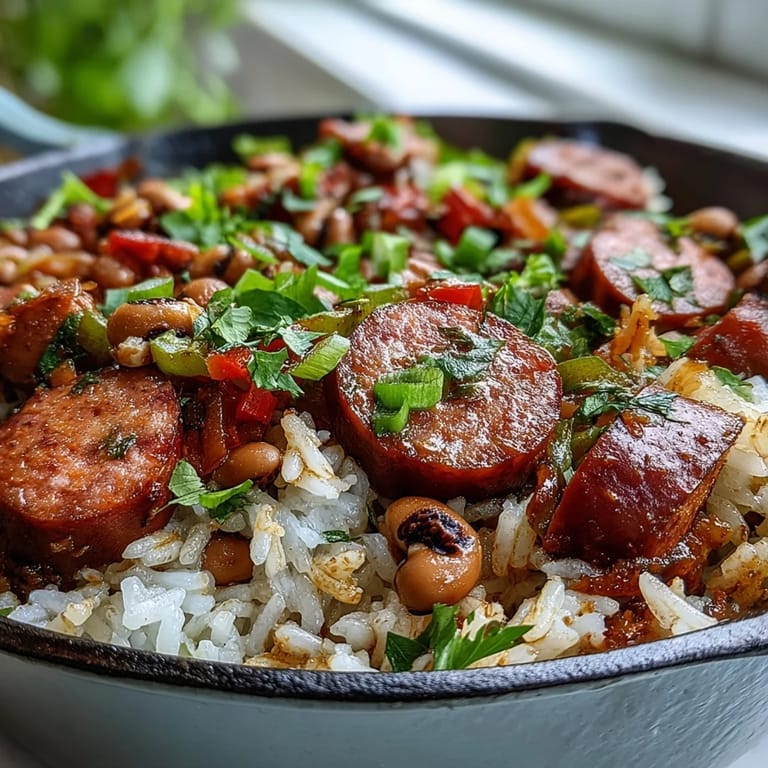
Save There's something about the smell of smoked sausage hitting hot oil that makes you feel like you're cooking something real. My neighbor Marcus taught me jambalaya on a humid Saturday afternoon when he showed up with a bag of andouille and a no-nonsense attitude about what belongs in a pot. He'd grown up eating this stuff, and watching him move through the kitchen with such easy confidence made me want to learn it properly, not just follow a recipe. That first bite—the way the spices coated my mouth and the rice soaked up all that bold flavor—I understood why people get serious about their jambalaya.
I made this for a small dinner party last fall when I was feeling brave about cooking for people I wanted to impress. Someone brought wine, someone brought cornbread, and I brought this jambalaya in a big ceramic pot straight to the table. Watching people actually go quiet when they took their first bite—that's when I knew the recipe had taken root in my kitchen for good. It became the dish I reach for when I want to feel confident and generous at the same time.
Ingredients
- Smoked sausage (340 g/12 oz): Andouille is traditional and brings authentic Cajun smoke, but kielbasa works beautifully too—the key is slicing it thick enough that it holds its shape during cooking.
- Onion, celery, and bell peppers: This holy trinity of vegetables is the foundation; make sure they're roughly the same dice size so they cook evenly and create that soffritto base that makes jambalaya taste like home.
- Garlic (3 cloves, minced): Don't skip the one-minute bloom after adding it—that minute transforms raw garlic into something mellow and aromatic that weaves through every bite.
- Black-eyed peas (1 can, 425 g): Rinsing them removes excess sodium and starch, giving you cleaner flavor and better texture; canned is perfectly fine here, no shame in the shortcut.
- Long-grain white rice (300 g/1½ cups): It absorbs liquid evenly and won't turn mushy if you follow the timing—this is where precision matters most.
- Chicken broth (800 ml/3⅓ cups): Use low-sodium so the spices shine; if you only have regular, ease back on added salt later.
- Diced tomatoes with juices (1 can, 400 g): The acidity brightens everything and adds moisture; never drain these, the liquid is part of the magic.
- Cajun seasoning (1½ tsp): This is where the bold flavor lives, though you can adjust it down if you're sensitive to heat or spice.
- Smoked paprika, thyme, oregano (⅔ tsp total): These dried herbs are subtle but essential—they create depth that makes people ask what your secret ingredient is.
- Bay leaf, salt, black pepper, cayenne (¼ tsp optional): The bay leaf adds a whisper of complexity that you won't notice directly but will miss if it's gone; cayenne is your heat dial, use it if you like things spicy.
- Olive oil (2 tbsp): It's the cooking medium for the sausage and vegetables, so don't cheap out on quality here.
- Spring onions and parsley (for garnish): These feel optional until you taste them—they add freshness and brightness that cuts through all that richness.
Tired of Takeout? 🥡
Get 10 meals you can make faster than delivery arrives. Seriously.
One email. No spam. Unsubscribe anytime.
Instructions
- Brown the sausage:
- Heat your pot over medium heat and let the oil warm until it shimmers slightly, then add the sausage slices and let them sit for a minute before stirring—this creates little caramelized edges that taste incredible. The sausage releases fat and flavor into the oil, which becomes your cooking base for everything else.
- Build the base:
- Toss in your onion, celery, and both bell peppers all at once and let them soften for about five minutes, stirring occasionally so nothing sticks. You want them tender but not collapsed, with just a little color on the edges.
- Bloom the garlic:
- Add your minced garlic and cook for exactly one minute—you'll smell when it's ready, that toasted, sweet aroma that makes your mouth water. This minute transforms the garlic from sharp and raw to mellow and golden.
- Toast the rice:
- Stir in your uncooked rice and let it coat in all that oil and vegetable mixture for a minute or two. This step adds a subtle nutty flavor that improves the final texture.
- Add the liquids and seasonings:
- Pour in your chicken broth, tomatoes with their juice, and black-eyed peas, then add all your spices at once and stir everything together until the rice is submerged. Take a moment to taste the liquid—it should taste bold and slightly salty, almost a little aggressive, because the rice will absorb that flavor.
- Simmer low and patient:
- Bring the pot to a boil, then immediately reduce heat to low, cover with the lid, and set a timer for 20 to 25 minutes. Resist the urge to peek or stir; the covered pot traps steam and cooks the rice evenly.
- Rest and fluff:
- When the timer goes off and the liquid has vanished, remove the pot from heat and let it sit covered for five minutes—this resting time lets the rice absorb any remaining moisture and become fully tender. Fish out the bay leaf, then fluff everything with a fork to separate the grains.
- Finish with brightness:
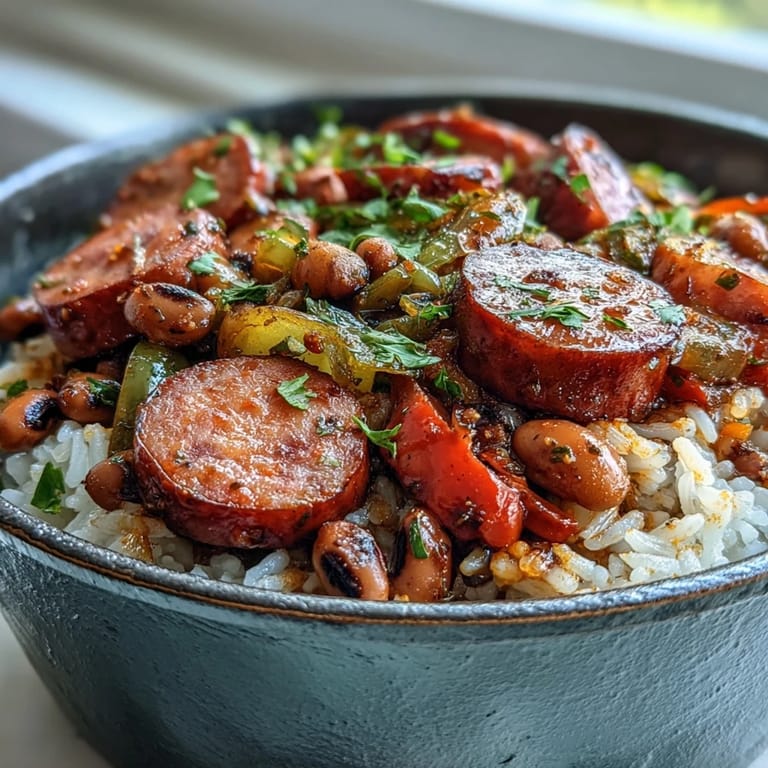
- Scatter your spring onions and fresh parsley over the top just before serving so they stay bright and fresh against all that warm, spiced rice. The green cuts through the richness and makes the whole dish feel alive.
 Save
Save My sister called once while I was making this and I held the phone away from my face so she could hear the sizzle and smell the richness coming through. She laughed and said it sounded like comfort, and I realized that's exactly what this dish is—it's the sound and smell of someone caring enough to build flavor from the ground up. That's when cooking stopped being about following steps and became about understanding why each step matters.
The Soul of Cajun Cooking
Jambalaya isn't fancy, and it's not trying to be. It's the cooking of people who had what they had and made something extraordinary with it—sausage, beans, rice, whatever vegetables were on hand, and spices that made everything taste like possibility. When you understand that history and approach this dish with respect for where it comes from, you stop seeing it as just dinner and start seeing it as honoring a tradition. The simplicity of the ingredients matters less than the generosity of the cooking.
Making It Your Own
Once you've made this basic version a few times and understand how the spices and flavors work together, you can start playing. Some people add okra or shrimp, some swap in different sausages or add mushrooms for vegetarian versions, some dial the heat up to unsafe levels. The beauty is that the foundation is so solid that variations work—you're building on something that already knows how to taste good.
Serving and Storing
This is the kind of food that's nearly better the next day when the flavors have gotten to know each other. Leftovers reheat beautifully in a pot over medium heat with a splash of broth stirred in to refresh the rice, or even in the microwave if you're in a hurry. It freezes well too, though I rarely have leftovers to freeze.
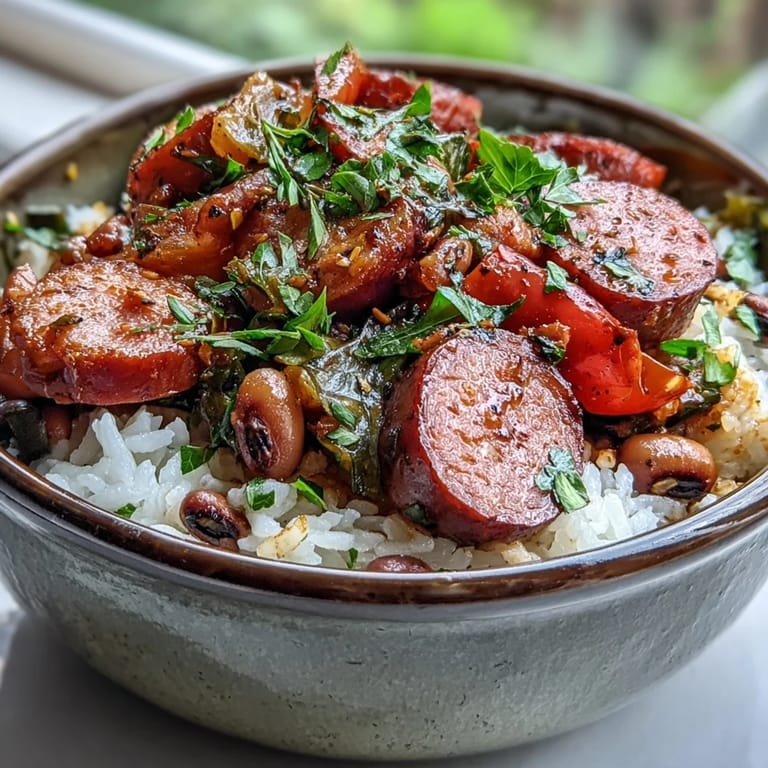
- Serve it in wide bowls so people can really see all the components and help themselves to extra sausage or vegetables.
- Hot sauce on the side is non-negotiable—let everyone adjust their own heat level rather than deciding for them.
- Cornbread is the only side you need, though a simple green salad adds brightness if you want it.
 Save
Save This jambalaya has become the meal I make when I want my kitchen to feel full of warmth and intention. It's taught me that some of the best cooking comes not from complexity, but from respecting what you're working with and giving it the time and attention it deserves.
Recipe Questions
- → What makes black-eyed pea jambalaya different from traditional versions?
This variation incorporates black-eyed peas for added protein and texture, creating a heartier dish while maintaining the classic Cajun flavor profile with smoked sausage, the holy trinity of vegetables, and aromatic rice.
- → Can I make this dish vegetarian?
Absolutely. Simply omit the smoked sausage and substitute vegetable broth for chicken broth. Consider adding extra black-eyed peas, mushrooms, or plant-based sausage to maintain the savory depth and protein content.
- → How spicy is this jambalaya?
The heat level is moderate and adjustable. Cajun seasoning provides a gentle warmth, while the optional cayenne pepper lets you control the intensity. Serve with hot sauce on the side for those who prefer extra kick.
- → What type of rice works best for jambalaya?
Long-grain white rice is ideal because it stays separate and fluffy during cooking. The grains absorb the flavorful liquid without becoming mushy, resulting in the perfect texture for this Cajun classic.
- → Can I prepare this dish in advance?
Yes, jambalaya reheats beautifully. Store in an airtight container for up to 4 days. The flavors often deepen overnight, making it an excellent make-ahead option for busy weeknights or meal prep.
- → What should I serve with black-eyed pea jambalaya?
This satisfying one-pot is a complete meal on its own. For a lighter touch, serve with a simple green salad dressed with vinaigrette. Cornbread or crusty French bread pairs wonderfully to soak up the flavorful juices.