 Save
Save I discovered these flatbreads by accident one Tuesday morning when I had leftover cottage cheese and Greek yogurt staring at me from the fridge. Instead of letting them go to waste, I threw them into a simple dough out of curiosity, and the result was so unexpectedly tender and golden that I've been making them ever since. There's something magical about how dairy transforms flour into something almost pillowy, with just enough tang to make you want another bite.
My friend Sarah came over one rainy afternoon, and I served these fresh from the pan with a quick chickpea dip. She picked one up without thinking twice and kept reaching for more, and I remember laughing because she was so surprised at how soft they were inside. That's when I realized these weren't just a way to use up ingredients—they were something special enough to share.
Ingredients
- Plain flour (200 g): The base that holds everything together, though you'll need a bit extra for dusting since the dough can be sticky from all that yogurt and cottage cheese.
- Greek yogurt (120 g): This does the heavy lifting in terms of tenderness, so don't skip it or swap it for regular yogurt without adjusting your flour slightly.
- Cottage cheese (100 g): The secret weapon that gives these flatbreads their incredibly soft crumb and subtle tangy flavor—make sure it's not the liquid kind.
- Baking powder (1/2 tsp): Just enough to give the dough a gentle lift without making them puffy like naan.
- Fine sea salt (1/2 tsp): Brings out the subtle tang and makes the whole thing taste more intentional.
- Olive oil or melted butter (2 tbsp): For pan-frying until they're golden and spotted, which is when you know they're done right.
Tired of Takeout? 🥡
Get 10 meals you can make faster than delivery arrives. Seriously.
One email. No spam. Unsubscribe anytime.
Instructions
- Mix the dry base:
- Combine your flour, baking powder, and salt in a large bowl, stirring so everything is evenly distributed. This only takes a minute, but it matters.
- Add the dairy:
- Dollop in your Greek yogurt and cottage cheese, then mix with a spoon or your hands until a rough, shaggy dough forms. Don't overthink it—this should feel a bit loose at first.
- Knead gently:
- Turn the dough out onto a lightly floured surface and knead for just 2 to 3 minutes until it becomes smoother and more cohesive. If it's sticking to your hands, dust it lightly with more flour rather than adding wet ingredients.
- Divide and shape:
- Cut the dough into 6 equal pieces, roll each into a ball, then use a rolling pin to flatten each one into a thin round about the thickness of a coin. You're aiming for roughly 5 to 6 millimeters thick.
- Heat the pan:
- Place a nonstick skillet or cast iron pan over medium heat and let it warm for a minute so the oil distributes evenly.
- Cook with attention:
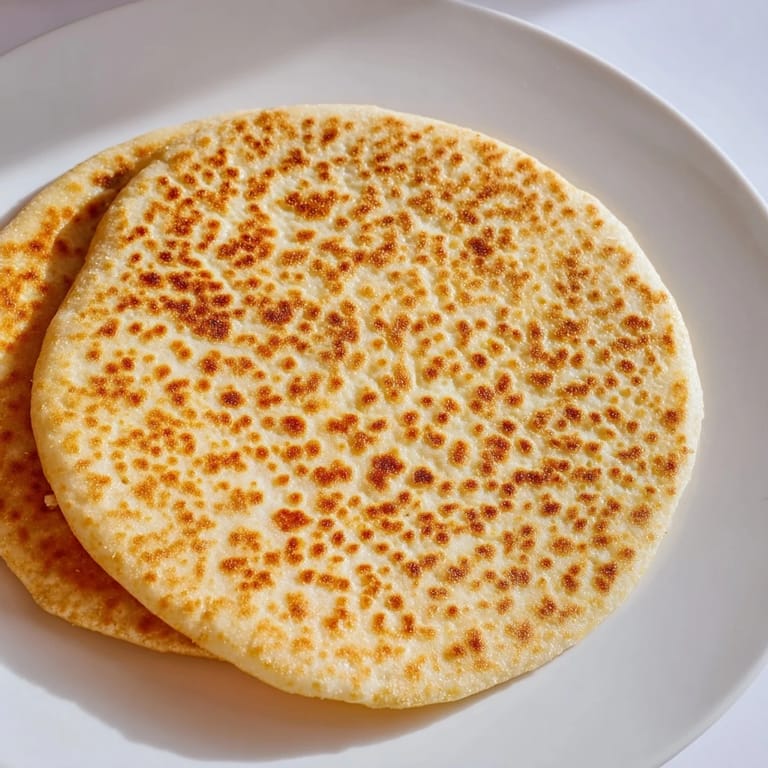
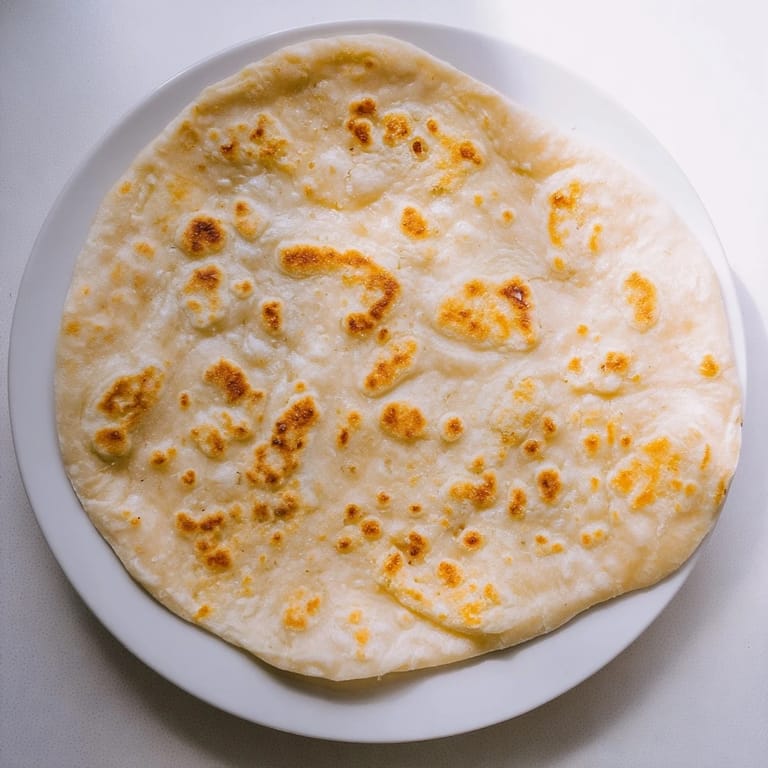
- Brush the hot pan lightly with olive oil or melted butter, then lay a flatbread down and watch as little golden spots appear within 2 to 3 minutes. Flip it over and cook the other side until it's equally spotted and cooked through.
- Keep them warm:
- Transfer each finished flatbread to a plate and cover it loosely with a clean towel to trap the steam and keep them soft while you cook the rest.
 Save
Save I'll never forget the sound of one of these flatbreads hitting the hot pan for the first time—this satisfying sizzle that somehow smelled like home even though I'd never made them before that day. That sizzle became my signal that everything was about to turn golden and delicious.
Why These Taste Different
Most flatbreads rely on either yeast and time, or pure oil for tenderness, but this recipe uses dairy to do something subtly different. The cottage cheese adds this gentle moisture that makes them softer than they have any right to be, while the yogurt brings a whisper of tang that you can't quite place but keeps you reaching for another. It's the kind of flavor that sneaks up on you in the best way.
Serving Suggestions
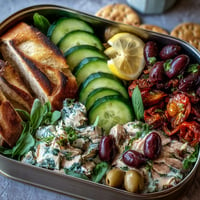
I've wrapped these around everything from roasted vegetables to leftover scrambled eggs, and they never feel like a starch obligation the way bread sometimes does. They're equally happy acting as a vehicle for store-bought hummus, or as a blank canvas for whatever's in your pantry.
Making Them Your Own
One evening I chopped up fresh dill and a few chives directly into the dough before rolling it out, and the entire kitchen smelled like an herb garden. If you want to go down that road, add your fresh or dried herbs when you're mixing in the yogurt and cottage cheese, before the dough gets too cohesive.
- Fresh herbs like parsley, dill, or chives work beautifully folded into the dough before cooking.
- A pinch of minced garlic can add savory depth without overwhelming the subtle tang of the dairy.
- Try brushing the finished flatbreads with garlic oil or melted herb butter for an extra layer of flavor.
 Save
Save These flatbreads have become my go-to when I want something homemade without the fuss of planning ahead. They're proof that sometimes the best discoveries come from using up what's already in your kitchen.
Recipe Questions
- → What gives these flatbreads their chewy texture?
The combination of cottage cheese and yogurt in the dough adds moisture and tenderness, resulting in a chewy, soft flatbread texture.
- → Can I add herbs to the dough for extra flavor?
Yes, mixing chopped parsley, chives, or dill into the dough brings fresh herbal notes that complement the subtle tang of the cottage cheese.
- → What is the best fat for pan-frying these flatbreads?
Olive oil or melted butter both work well for pan-frying, enhancing browning and adding richness.
- → How do I store leftover flatbreads?
Keep flatbreads in an airtight container. Reheat them gently in a dry pan to restore softness and warmth.
- → Are these flatbreads suitable for vegetarian diets?
Yes, the ingredients are vegetarian-friendly, featuring dairy and flour without any meat-based components.