 Save
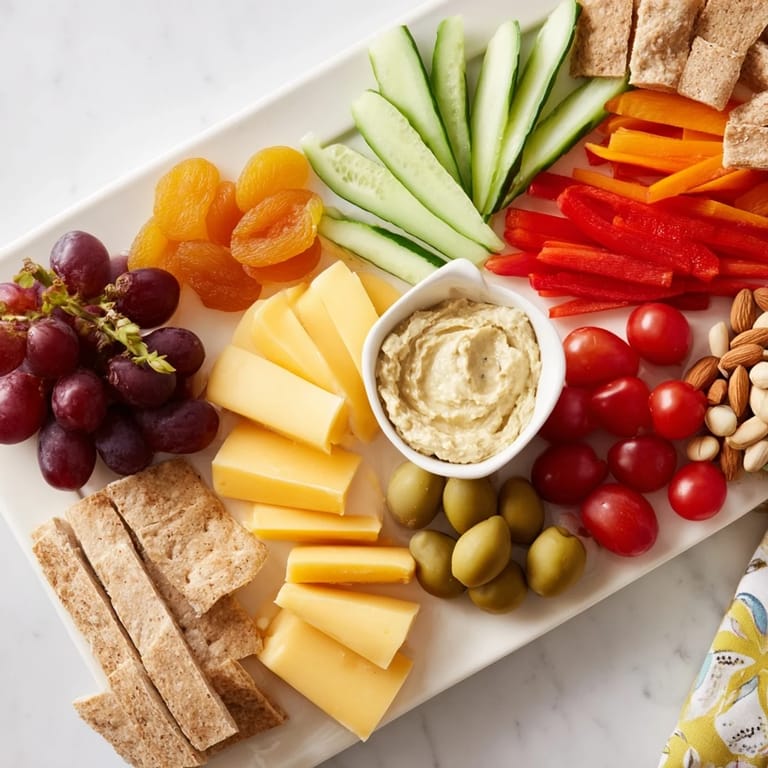
Save I discovered the magic of directional boards at a friend's dinner party last spring, when I watched guests naturally gravitate toward the center of the table, drawn in by the visual architecture of the spread. That evening, I realized that a charcuterie board could be so much more than a collection of delicious ingredients—it could tell a story through its arrangement. The arrowhead design came to me later, when I was thinking about how food should guide people, create conversation, and make them feel welcomed before they even taste anything. Since then, this board has become my go-to for impressing without overthinking.
I made this board for my sister's book club last month, and something unexpected happened—instead of people diving in immediately, they paused. They actually looked at it first, took photos, and talked about how the arrangement made them smile. That's when I knew this design wasn't just pretty; it had a warmth to it that made people slow down and appreciate the moment.
Ingredients
- Aged cheddar, cut into triangles (100 g): The sharpness cuts through rich meats beautifully, and triangle shapes are perfect for pointing. I learned that room temperature cheddar has so much more flavor than cold cheese.
- Brie, sliced into wedges (100 g): Those creamy wedges feel luxurious and their natural shape already points outward. Let it sit out for 15 minutes before arranging so it feels butter-soft.
- Gouda, cut into strips (100 g): The subtle sweetness and smooth texture make it a crowd favorite. Strips align naturally with the directional theme.
- Prosciutto, folded (100 g): Those delicate folds catch light beautifully and create texture contrast. Fold them loosely just before serving so they stay silky, not stiff.
- Salami, sliced and folded (100 g): The peppery notes balance the sweetness of fruit, and folded slices are sturdy enough to point without drooping.
- Seedless grapes in small clusters (1 cup): Cut clusters are easier to eat one-handed and look fuller than individual grapes. The jewel tones add real visual pop.
- Cherry tomatoes, halved (1 cup): Halving them reveals their bright interior and makes them look intentional rather than tossed on. Choose the ripest ones you can find.
- Cucumber, sliced diagonally (1 small): Diagonal cuts create natural points and look far more elegant than straight slices. I pat them dry so they don't make the board soggy.
- Red bell pepper, sliced into strips (1 small): The color is essential for visual drama, and strips point naturally toward your focal point.
- Artisan crackers (1 cup): Choose ones with interesting shapes and textures—they're supporting actors in your visual story.
- Baguette, sliced on the bias (1 small): Angled slices are easier to arrange directionally and feel more curated than straight cuts.
- Marcona almonds (½ cup): These are buttery and slightly sweet, filling gaps while reinforcing the overall direction with their oblong shapes.
- Dried apricots (¼ cup): Their golden color connects different sections visually. The slight tartness prevents the board from feeling too heavy.
- Olives (¼ cup): These anchor each line and add a salty, briny moment. I always drain them well so they don't pool liquid.
- Herbed hummus or whipped feta dip (100 ml): This is your magnetic center. Use a small bowl so it feels intentional and precious, not like a side thought.
Tired of Takeout? 🥡
Get 10 meals you can make faster than delivery arrives. Seriously.
One email. No spam. Unsubscribe anytime.
Instructions
- Set your foundation:
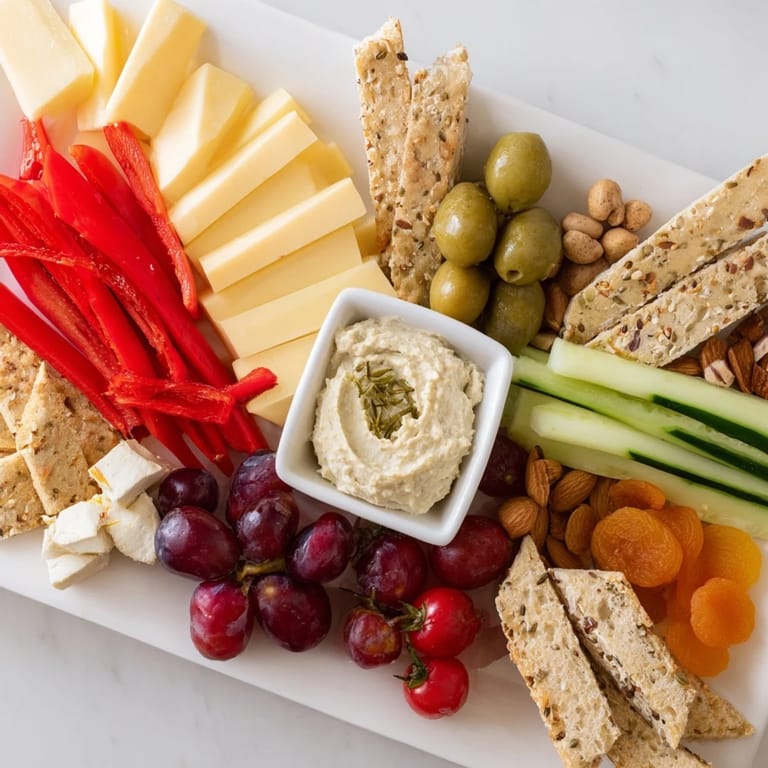
- Choose a large board—wood, slate, or marble—and place it in front of you. This is your canvas. Position your dip bowl at one end or corner; this is the arrowhead point where all lines will converge. Trust me, this one choice will make the whole arrangement click into place.
- Point the cheeses:
- Arrange your cheese wedges and triangles with their points facing toward the dip bowl. Fan them out from the opposite side, creating the first visual ray. Leave space between them—this isn't about crowding the board, it's about rhythm and intention.
- Add the meats with flow:
- If using them, position folded prosciutto and salami in lines that all flow toward your dip. These should feel like gentle brushstrokes directing the eye inward. They're delicate, so handle them just before guests arrive if possible.
- Layer vegetables and fruit diagonally:
- Place your tomatoes, cucumbers, and peppers so every cut surface angles toward the center. This is where the magic happens—the diagonals create actual movement on the board. Step back and look; you should feel pulled toward the dip.
- Position crackers and bread in radiating lines:
- Lay crackers and bread slices pointing inward, almost like spokes on a wheel. Vary the angles slightly so it feels natural, not rigid. These are the infrastructure that holds the arrangement together.
- Fill the spaces with nuts and dried fruit:
- Scatter marcona almonds, dried apricots, and olives along the lines between main components. These fill gaps while reinforcing the directional pattern. They're the detail work that elevates the whole presentation.
- Step back and adjust:
- Look at your board from above and from the side. Are there any spots that feel empty or confused? Adjust elements for balance. Fill gaps but don't crowd. Everything should point home to that bowl of dip.
 Save
Save Last summer, I made this board for a casual neighborhood gathering, and a child at the party pointed at it and said, 'It looks like it's giving you a hug.' That comment stayed with me. The directional flow, the pointing shapes, the center—it really does feel like the board is embracing whoever stands before it. That's the moment I stopped thinking of it as just an appetizer and started thinking of it as a way of saying welcome.
Creating Your Color Story
The visual impact of this board depends almost entirely on color contrast. When I started making these, I used whatever cheeses I had on hand and wondered why it looked flat. Then I realized I needed to think like a painter—placing cool greens near warm golds, creating pockets of red against pale cheese. The arrowhead structure gives you natural zones to work with. Use the brighter vegetables to push the eye forward, and let the crackers be the neutral backdrop. Don't think ingredient; think hue. Your board will thank you for that shift in perspective.
Temperature and Timing Matters More Than You Think
I used to make my board an hour before guests arrived, proud of my efficiency, and then watch the cheeses turn gummy and the edges of the meat curl up. Now I work backward from the time people arrive. Vegetables and fruit can go out 30 minutes early. Cheeses and meats come out maybe 15 minutes before service. Crackers only if you're serving immediately—they get stale faster than you'd expect. The dip goes in its bowl no more than 10 minutes before the board appears. I've noticed that a board served at the right moment tastes better and looks fresher. That detail matters.
Making It Your Own
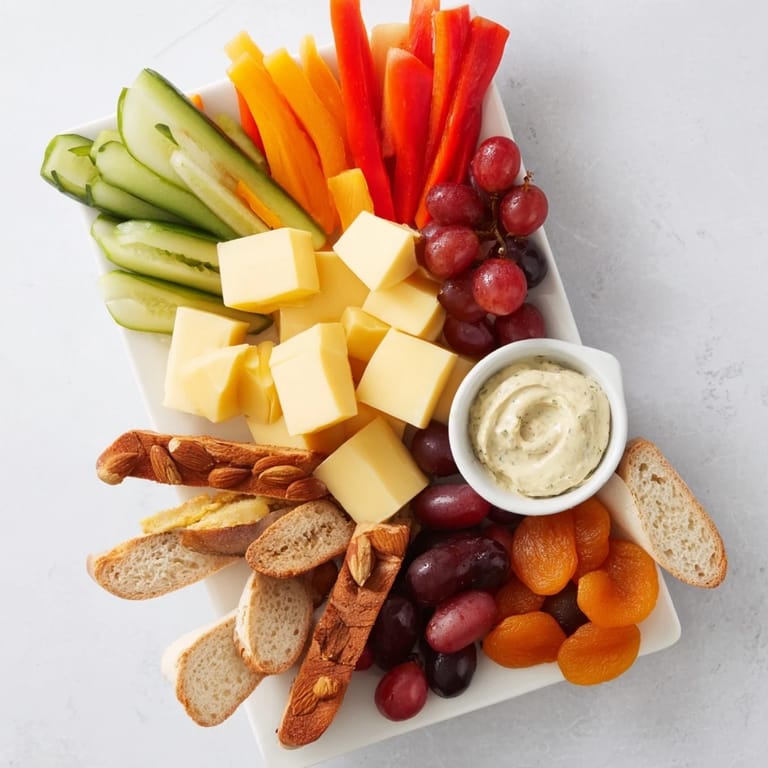
The beauty of this design is that it's completely customizable to what you love and what you have. I've made versions with only vegetables for dietary needs, added spiced nuts for extra flavor, swapped the dip three times in one month because I was experimenting. The structure—the pointing, the center focal point—remains the same. The specifics are yours to decide. I've learned that the most impressive boards aren't the ones made with rare ingredients; they're the ones made with intention and love, whatever those ingredients might be.
- For vegetarian: Simply increase your cheese varieties, add roasted vegetables, and consider nuts with herbs for depth
- For dietary restrictions: Gluten-free crackers, nut-free options, and dairy-free spreads slot right into the same structure
- For fun variations: Try smoked paprika on almonds, add fresh herbs as garnish, or use different colored dips for visual drama
 Save
Save Every time I set down one of these boards, I'm reminded that feeding people is really about seeing them. The arrowhead says, 'I made this point toward you. Come closer.' That small gesture changes everything.
Recipe Questions
- → How do I create the arrowhead effect on the board?
Arrange cheeses, meats, fruits, and crackers so their points and lines angle toward the dip bowl, creating a directional visual flow.
- → What types of cheeses work best for this arrangement?
Cheeses that can be cut into distinct shapes like triangles, wedges, or strips—such as aged cheddar, brie, and gouda—are ideal for this style.
- → Can this board be adapted for vegetarians?
Yes, simply omit the meats and increase variety of cheeses or fresh vegetables to maintain a balanced display.
- → What are good dip options to pair with this board?
Herbed hummus, whipped feta, beet hummus, tzatziki, or whipped ricotta complement the ingredients well.
- → How can I enhance the presentation with colors and textures?
Use contrasting colors like red bell peppers and green cucumbers along with varied textures such as smooth cheese and crunchy crackers for visual interest.
- → What wines pair well with this directional board?
Light, crisp wines such as Sauvignon Blanc or Pinot Noir enhance the flavors without overpowering the assortment.