 Save
Save The first time I made these crispy rice salmon stacks, I wasn't even planning to—I had leftover sushi rice, some beautiful salmon that needed using, and that restless afternoon energy where cooking becomes a way to think. I started frying the rice on a whim, heard that golden crackle, and suddenly remembered why texture matters as much as flavor. Within twenty minutes, I'd built something that felt both elegant and utterly unpretentious, the kind of dish that makes people lean in closer when you set it down.
I made this for a friend who'd just moved to the city and was feeling a bit lost in her new kitchen. She sat at my counter with a glass of wine, and by the time we finished plating, she was already mentally redecorating her apartment to have a proper cooking space. It was one of those moments where the food became a conversation, an excuse to dream out loud together.
Ingredients
- Sushi rice: The foundation here—rinse it well, and don't skip the vinegar mixture, which wakes up the rice and keeps it from being one-dimensional.
- Vegetable oil: Keep it clean and neutral so the rice gets properly golden without competing flavors.
- Sushi-grade salmon: Diced fine and mixed with soy, sesame, and lime, this becomes bright and deeply flavorful without overwhelming the plate.
- Avocado: Ripe but still holding its shape is the sweet spot—creamy against crispy is what makes this whole thing sing.
- Spicy mayo: It's just two ingredients, but the sriracha lift ties everything together and adds a whisper of heat.
- Sesame seeds and nori: These final touches give you visual interest and that familiar sushi-bar feeling.
Tired of Takeout? 🥡
Get 10 meals you can make faster than delivery arrives. Seriously.
One email. No spam. Unsubscribe anytime.
Instructions
- Prepare and Season the Rice:
- Rinse the sushi rice under cold running water, moving your fingers through it gently until the water runs clear—this washes away excess starch and keeps the rice from turning gluey. Cook it with the measured water, then while it's still warm, fold in the vinegar mixture with a light hand, as if you're being kind to it.
- Chill and Set:
- Press the cooled rice into a parchment-lined square pan to create an even, compact layer. The twenty-minute chill is worth the wait—it helps the rice hold together when you cut and fry it.
- Prepare the Salmon Mixture:
- Combine your diced salmon with soy sauce, sesame oil, sriracha if you like heat, lime juice, and green onion, stirring gently so the salmon stays intact. This tastes better when it's had time to sit and let the flavors mingle, so chill it while you work on the rice.
- Make Your Spicy Mayo:
- Whisk together mayonnaise and sriracha until it's a uniform peachy-orange color, then set it aside—this is your flavor anchor for everything that comes next.
- Cut and Fry:
- Slice the chilled rice into two-inch squares, then heat your oil in a skillet over medium-high heat. You'll know it's ready when a grain of rice sizzles immediately—fry each square about two to three minutes per side until the edges turn golden and the rice sounds crisp when you move it around the pan.
- Assemble with Intent:
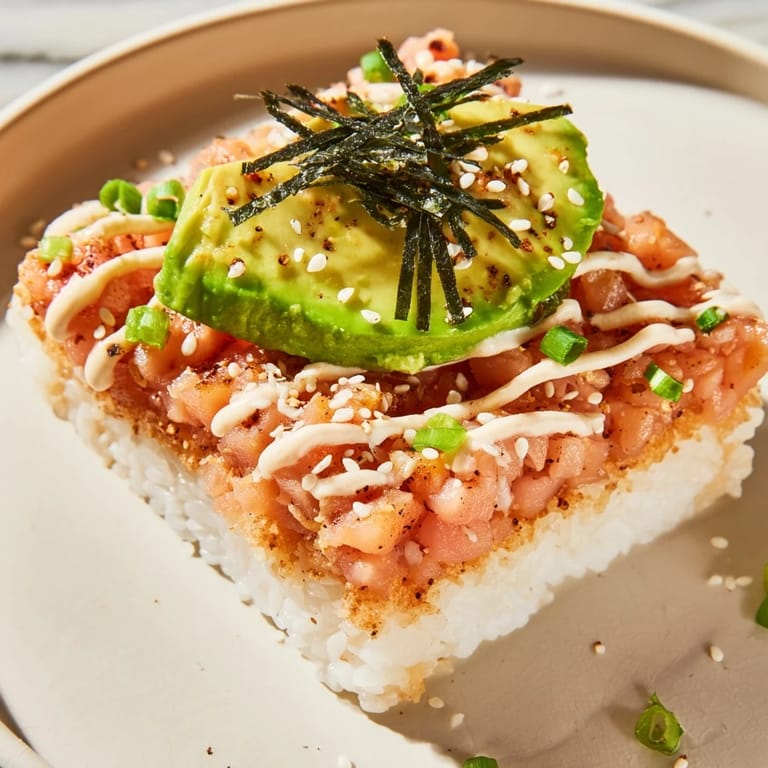
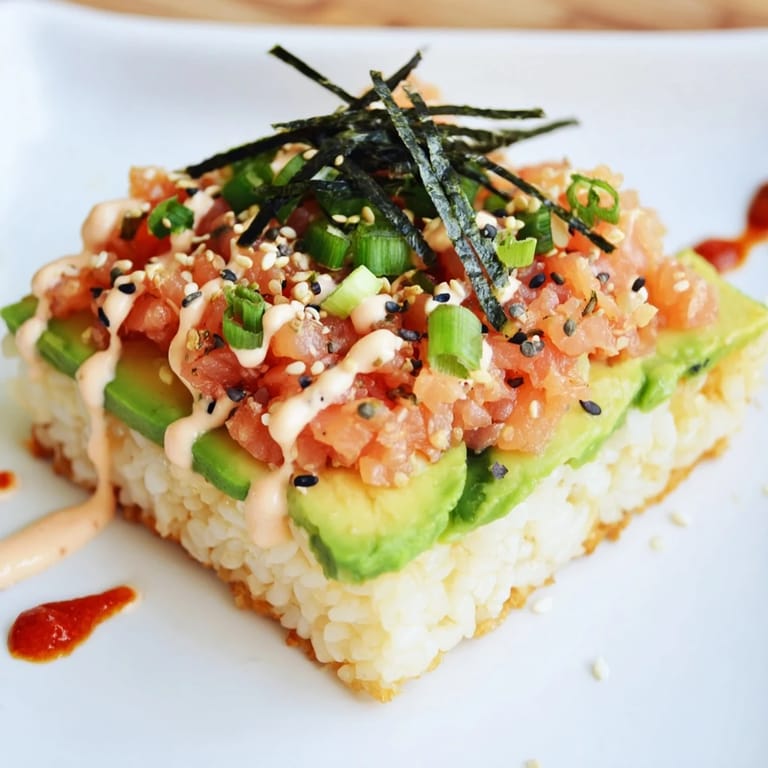
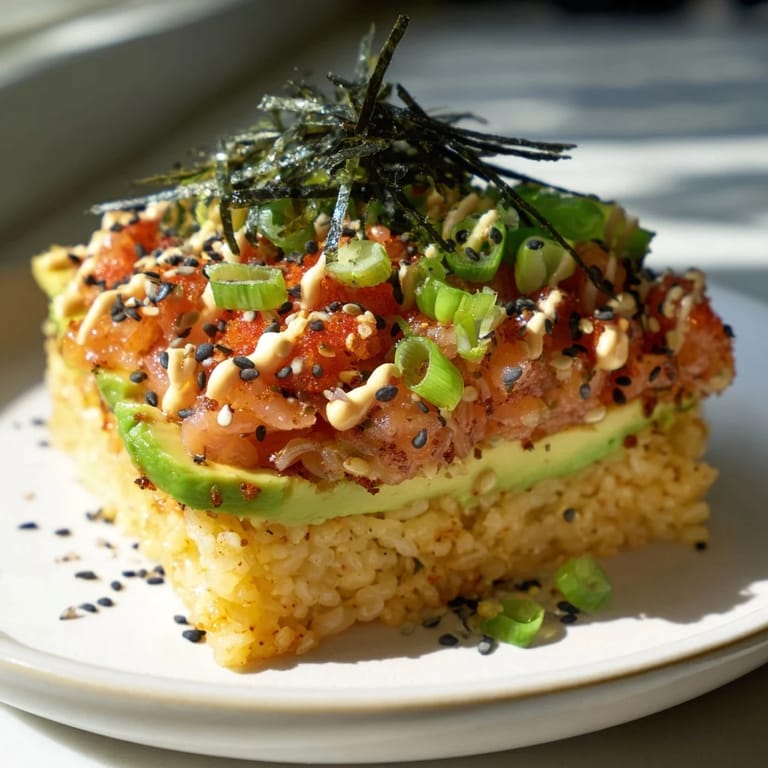
- While the rice is still warm, layer each square with avocado, a generous spoonful of salmon mixture, a drizzle of spicy mayo, and a scatter of sesame seeds, chives, and nori if you have them. Think of it like building something that should taste good on every bite.
- Serve Right Away:
- The magic here is catching the rice while it's still warm and crisp—this isn't something that waits well, and that urgency is part of its charm.
 Save
Save There's something quietly perfect about eating something this refined with your fingers, letting the crispy rice break under your bite and the salmon and avocado give way softly beneath. It made me realize that the best dishes aren't always the most complicated—sometimes they're just the ones that understand texture, balance, and the simple pleasure of elements coming together at exactly the right moment.
Why Crispy Rice Changed Everything
I'd always thought of crispy rice as something that belonged only in sushi rolls, pressed tight and hidden. But frying it separately, then building on top of it, taught me that texture isn't an accident—it's a decision. Every time the rice crackles in your mouth, it's doing something the mayonnaise and avocado aren't, and that contrast is what keeps you coming back to the plate.
Building Blocks You Can Rearrange
Once you understand how this stack works, you can start playing. I've made it with cooked salmon when I didn't have sushi-grade on hand, with cucumber instead of avocado when it's hot outside, even with a thin smear of wasabi under the salmon for someone who liked things hotter. The structure stays the same—crispy foundation, cool creamy layer, bright protein, acid and heat on top—but the particulars can be whatever you have or whatever you're craving that day.
The Serving Moment That Matters
Timing here isn't fussy—it's just real. You fry the rice while your guests are arriving, plate it while they're settling in, and hand it over while it's still warm and the mayo is still bright. It's the kind of appetizer that works because it doesn't take all night to make, and because people actually want to eat it, not just admire it.
- If you're making this ahead, fry the rice and keep it at room temperature, then assemble just before serving so everything stays crisp.
- A squeeze of fresh lemon over the top at the last second adds brightness if your lime has lost its punch.
- This pairs beautifully with a cold sake or a crisp white wine that won't compete with the delicate salmon flavor.
 Save
Save This dish lives in that wonderful space where it feels special without requiring you to perform restaurant magic. It's honest food that happens to look beautiful, and that's all you really need.
Recipe Questions
- → How do you achieve the crispy texture on the rice?
Press cooked sushi rice into a pan, chill it, then cut into squares and pan-fry with vegetable oil until golden and crisp on both sides.
- → Can I use cooked salmon instead of raw?
Yes, cooked or canned salmon can substitute raw for a milder flavor and easier preparation while maintaining texture.
- → What gives the salmon its flavor?
The diced salmon is mixed with low-sodium soy sauce, toasted sesame oil, lime juice, green onion, and optional sriracha for a balanced, zesty taste.
- → What are good accompaniments for this dish?
Pickled ginger, thin cucumber slices, or a crisp white wine or chilled sake complement the fresh and crunchy elements well.
- → Are there allergy considerations to keep in mind?
This dish contains fish, soy, egg (from mayonnaise), and sesame; check all ingredients carefully if allergies are a concern.