 Save
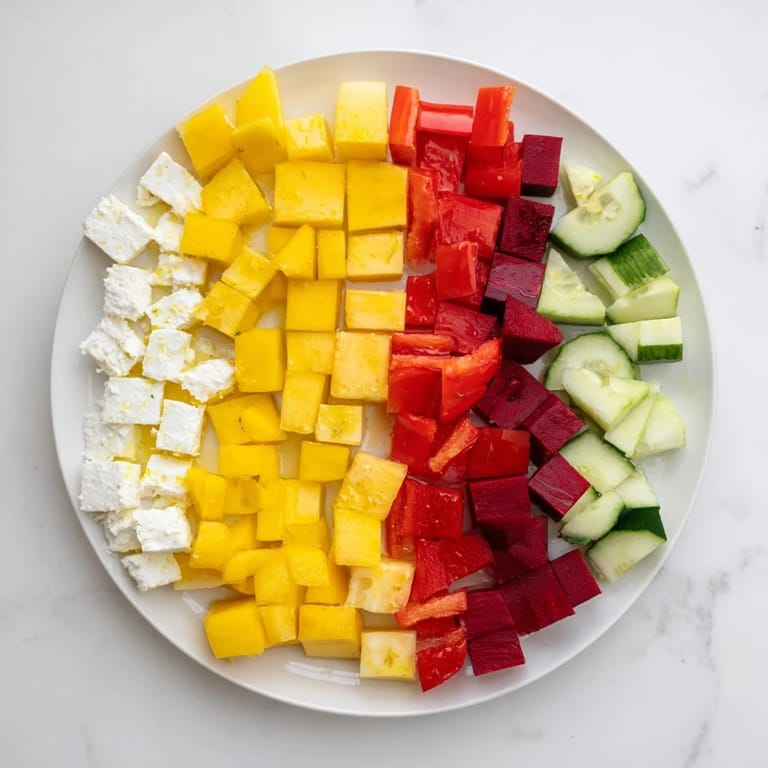
Save I remember the first time I saw a cube-cut salad at a minimalist restaurant in Copenhagen—everything was so perfectly geometric that I almost didn't want to eat it. The chef explained that by cutting every ingredient into uniform cubes, you create this beautiful balance where no single flavor dominates, and instead, each bite becomes a little surprise of contrasting textures and tastes. I've been obsessed with recreating that moment at home ever since, and this Cube Geometry Study has become my answer to 'what should we serve when we want to impress people without actually cooking.'
I made this for my sister's birthday brunch last summer, and I'll never forget how she laughed when she saw it—she said it looked like something that belonged in a gallery, not on a plate. By the end of the meal, everyone was asking for the recipe, and one friend asked if I'd trained as a chef. The truth is, it's all about the knife work and the grid arrangement. Once you understand that, you'll find yourself making this again and again.
Ingredients
- 1 small cucumber, peeled and cut into 1 cm cubes: The cucumber is your neutral base—crisp and refreshing. I learned to peel it first because the skin can slip during cutting and ruin your precision.
- 1 ripe mango, peeled and cut into 1 cm cubes: This is where sweetness lives. The mango has to be ripe but still firm enough to hold its shape when cut. If it's too soft, your cubes will fall apart.
- 1 ripe avocado, peeled and cut into 1 cm cubes: Avocado adds creaminess and richness. Cut it last and toss it gently in the dressing immediately to prevent browning—a trick that saved me more times than I can count.
- 1 small red beet, cooked, peeled, and cut into 1 cm cubes: The beet is your visual drama. Its deep red color anchors the whole grid. I always cook it separately to prevent its color from bleeding onto everything else.
- 1 small yellow bell pepper, seeded and cut into 1 cm cubes: Sweet and crisp, the pepper adds brightness to the arrangement. Make sure you remove all the seeds cleanly—they catch between your teeth.
- 1 small watermelon wedge, rind removed, cut into 1 cm cubes: This is the surprise ingredient that makes people pause mid-chew. Watermelon's unexpected freshness against salty feta is a revelation.
- 120 g feta cheese, cut into 1 cm cubes: The feta is your protein and your salt. Cut it cold straight from the fridge—it's much easier to get clean cubes that way.
- 2 tbsp extra-virgin olive oil: Use one you genuinely love. This is a raw-ingredient salad, so the oil matters more than it would in a cooked dish.
- 1 tbsp lemon juice: Bright and sharp, this keeps everything tasting fresh. Squeeze it fresh if you can.
- 1/2 tsp sea salt and 1/4 tsp freshly ground black pepper: Season to taste. I always taste a tiny piece of each ingredient first to understand what the salad needs.
- 1/2 tsp honey (optional): A whisper of honey rounds out the dressing and balances the acidity. Don't skip it—it makes a real difference.
Tired of Takeout? 🥡
Get 10 meals you can make faster than delivery arrives. Seriously.
One email. No spam. Unsubscribe anytime.
Instructions
- Gather and prepare your mise en place:
- Before you cut anything, set yourself up for success. Wash all your vegetables and pat them completely dry. You need a sharp knife—a dull knife will crush your cubes instead of cutting them cleanly. I sharpen mine right before I start. Lay out a cutting board and clear some counter space where you can work with intention. This is meditative work, so move slowly.
- Master the cube cut:
- For uniform 1 cm cubes, imagine each vegetable as a small grid. Peel the cucumber first, then cut it into thin planks, stack the planks, cut them into thin sticks, then cut the sticks into cubes. The rhythm becomes almost musical once you get started. For round vegetables like the mango and avocado, you'll find it easier to work with one side at a time, creating a flat surface first. The beet should already be cooked and cooled before you touch it.
- Compose the dressing:
- In a small bowl, whisk together olive oil, lemon juice, salt, pepper, and honey if you're using it. Don't overthink it—just whisk until the salt dissolves and the honey is distributed. Taste it on a piece of cucumber. It should taste bright and a little salty, because it's about to meet some very fresh vegetables.
- Arrange on the grid:
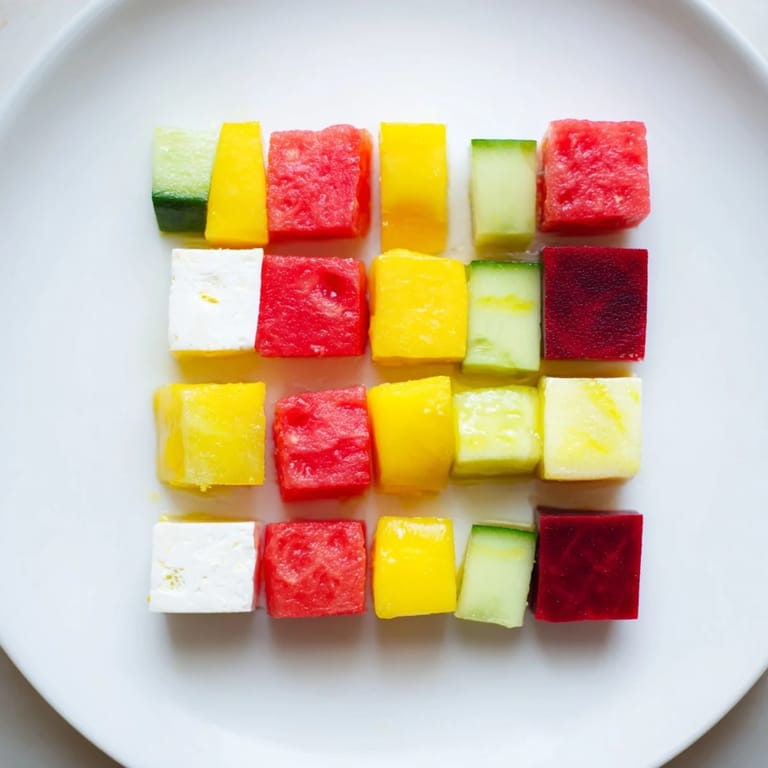
- This is where the magic happens. Use a large, flat platter or cutting board as your canvas. Start by creating rows, alternating colors deliberately. One row might be cucumber, mango, avocado, beet, pepper, watermelon, feta. Then repeat. Step back and look at it. Adjust it. You're not just making a salad—you're creating something you'll want to photograph. The arrangement is half the dish.
- Dress and serve immediately:
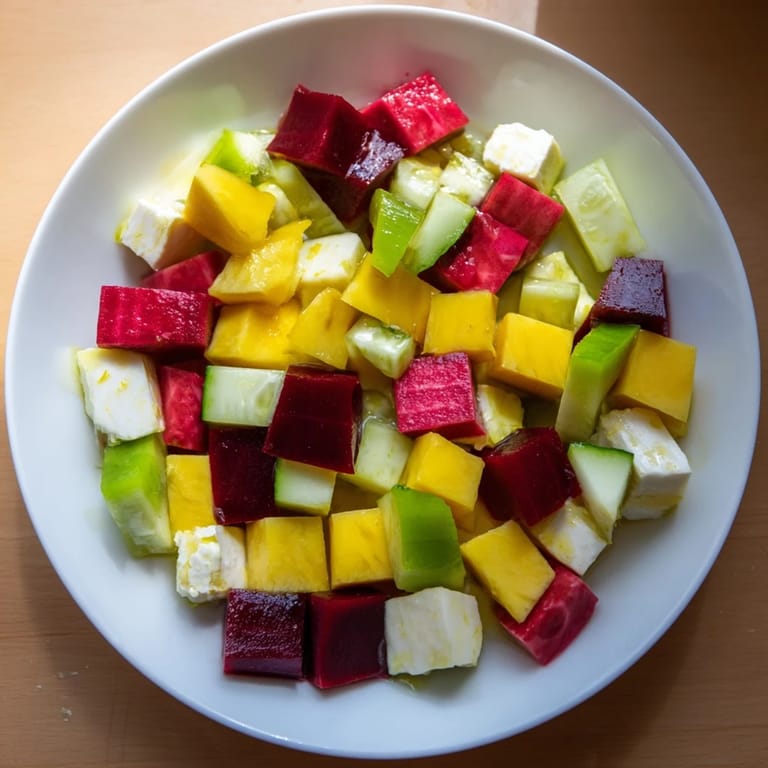
- Just before serving, drizzle the dressing over the cubes. Don't soak them—a light hand is better. The goal is to help them come together while maintaining their individual identity. Serve right away while everything is cold and crisp. The cubes will start to soften and lose their geometry if they sit.
 Save
Save There was a moment during that birthday brunch when the table went quiet—everyone was just looking at the salad. My sister reached down and took a photograph before anyone took a bite. That's when I realized this recipe isn't just about taste. It's about slowing down, about making something beautiful with your hands, about saying 'you matter to me' through the precision of your knife work.
The Art of Precision in the Kitchen
This recipe taught me that precision isn't about rigidity—it's about respect. When you take the time to cut each piece the same size, you're showing respect to the ingredients and to the people eating them. It forces you to slow down in a world that's always rushing you. I've noticed that making this salad puts me in a meditative state. My mind quiets. My hands know what to do. By the time the salad is on the table, I feel more present than I did when I started.
Playing with Flavor and Color
The genius of this salad is that you can swap things out and create entirely different moods. Use papaya instead of mango and suddenly it feels tropical. Add beets and it becomes earthy and grounding. The grid format means that every ingredient gets equal billing—nothing dominates. This is democracy on a plate. I've made versions with roasted chickpeas for more protein, and versions with just the raw vegetables for maximum crunch. The structure stays the same, but the feeling changes completely.
Building Your Own Cube Salad
Once you master the technique, you can build this salad with whatever you have on hand. The only rules are: everything must be cut into uniform cubes, and you need enough variety to create visual interest. Think about including something crisp, something creamy, something sweet, something savory, and something bright. I always include something unexpected—watermelon, persimmon, pomegranate—because that's where the memory lives.
- Keep your cubes uniform for visual impact and even texture distribution
- Always work with a sharp knife and take your time—this isn't about speed, it's about presence
- Arrange the salad last and serve immediately to protect that beautiful geometry you worked so hard to create
 Save
Save This salad has become my answer to the question 'how do you make simple food feel special?' The answer is attention. It's showing up with a sharp knife, steady hands, and the belief that even a salad deserves your full presence. Make this when you want to remember that cooking is as much about the doing as it is about the eating.
Recipe Questions
- → How can I ensure uniform cube sizes?
Use a sharp knife and a ruler to measure and cut each ingredient into 1 cm cubes for consistent size and presentation.
- → Can I substitute feta cheese in this dish?
Yes, for vegan options, replace feta with firm tofu cubes to maintain texture and complement the flavors.
- → What dressing pairs well with this salad?
A simple mix of extra-virgin olive oil, fresh lemon juice, sea salt, black pepper, and optional honey enhances the fresh ingredients without overpowering them.
- → Are there alternatives to the fruits used?
Mango can be swapped with papaya or pineapple to introduce different flavor profiles while preserving the salad's vibrant look.
- → How should the salad be served for best texture?
Arrange cubes just before serving and drizzle dressing lightly to keep the ingredients crisp and visually appealing.
- → What tools help achieve precise cuts?
A sharp chef’s knife, cutting board, and optionally a ruler ensure clean, even cubes for a polished presentation.