 Save
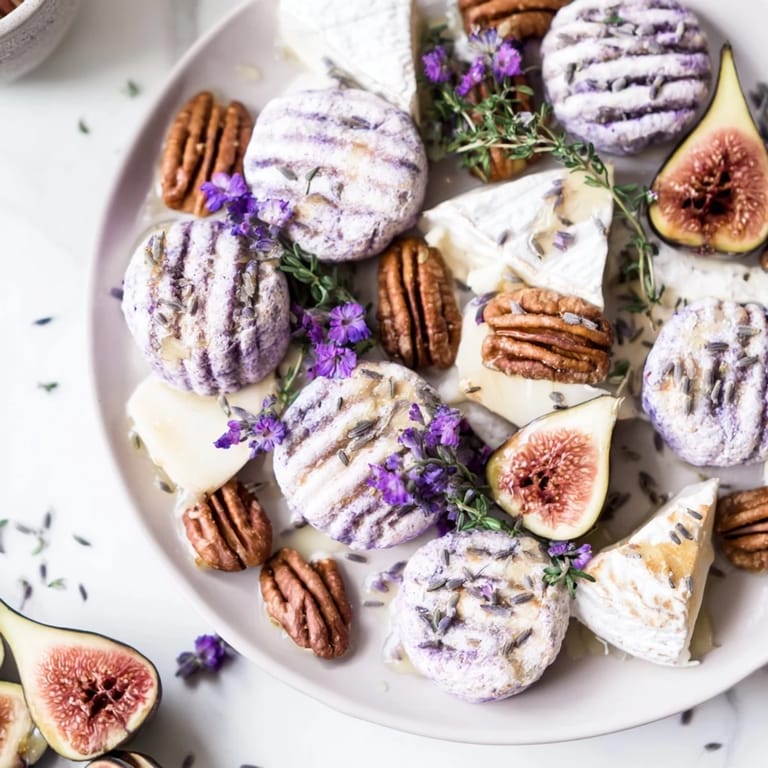
Save I first assembled a lavender cheese board on a whim, pulling purple-coated goat cheese from the market and remembering how my grandmother always said the best entertaining happens when you stop overthinking it. The ash-rinded brie caught my eye next, its charcoal exterior almost dramatic against the soft violet of the goat cheese. Within minutes, I'd scattered grapes and figs across a board, drizzled honey, and suddenly had something that looked like it belonged in a magazine but felt entirely like me. My friends arrived that evening expecting casual snacks, and instead they found themselves moving slowly around this board, lingering over each pairing like they were discovering something precious. That's when I realized how a few thoughtful elements—color, contrast, intention—could transform a simple gathering into something memorable.
I made this board for my partner's birthday last summer, and what started as appetizers became the entire evening—we never even got to dinner because we kept returning to it, trying new combinations and talking until the sun had nearly set. There's something about a beautiful cheese board that slows people down and makes them want to linger, and that night taught me that sometimes the simplest food creates the most meaningful moments.
Ingredients
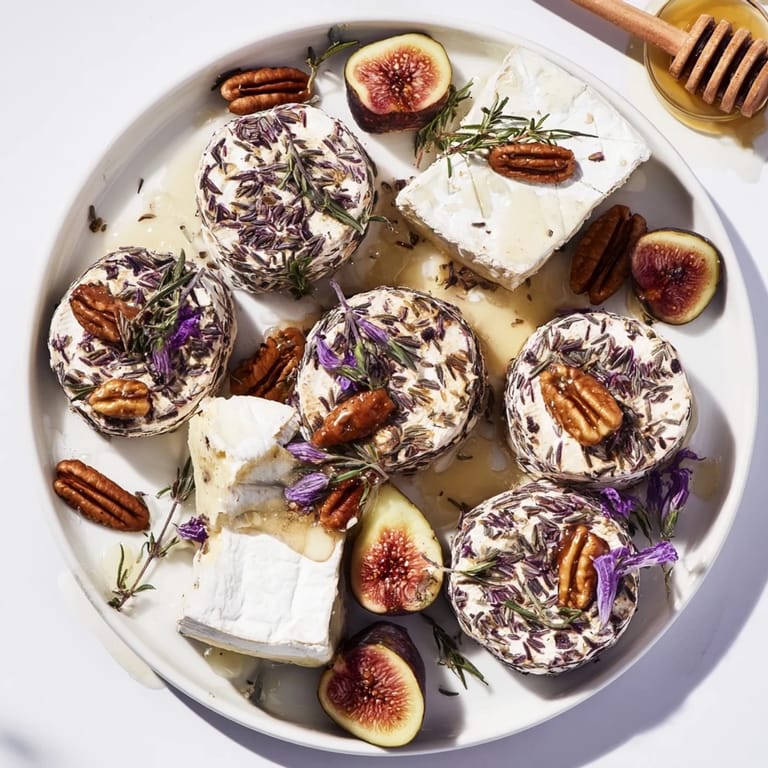
- Lavender-coated goat cheese: This is the show-stopper that makes the whole board feel intentional; the coating adds visual drama and a whisper of floral flavor without overwhelming the creamy tanginess underneath.
- Ash-rinded brie: The deep grey exterior creates a striking contrast to the purple goat cheese, and the interior melts on your tongue with a gentle earthiness that pairs beautifully with anything sweet.
- Grapes and figs: Their natural sweetness and texture provide essential contrast to the richness of the cheeses; halving or quartering them makes them easier to balance on crackers.
- Candied walnuts or pecans: These add a buttery crunch that keeps every bite interesting and prevent the board from feeling too soft and creamy.
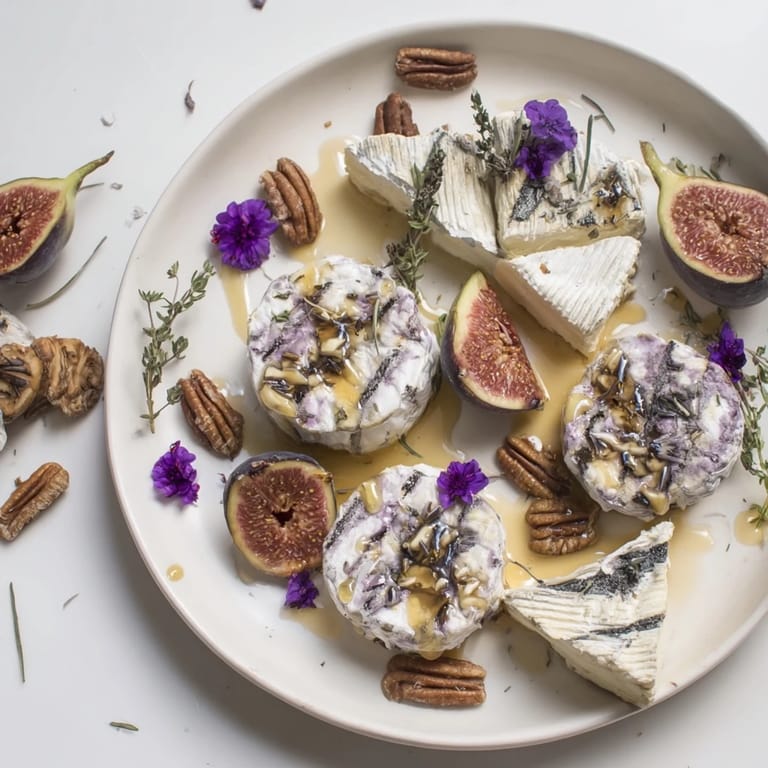
- Lavender honey: Drizzle it sparingly over the goat cheese to amplify the floral theme, but regular honey works if you can't find the specialty version.
- Edible flowers and thyme: These aren't just garnish—they signal that this board has been thoughtfully composed, and the aroma adds another sensory layer when guests lean in.
- Toasted baguette and charcoal crackers: The baguette's slight warmth and crunch provide the perfect vehicle for building bites, while black crackers add visual contrast and a subtle nuttiness.
Tired of Takeout? 🥡
Get 10 meals you can make faster than delivery arrives. Seriously.
One email. No spam. Unsubscribe anytime.
Instructions
- Create Your Color Story:
- Start by placing your two cheeses on the board with space between them, letting their purple and grey tones anchor the whole composition. Step back and look at the board from above—this is where the magic happens visually.
- Build Clusters:
- Nestle small mounds of grapes and figs into the negative space, grouping them so guests can easily grab a few without dismantling your arrangement. I like to scatter them in loose triangles across the board.
- Add Texture and Crunch:
- Sprinkle candied nuts between the fruit and cheese, creating little pockets of interest that encourage people to explore different corners of the board. This also prevents any section from looking too empty.
- Honey and Flourish:
- Drizzle lavender honey directly over the goat cheese in thin streams, letting some pool slightly at the base. The visual richness of the honey makes the goat cheese look even more inviting.
- The Garnish Moment:
- Scatter edible flowers and fresh thyme sprigs across the entire board just before serving, allowing the colors and aromas to be the final impression. This step should take less than a minute but creates an almost magical effect.
- Complete the Foundation:
- Arrange toasted baguette slices and charcoal crackers around the perimeter, leaving room so they don't crowd the cheeses and fruit. Guests will appreciate having options that contrast with one another.
- The Moment of Truth:
- Step back, take in what you've created, and serve immediately while everything is fresh and the board feels vibrant. Your guests will know they're experiencing something special the moment they see it.
 Save
Save I once served a simpler version of this board at a dinner party where one guest mentioned she'd been stressed all week, and watching her slow down as she moved around the table, pairing flavors thoughtfully and taking real time with the experience, reminded me that food is really about creating permission for people to be present. That's what this board does—it invites slowness and appreciation.
The Poetry of Purple and Grey
There's something almost meditative about the color palette of this board—the soft lavender of the goat cheese against the charcoal rind of the brie creates a visual quietness that feels both contemporary and timeless. These muted tones seem to make people speak more softly and linger longer, transforming a simple appetizer into an experience. I've noticed that boards with bold, clashing colors can feel chaotic, but this gentle purple-grey combination has a calming effect that lets the flavors become the main conversation.
Building the Perfect Bite
The magic of a cheese board lies in the freedom it gives each person to compose their own ideal bite, and this one offers enough variety that every combination feels new. Watch your guests as they build—some will go straight for the goat cheese and honey, others will work through the textures methodically, and that's the whole point. The board succeeds when people are thinking about what comes next, experimenting with whether the brie tastes better with figs or grapes, discovering that the candied pecans change everything. This kind of playful eating, where there's no wrong answer, is what makes gathering around food feel joyful rather than formal.
Making This Board Your Own
While this recipe is built around a specific color story and ingredient list, the real lesson is that a cheese board is only constrained by your imagination and whatever beautiful things you can find at the market that day. You might swap the figs for fresh apricots or berries, trade candied nuts for roasted chickpeas, or add purple endive leaves for extra crunch and color. The framework—striking cheeses, fresh fruit, something sweet, something crunchy, garnishes for aroma and visual pop—is flexible enough to adapt to seasons and what catches your eye.
- Lavender honey is wonderful but not essential; any floral honey or even a drizzle of fig jam creates the same touch of elegance.
- If you can't source ash-rinded brie, any creamy brie or even a soft blue cheese with a dramatic exterior will create the same visual impact.
- The edible flowers are a luxury rather than a necessity, but they transform the board from pretty to unforgettable, so I'd make finding them a priority.
 Save
Save Every time I make this board, I'm reminded that the most sophisticated entertaining often comes from the simplest gestures—a thoughtful combination, careful attention to color and texture, and the decision to let people move at their own pace. That's all this recipe really is, but somehow it always feels like something more.
Recipe Questions
- → What cheeses are featured in this board?
It combines lavender-coated goat cheese with ash-rinded brie, offering contrasting textures and floral flavors.
- → Can I use dried figs instead of fresh?
Yes, dried figs are a flavorful alternative when fresh figs are out of season.
- → What pairs well with the honey drizzle?
Lavender honey enhances floral notes, but regular honey works equally well to complement the cheeses.
- → Are there gluten-free options included?
Gluten-free crackers can replace the baguette and regular crackers to accommodate gluten sensitivities.
- → How should the board be arranged for best presentation?
Place cheeses spaced apart, cluster grapes and figs nearby, sprinkle candied nuts in between, then garnish with edible flowers and thyme.
- → What drink pairs best with this cheese board?
A chilled Provence rosé or floral white wines like Gewürztraminer beautifully complement the flavors.