 Save
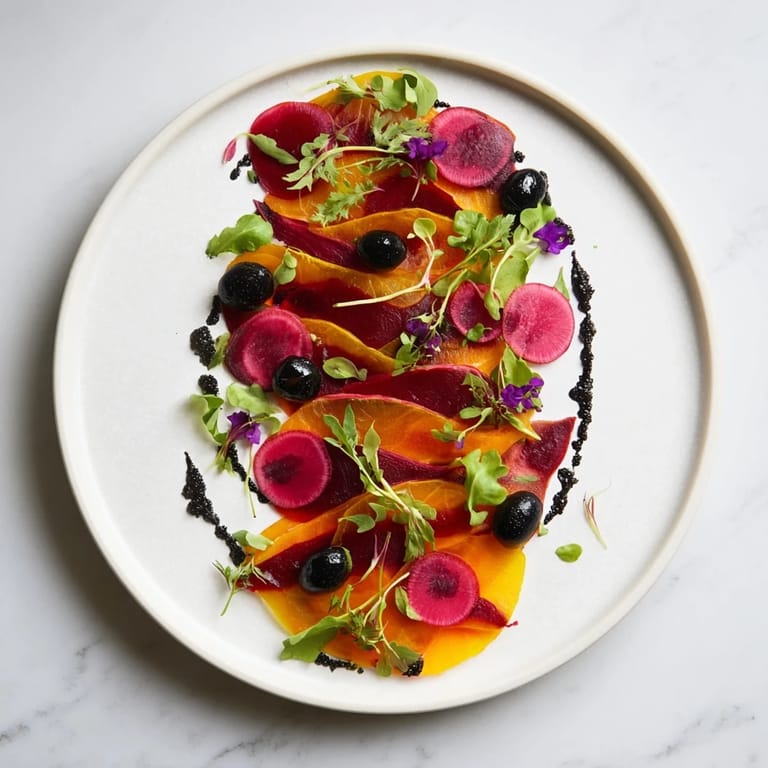
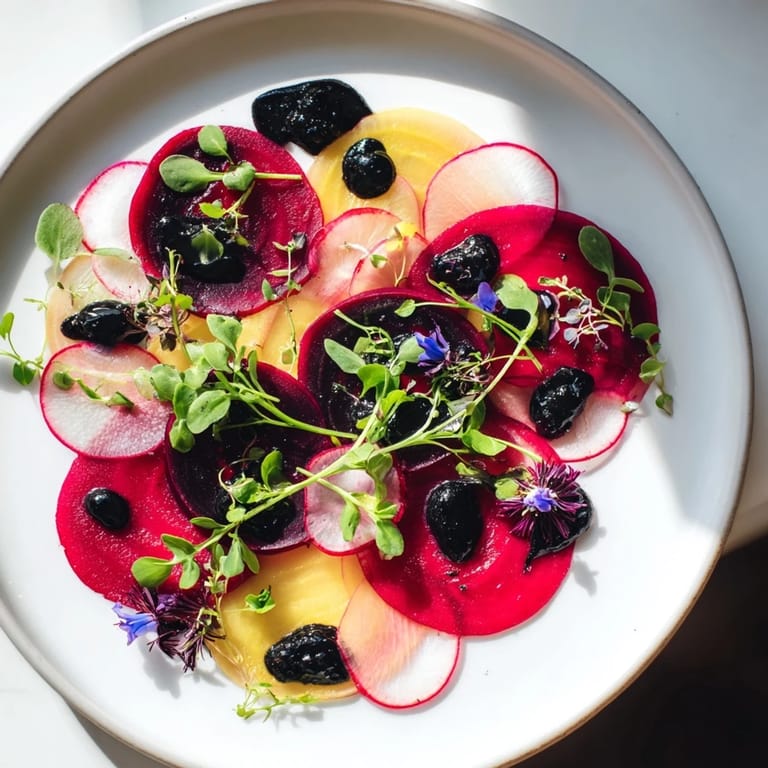
Save I discovered this dish on a gray afternoon when my friend mentioned she'd been experimenting with vegetables as art. The idea stuck with me—that food could be deliberately composed, layered with intention. When I finally sat down to create it myself, I realized that the contrast between deep blacks and vibrant pinks wasn't just beautiful; it told a story on the plate. There's something oddly satisfying about arranging something so carefully that it feels less like cooking and more like painting.
I made this the night before having friends over, thinking it would be too fiddly to plate on the spot. Instead, I discovered that assembling it piece by piece, while they sat at my kitchen counter with wine, turned the whole thing into a moment we shared. We laughed about how serious it looked and how ridiculously simple it actually was to make. That's when I realized this dish isn't about complexity—it's about intention.
Ingredients
- Golden beet: Slice it paper-thin so light passes through slightly; it becomes almost translucent and glows against darker elements.
- Red beet: Its deeper crimson creates natural contrast and holds its color beautifully without bleeding into the other ingredients.
- Baby arugula: The peppery bite cuts through the earthiness of the beets and adds a textural contrast that keeps the bite interesting.
- Watermelon radish: Beyond its striking rings, it adds a subtle sweetness and crisp freshness that balances the heavier root vegetables.
- Blackberries: These aren't just for show—their tartness and slight jammy quality anchor the dish and introduce fruit's brightness.
- Black olives: Use good ones if you can; they add umami depth that elevates the whole composition.
- Black tahini: If you can't find it, regular tahini mixed with a tiny bit of squid ink works, but honestly, black tahini tastes richer and more intentional.
- Extra virgin olive oil: This is where quality matters; a peppery or fruity oil will make the dressing memorable.
- Lemon juice: Fresh squeezed makes a real difference; bottled tends to taste hollow against such delicate vegetables.
- Honey: A teaspoon seems small, but it rounds out the acidity and adds a subtle sweetness that makes everything sing together.
- Microgreens: Choose colors that contrast with what's beneath them; purple radish microgreens against pink beets create even more visual drama.
Tired of Takeout? 🥡
Get 10 meals you can make faster than delivery arrives. Seriously.
One email. No spam. Unsubscribe anytime.
Instructions
- Slice your vegetables with intention:
- Use a mandoline if you have one, but a sharp knife works just as well if you go slowly. The thinner the slices, the more the light catches them, and that's where the magic happens. Aim for almost translucent with the beets—you should be able to almost see your hand through them.
- Build your base layer:
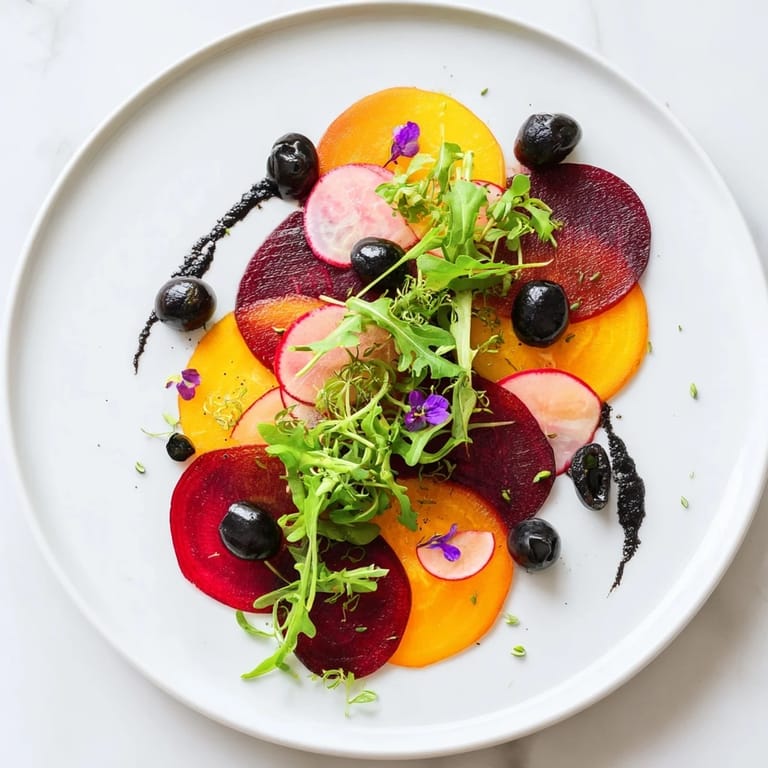
- Arrange the golden and red beet slices in overlapping rows on your platter, alternating colors like you're composing a painting. There's no rigid rule here—let your eye guide you. The semi-overlapping pattern creates natural shadows and movement.
- Layer in the bright elements:
- Fan the watermelon radish slices across the beets so their striped rings show clearly. Scatter the arugula loosely over the top, letting some leaves stand up slightly for height and dimension.
- Place your dark accents strategically:
- Here's where the name comes from—position the blackberries and olives in the spaces and underneath the brighter ingredients so they create shadowy pockets. Think of them as punctuation marks rather than scattered garnish; each one should feel placed, not random.
- Whisk your dressing:
- Combine the oil, lemon juice, and honey in a bowl, whisking until the honey dissolves and the mixture emulsifies slightly. Taste it before dressing the plate; it should be balanced between bright lemon and subtle sweetness.
- Add the tahini shadows:
- Use a small spoon to place tiny dollops of black tahini around the plate, then gently smear them with the back of the spoon to create organic, shadowy streaks. This is the moment where restraint matters—less is more with something this rich.
- Finish with garnish and serve:
- Top the whole composition with microgreens and edible flowers if using them. Drizzle the dressing just before serving so nothing gets soggy. The moment you finish is when you serve it.
 Save
Save What surprised me most about this dish was how it shifted the way we ate. Usually we dug in without thinking, but this time, everyone paused to look first. It made the simple act of eating feel ceremonial, which sounds pretentious until you realize that's actually what cooking together is about—creating moments that matter.
Why This Dish Works
The genius of Shadow Play is that it respects vegetables. Instead of trying to hide them or transform them into something they're not, it celebrates their colors, textures, and flavors exactly as they are. The dark and light contrast isn't just visual theater; it's a reminder that simple ingredients, when arranged with care, become something extraordinary. Every component stays true to itself while contributing to something larger.
Building Your Own Shadow Play
Once you understand the principle, you can build variations with whatever vegetables speak to you. I've made versions with roasted purple carrots instead of olives, or with charred eggplant ribbons creating the shadows. The framework stays the same: light elements layered with dark accents, a dressing that brings everything together, and a moment of attention before eating. The beauty is that you're not bound by this exact ingredient list—you're learning a visual language that you can speak in your own way.
Pairing and Serving Suggestions
I serve this as a composed appetizer at dinner parties, but it works equally well as a light lunch or part of a mezze spread. The key is giving it space on the plate—it deserves to be seen. As for wine, a crisp Sauvignon Blanc with its herbaceous notes plays beautifully against the earthiness, while a light Pinot Noir's delicate tannins won't overpower the subtle flavors. You could also pair it with sparkling water infused with herbs, or honestly, just good bread to use as a vehicle for the tahini and oil.
- If you're feeding a crowd, you can assemble the base layer ahead and add the dressing and microgreens at the last moment.
- Leftovers actually taste good the next day if you store components separately and reassemble them.
- This dish pairs beautifully with soft cheeses like goat cheese or burrata if you want to make it slightly more substantial.
 Save
Save This dish reminded me that cooking is visual language, and sometimes the most meaningful meals are the ones we slow down to really see. Every time I make it, it feels a little different, a little more personal.