 Save
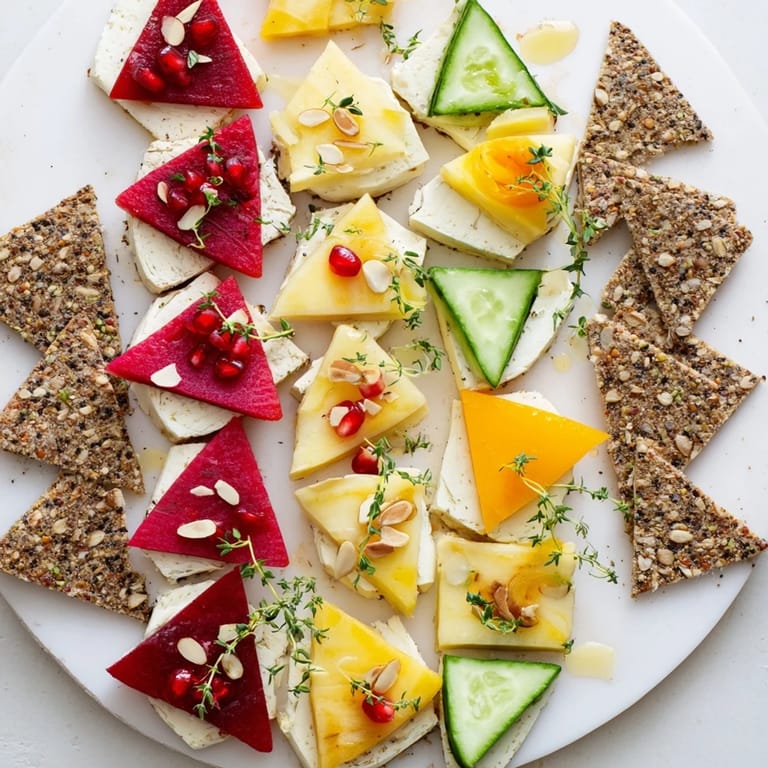
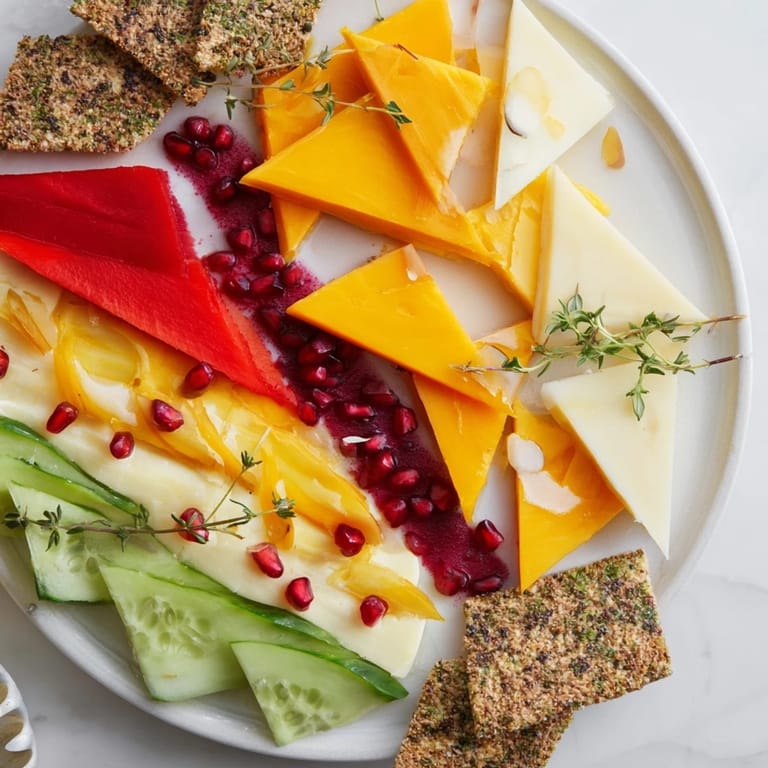
Save I discovered the magic of tessellation boards at a gallery opening on a quiet Thursday evening. A friend had arranged an appetizer spread that was so visually stunning, guests kept pausing mid-conversation to admire it before eating. It wasn't until I reached for a piece of aged cheddar that I realized every single element was cut into a perfect triangle, interlocking like an Escher painting made entirely of food. That night, I became obsessed with recreating that moment at home, and now this Tessellation Triangle has become my signature move whenever I want to turn an ordinary gathering into something people actually remember.
I remember arranging my first tessellation triangle for my cousin's engagement party, nervous that the whole thing would fall apart during transport. Instead, watching her face light up when she saw it arranged on her dining table—that moment made me realize that feeding people isn't just about flavor, it's about creating a visual memory they'll carry with them.
Ingredients
- Aged Cheddar, 100 g, sliced into triangles: This cheese brings a sharp, crystalline bite that anchors the whole board. I learned to slice it just thick enough that it holds its shape but thin enough to feel delicate when you bite it.
- Manchego, 100 g, sliced into triangles: Its nutty, slightly salty character creates those unexpected flavor moments. It's firm enough to cut cleanly, which matters when you're being precise.
- Goat Cheese, 100 g, chilled and cut into triangles: The creamy counterpoint that softens everything around it. Chill it well before cutting, or it'll smudge instead of slice.
- Cucumber, 1 medium, peeled and sliced into thin triangles: The refreshing palate cleaner that lets people keep eating longer without feeling heavy. Its mild sweetness bridges the gap between savory and sweet elements.
- Red Bell Pepper, 1 large, seeded and cut into triangles: This is your visual pop and your sweet note. I always choose the deepest red I can find because the color carries as much weight as the flavor.
- Beet, 1 small, cooked and sliced into very thin triangles: Earthy and deeply colored, beets are the quiet heroes that make every other color look more vibrant. Cooking and cooling them ahead saves stress on board day.
- Pear, 1 large, cored and sliced into thin triangles: The sophisticated sweetness that makes people say 'oh, what is that?' The subtle honey note pairs perfectly with cheese and almonds.
- Seedless Watermelon, 1/2 cup, cut into small triangles: Pure, innocent sweetness that surprises people in a savory context. I learned to cut it just before assembly so it stays crisp and doesn't weep.
- Whole Grain Crackers, 100 g, cut if needed into triangles: These give texture and are a vehicle for the cheeses. Cutting them into triangles sometimes feels fussy, but it's what makes the pattern work.
- Roasted Almonds, 1/4 cup: Your textural secret weapon. They fill tiny gaps and add a satisfying crunch that makes people feel like they're eating something special.
- Pomegranate Seeds, 1/4 cup: Jewel-like garnish that solves the problem of small gaps while adding brightness and a subtle tartness.
- Honey, 2 tbsp (optional): A whisper of sweetness drizzled over the goat cheese creates pockets of complexity. Use this sparingly—restraint is elegant.
- Fresh Herbs (thyme or mint): Your final flourish that makes people know you thought about every detail. Thyme feels more sophisticated, mint feels more playful.
Tired of Takeout? 🥡
Get 10 meals you can make faster than delivery arrives. Seriously.
One email. No spam. Unsubscribe anytime.
Instructions
- Gather Your Stage:
- Set out your largest wooden board or platter on a clean, flat surface where you can see the whole composition. This is your canvas, and it needs room to breathe so you can step back and see the whole picture as you work.
- Cut Everything with Intention:
- This step determines everything. Use a sharp chef's knife or mandoline to cut each element into similar-sized triangles, aiming for consistency so they fit together like puzzle pieces. Your cuts don't need to be perfect, but they need to be intentional—that's what people notice.
- Start from One Corner:
- Pick your starting point, usually a corner, and begin placing triangles with the colors and textures you want to emphasize first. Think of it like building a visual rhythm. The first few pieces set the pattern for everything that follows.
- Build the Pattern:
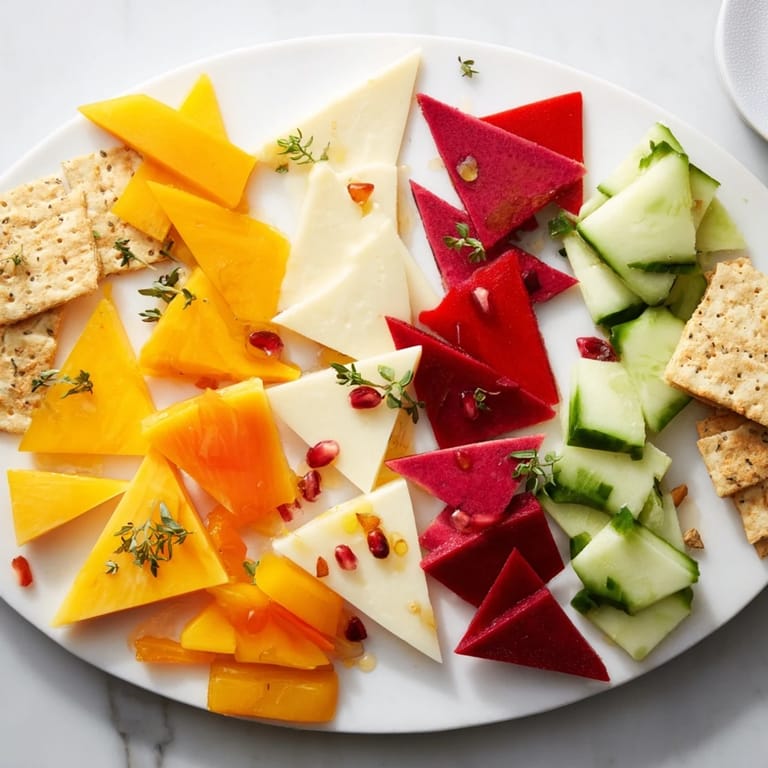
- Work methodically across the board, alternating colors and textures as you go, fitting each triangle snugly against its neighbors. You're aiming for that seamless, interlocking feeling. When you fit pieces tightly, gaps become your friends instead of your problems because they create negative space that makes the whole thing read as intentional.
- Keep Building Until Complete:
- Don't rush. This is meditative work. As you cover more of the board, the pattern will start to emerge, and you'll begin to understand which colors need to go where to create visual flow.
- Fill the Spaces Artfully:
- Those tiny gaps between triangles? Tuck pomegranate seeds and roasted almonds into them. This is where the board goes from 'very organized' to 'actually beautiful.'
- Add the Final Magic:
- Drizzle honey gently over the goat cheese triangles if you're using it, then scatter fresh herbs across the board. This is where you transform a carefully arranged board into something that looks like it arrived fully formed from a design studio.
- Serve Immediately:
- Your tessellation triangle is at its best within a few minutes of completion, when every color is still vivid and nothing has begun to oxidize or dry. This is the moment for which you've been preparing.
 Save
Save The first time someone brought this board to a potluck and returned home with an empty platter, I realized that beautiful food communicates something deeper than taste—it says 'I thought about you while I was making this.' That moment taught me that presentation isn't vanity, it's kindness made visible.
The Geometry of Flavor
When you cut things into triangles, something shifts in how people eat. They slow down. They think about combinations. A triangle of aged cheddar paired with a triangle of pear becomes an intentional pairing instead of a random grab. The geometric precision somehow makes people more thoughtful about what they're putting together, and suddenly your appetizer board becomes a conversation about flavor and memory instead of just something to eat while standing.
Customizing Your Tessellation
This board is a template, not a blueprint. The magic is in the principle—cut everything uniformly and arrange it with intention—not in the specific ingredients. I've made versions with fresh mozzarella and heirloom tomatoes, with roasted vegetables and herbed ricotta, with seasonal fruits that changed the entire mood of the board. What matters is honoring the geometric idea while expressing what's available to you right now.
Preparing for Success
For a vegan version, swap the cheeses for firm plant-based options and skip the honey. For guests who eat cured meats, add thin triangles of prosciutto or salami—they fit the pattern perfectly. The board is best served with something crisp to drink, a Sauvignon Blanc if you're celebrating, or sparkling water with citrus if you're keeping it simple.
- Use a mandoline slicer for the thinnest, most consistent cuts, especially for beets and cucumbers
- Set your board on a stable surface away from the sun so the colors stay vivid during the party
- If you're transporting this, assemble it at your destination—it's worth the extra fifteen minutes when you see how beautiful it looks at home
 Save
Save This board has taught me that sometimes the most memorable meals aren't the ones with the fanciest cooking—they're the ones where someone took time to show care through precision and beauty. That's worth doing.
Recipe Questions
- → How can I achieve uniform triangle shapes?
Use a sharp knife or a mandoline slicer for even, precise cuts to ensure the tessellated pattern fits seamlessly.
- → What cheeses work best for this style?
Aged cheddar, Manchego, and goat cheese hold their shape well and complement the fresh vegetables and fruits.
- → Can this board be adapted for vegan diets?
Yes, substitute plant-based cheeses and use honey alternatives or omit drizzling for a vegan-friendly version.
- → How do I prevent gaps between pieces?
Arrange triangles tightly and fill any small spaces with pomegranate seeds or roasted almonds for a polished look.
- → What beverages pair well with this board?
Crisp white wines like Sauvignon Blanc or sparkling water with citrus enhance the fresh and bold flavors.